Silver Golf Hole In One Trophy
Silver Golf Hole In One Trophy
32075
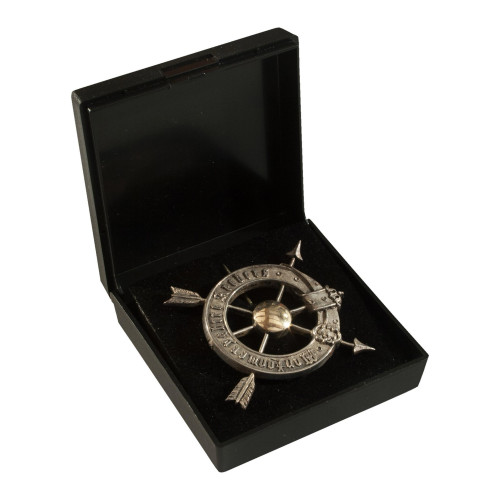
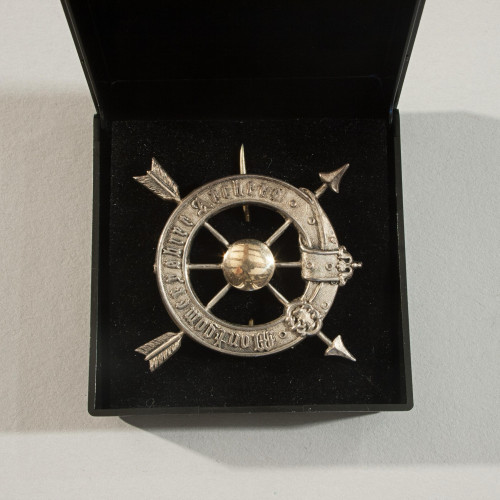
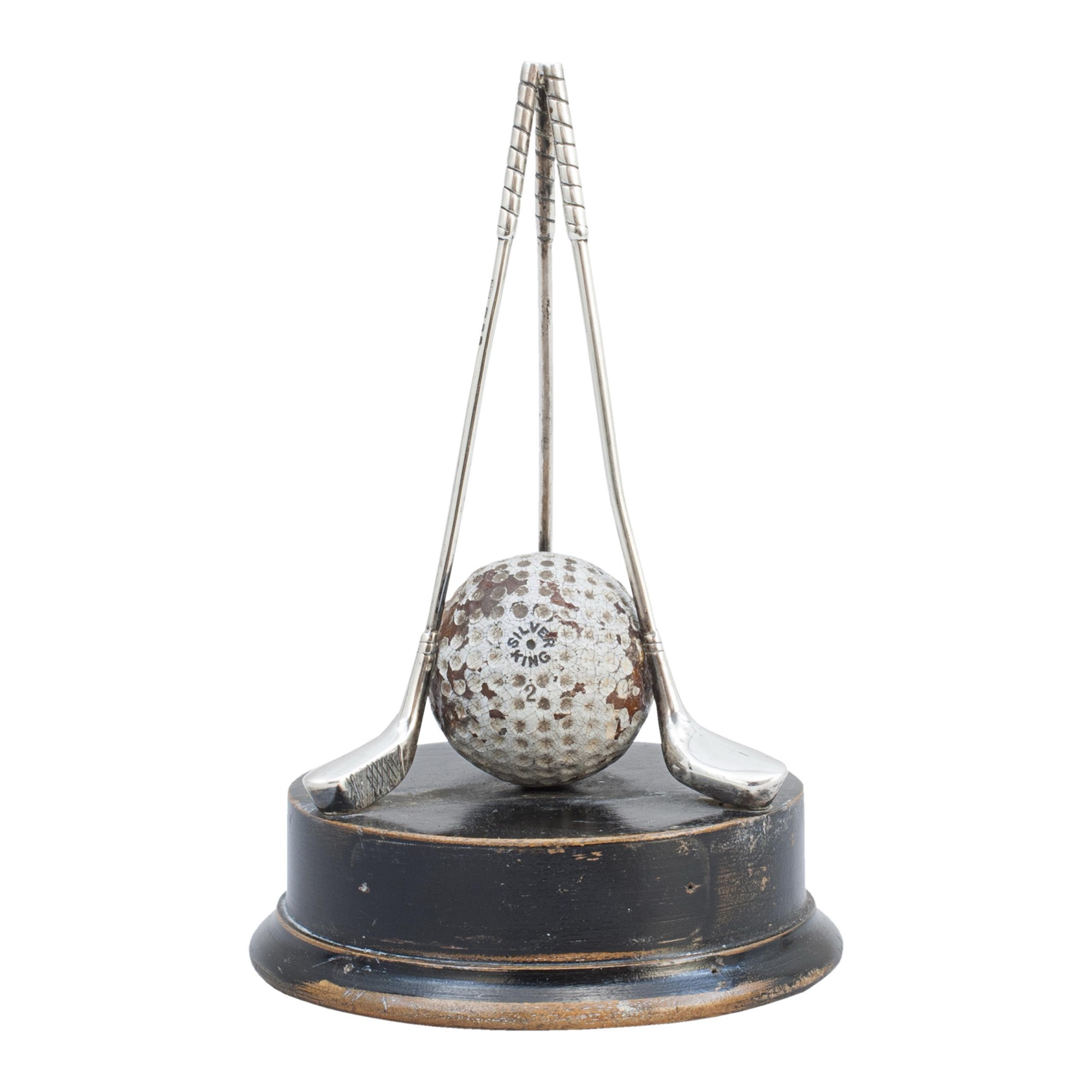
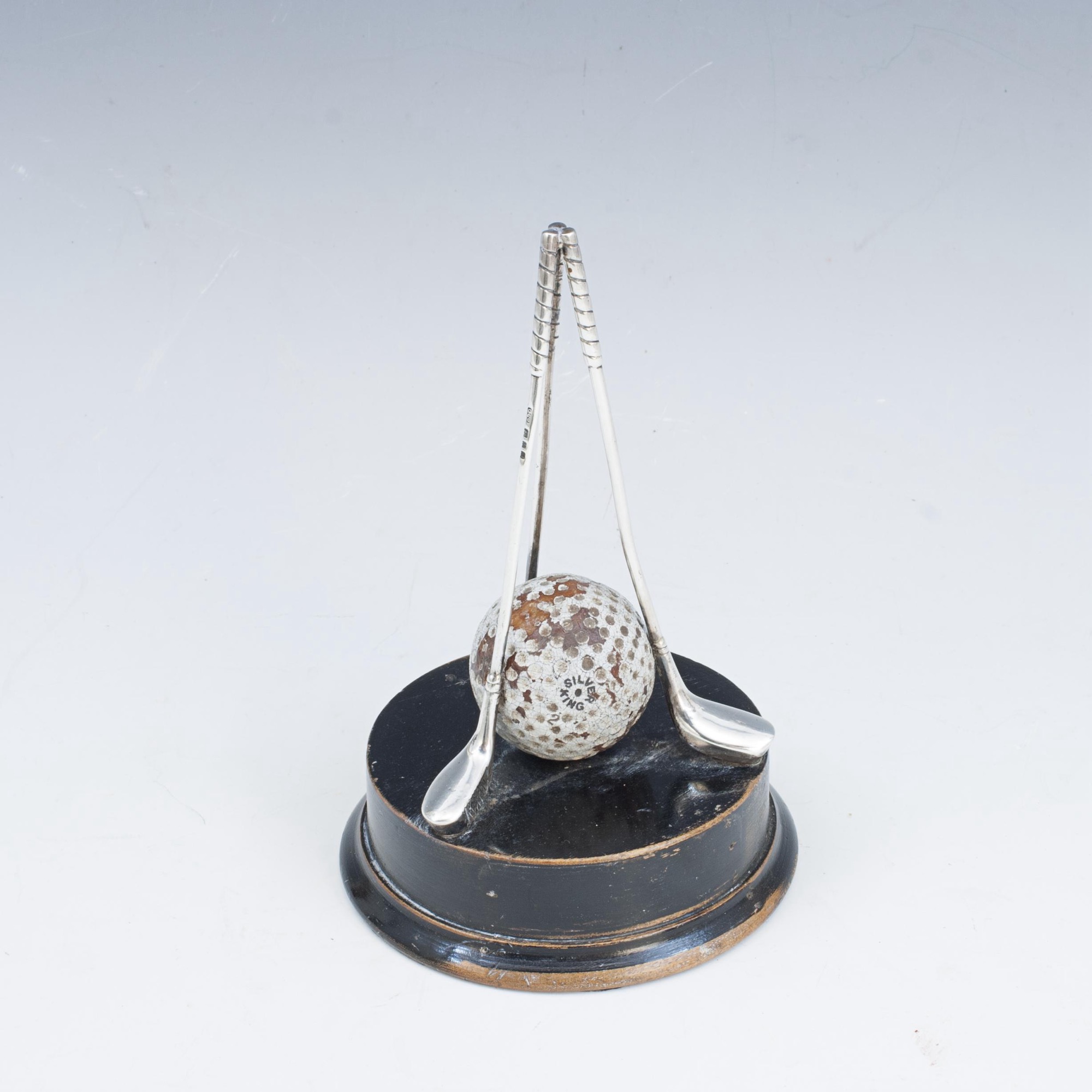
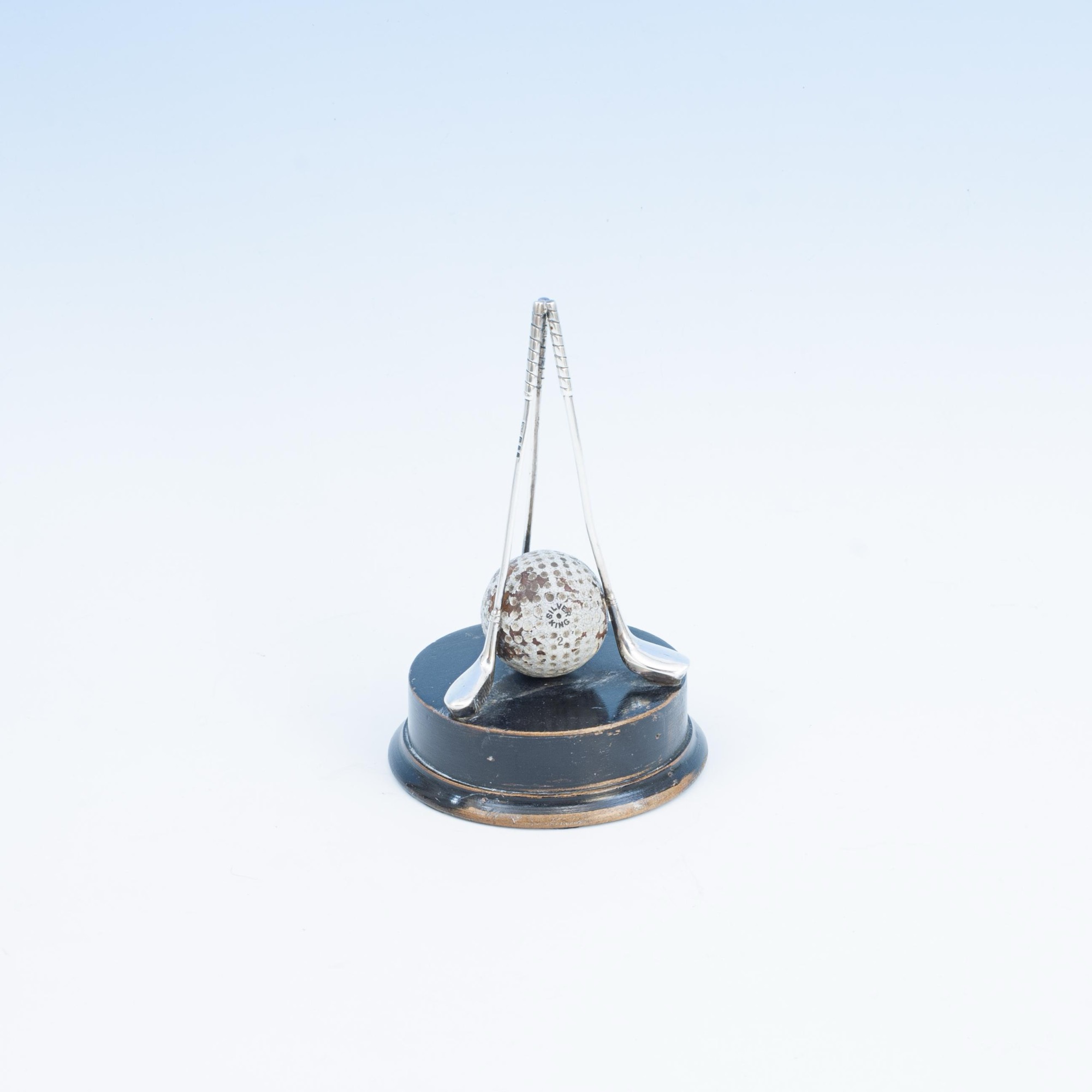
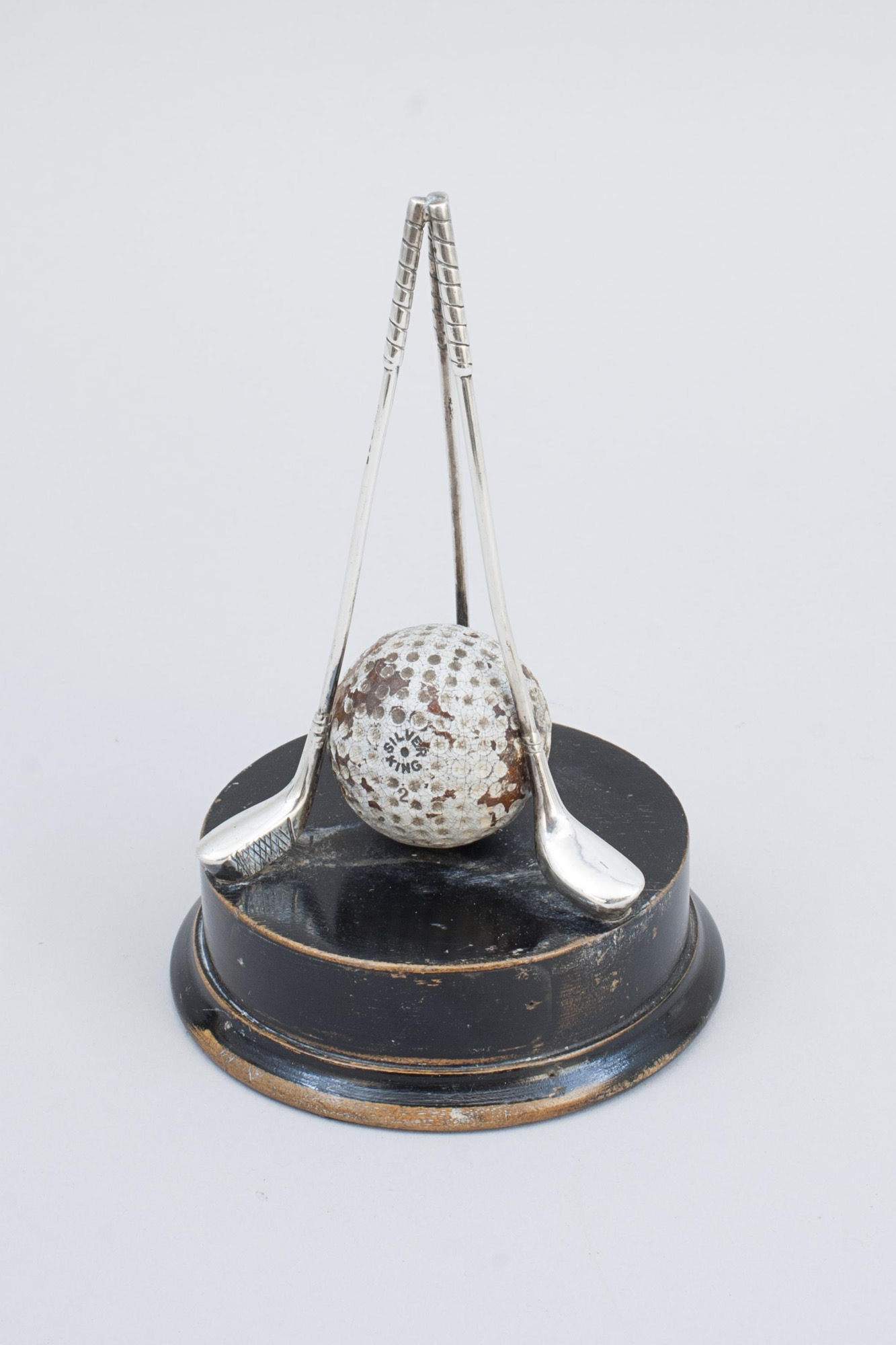
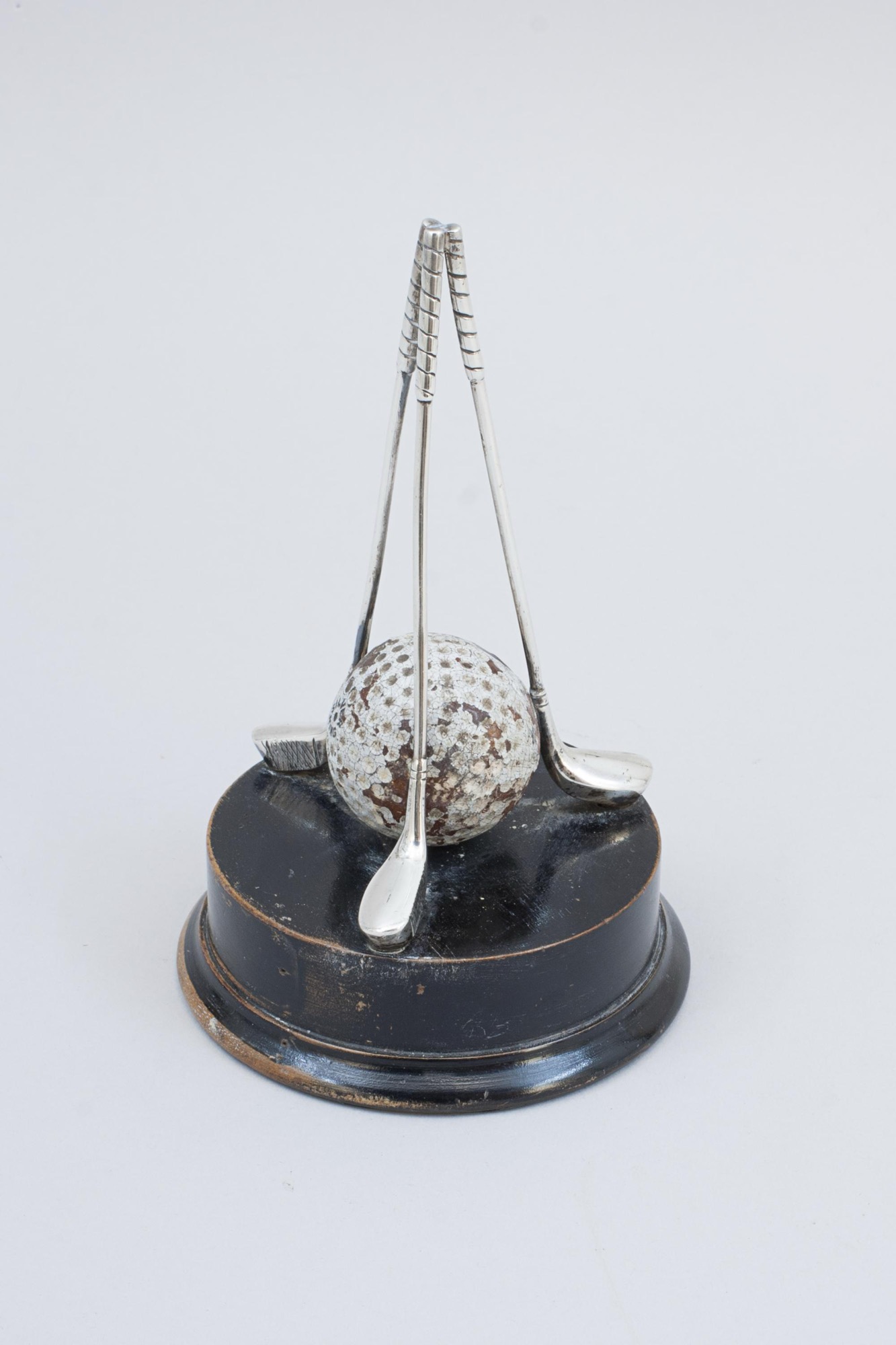
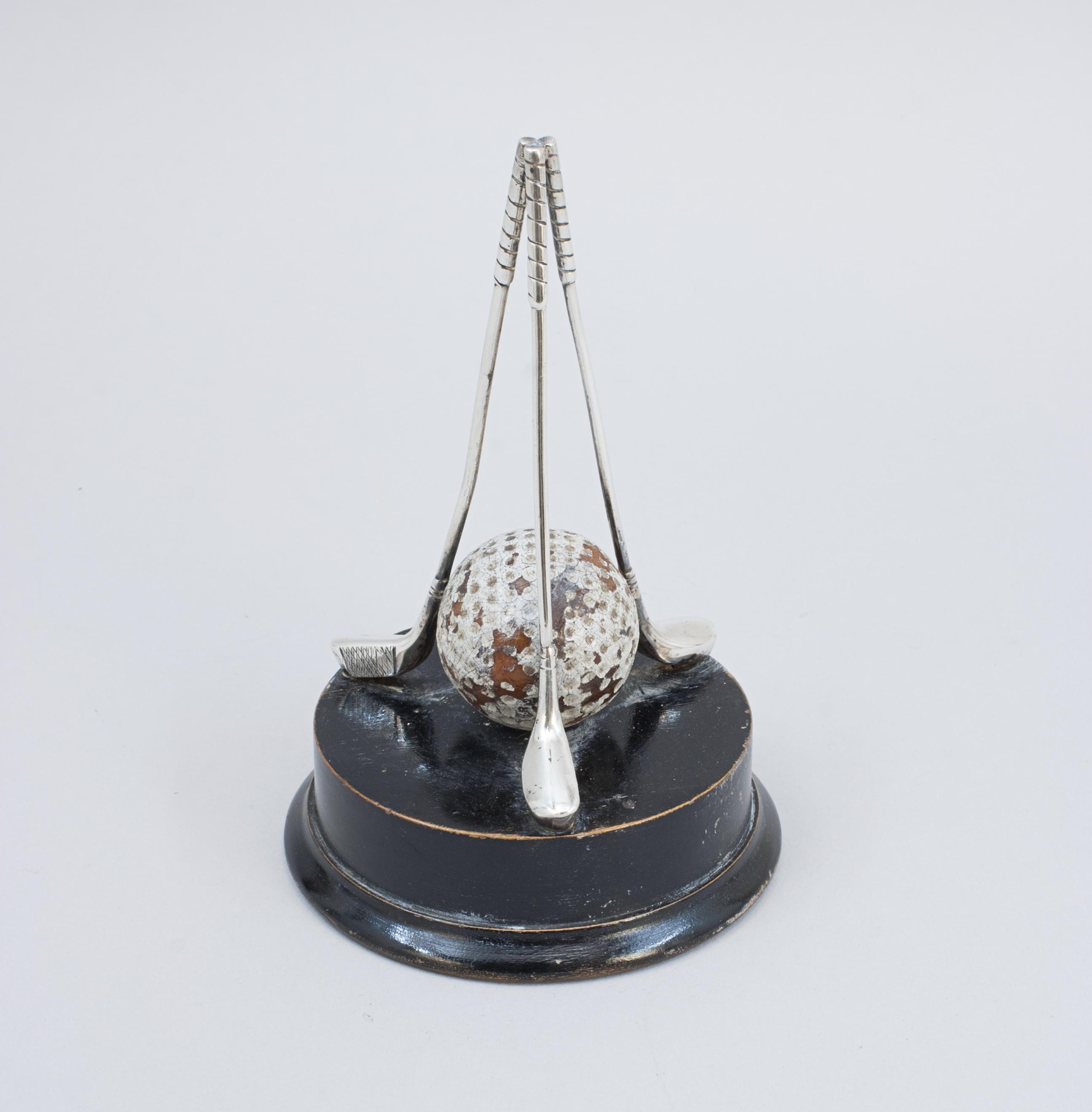
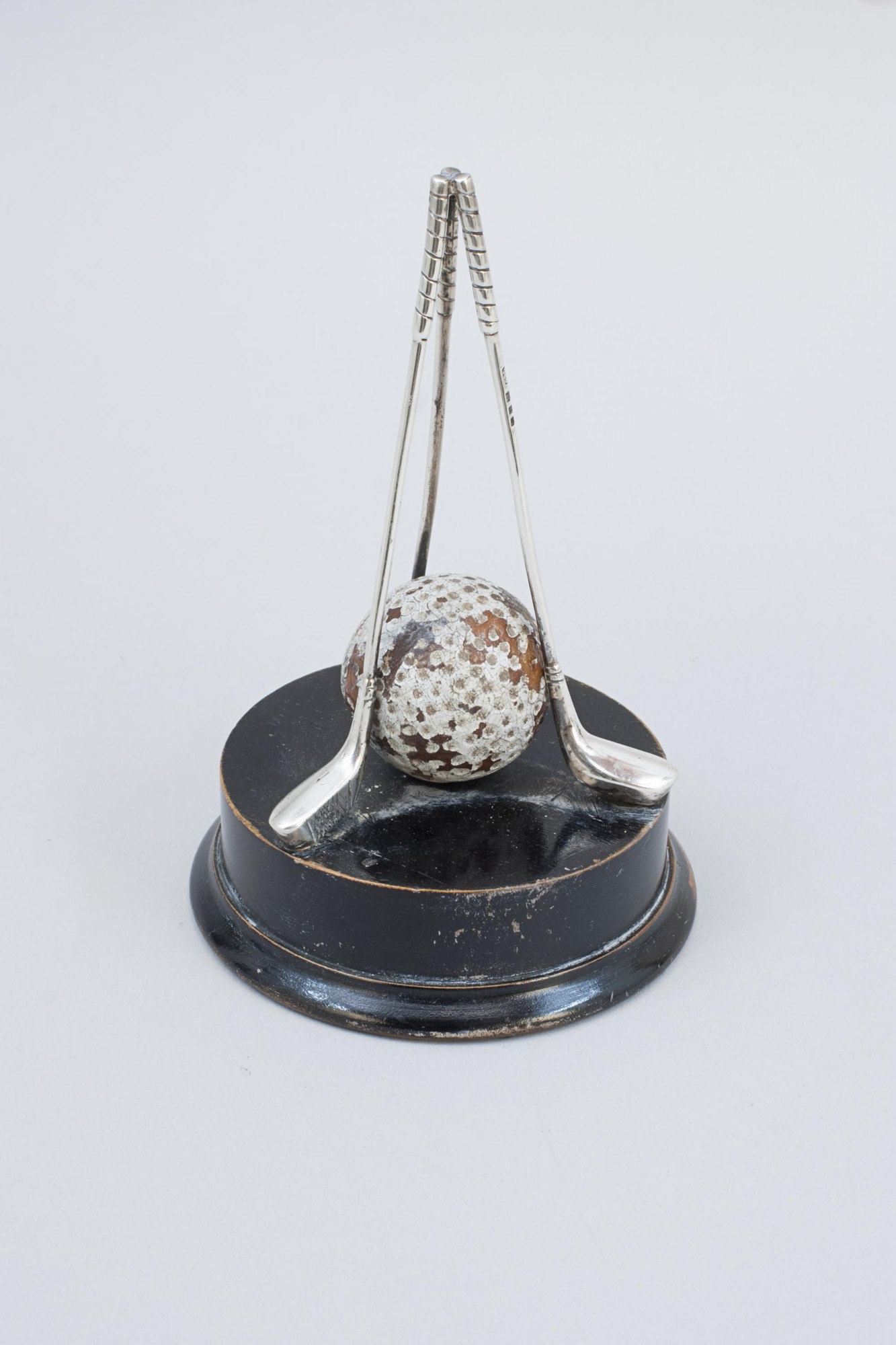
Silvertown Sterling Silver 'Hole In One' Golf Trophy.
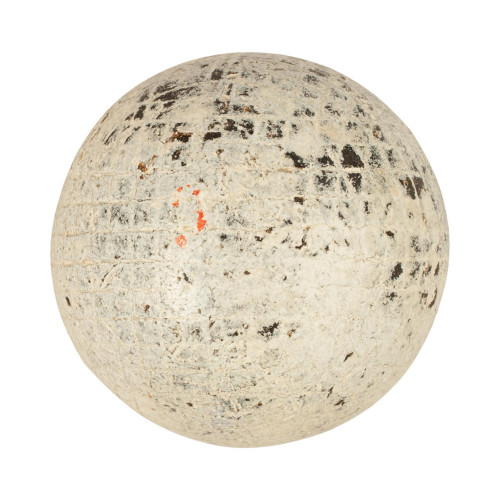
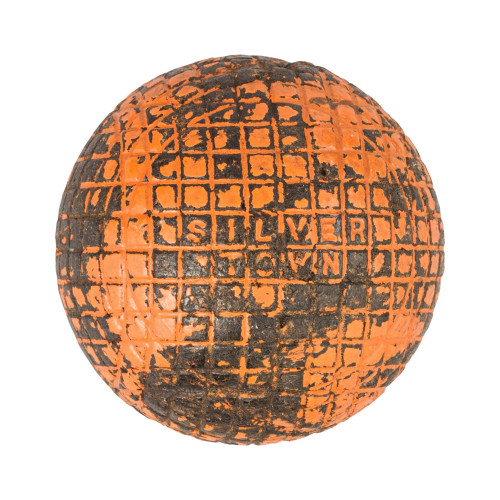
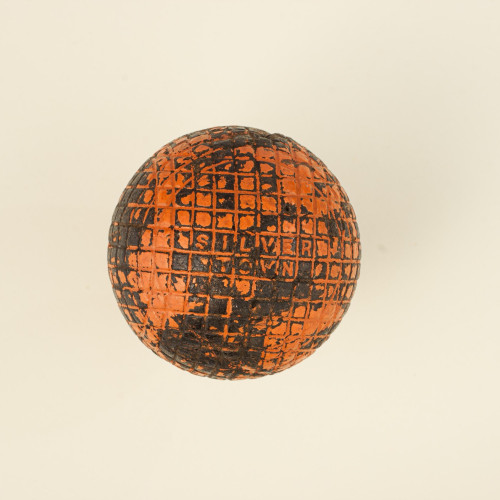
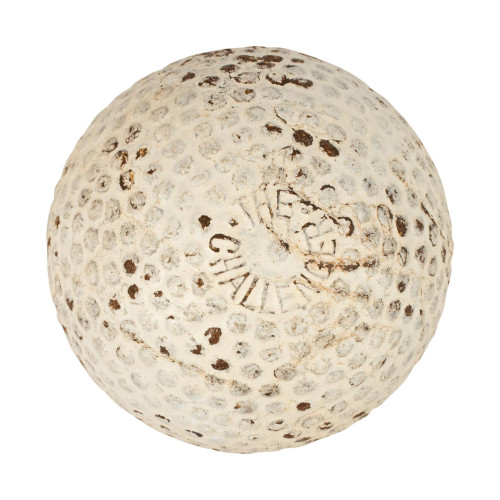
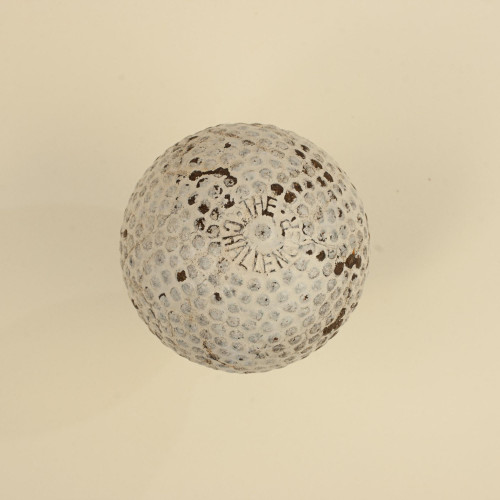
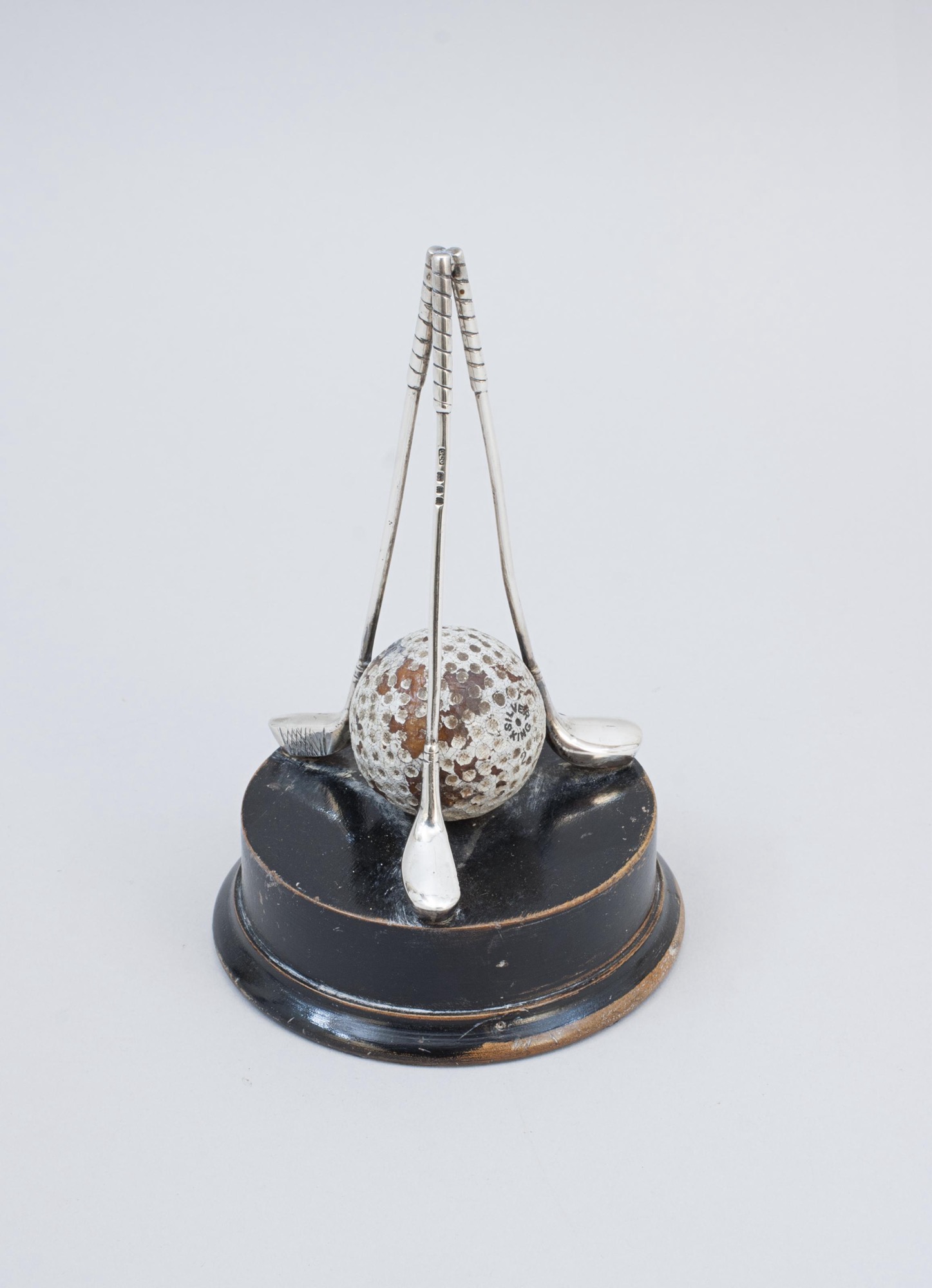
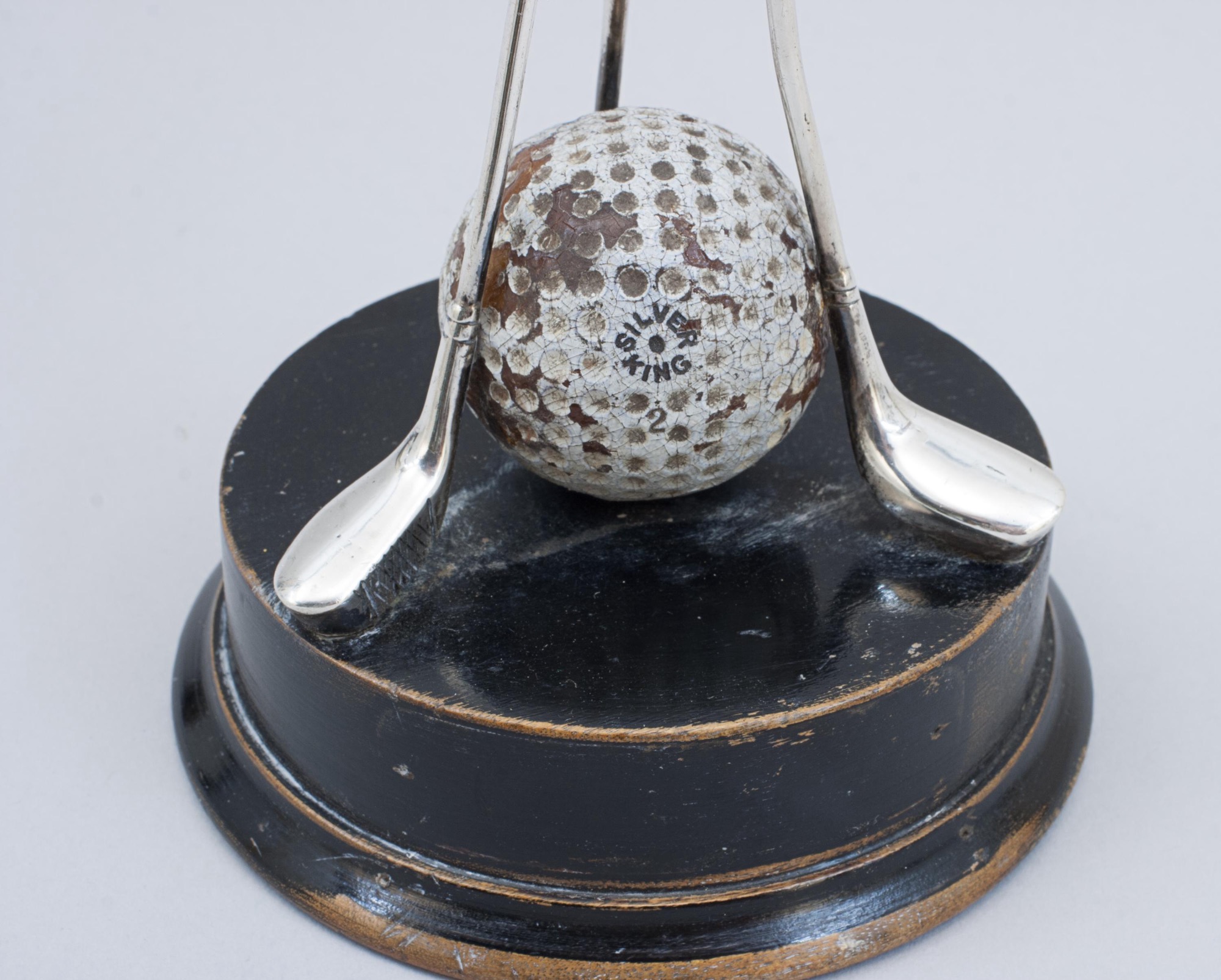
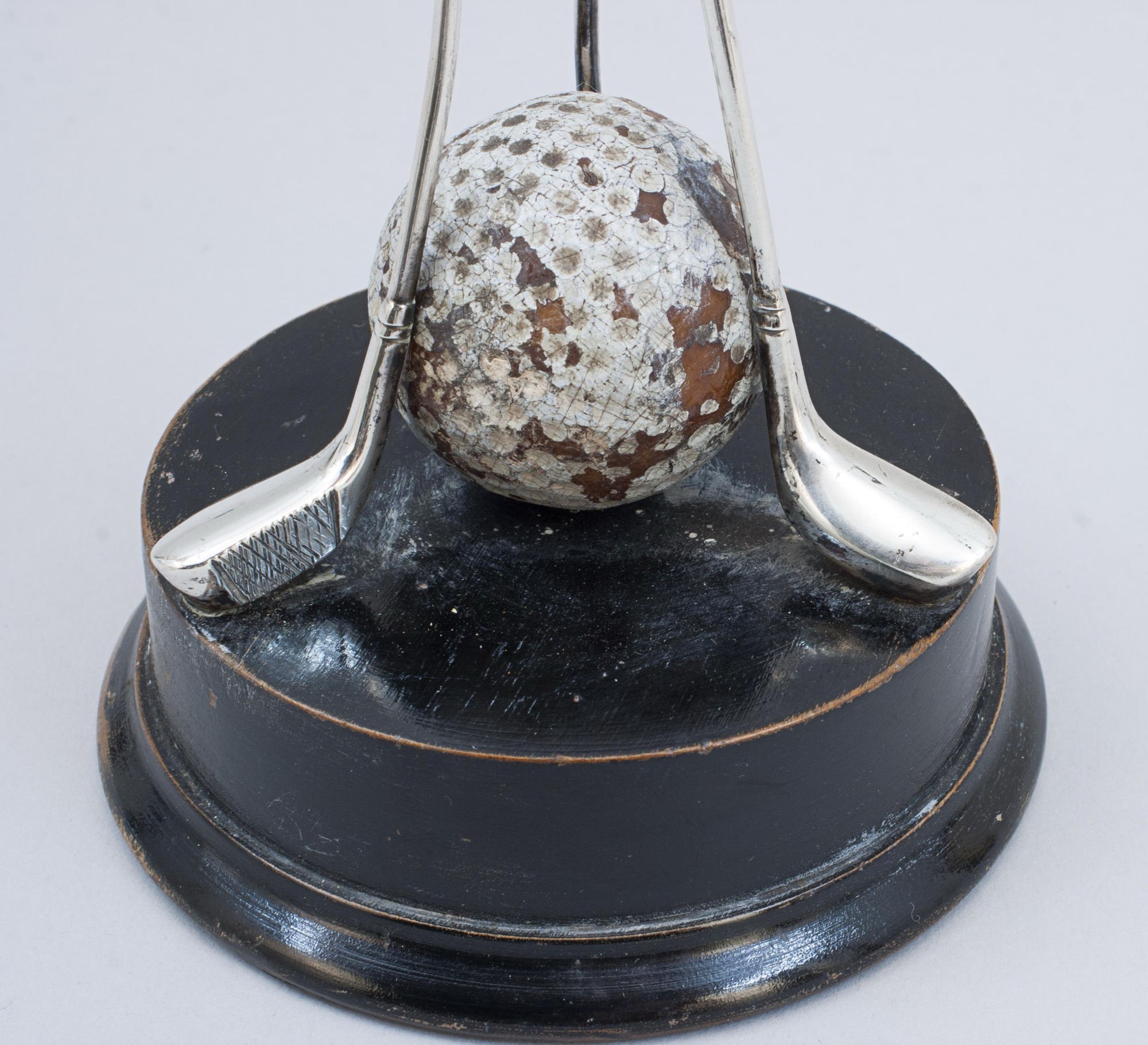
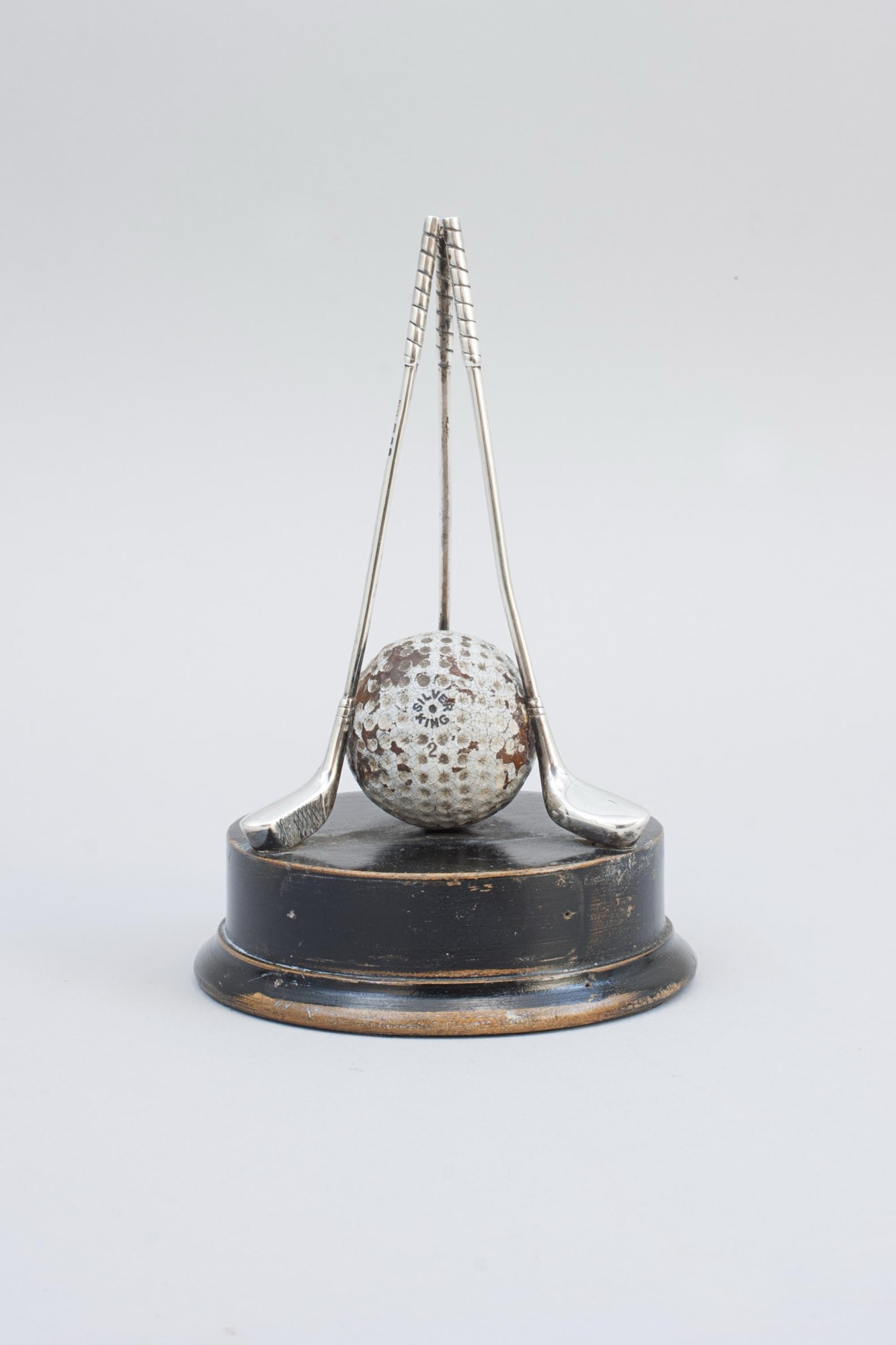
A handsome sterling silver 'Hole In One' golf trophy, comprising three silver golf clubs mounted on an ebonised, turned wooden base. The clubs stand upright around a period rubber-cored, dimpled No. 2 'Silver King' golf ball, creating an attractive and distinctly 1920s design. The trophy is particularly interesting in relation to the Silvertown Company and its 'Silver King' golf balls. Comparable examples of this trophy are known with a small plaque bearing the inscription "With the compliments of Silvertown Co.", strongly suggesting that examples were supplied or distributed by the company as promotional or presentation trophies. The plaque on this example has, at some stage, been removed, leaving no surviving inscription connecting it to a particular golf club, player or event.
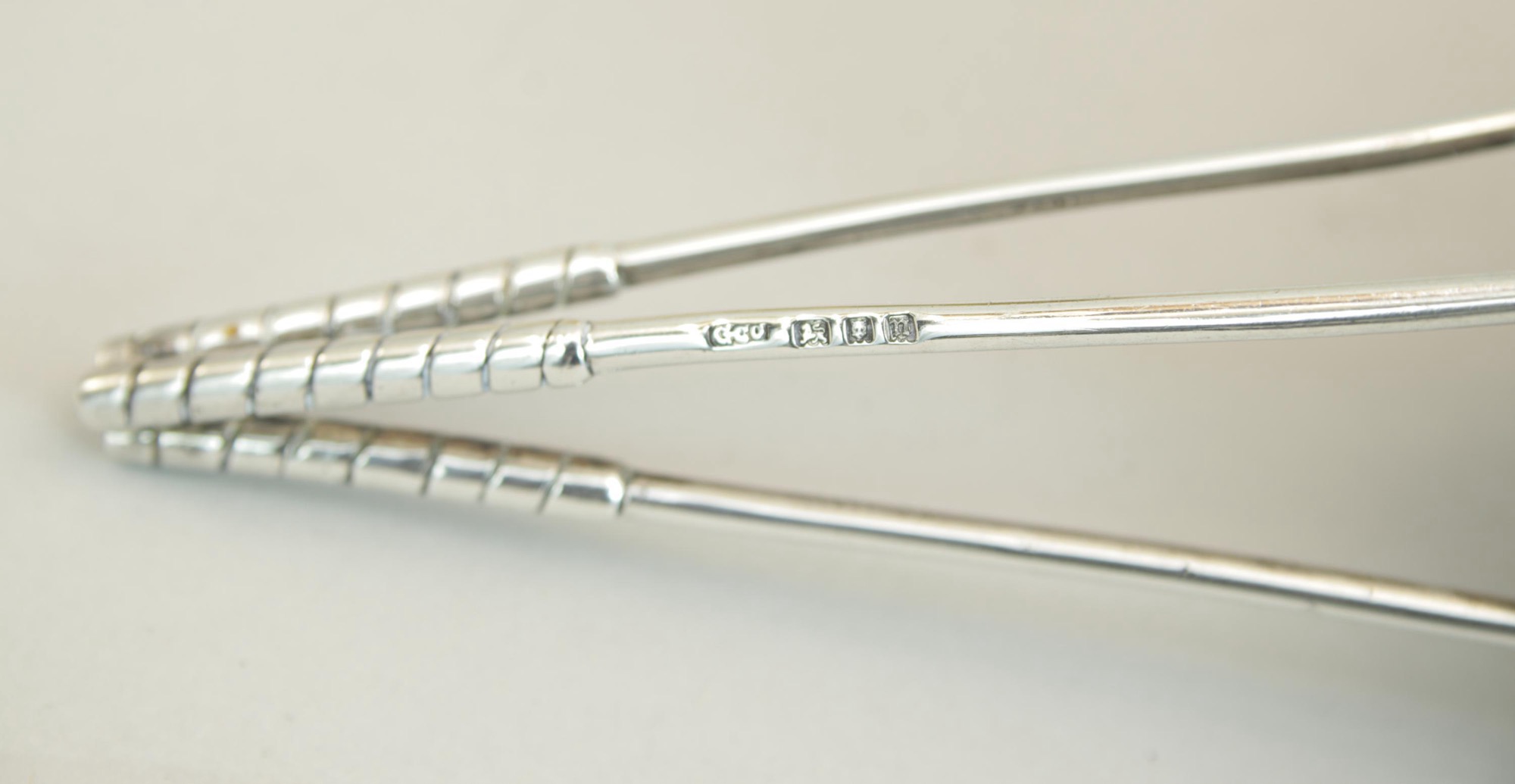
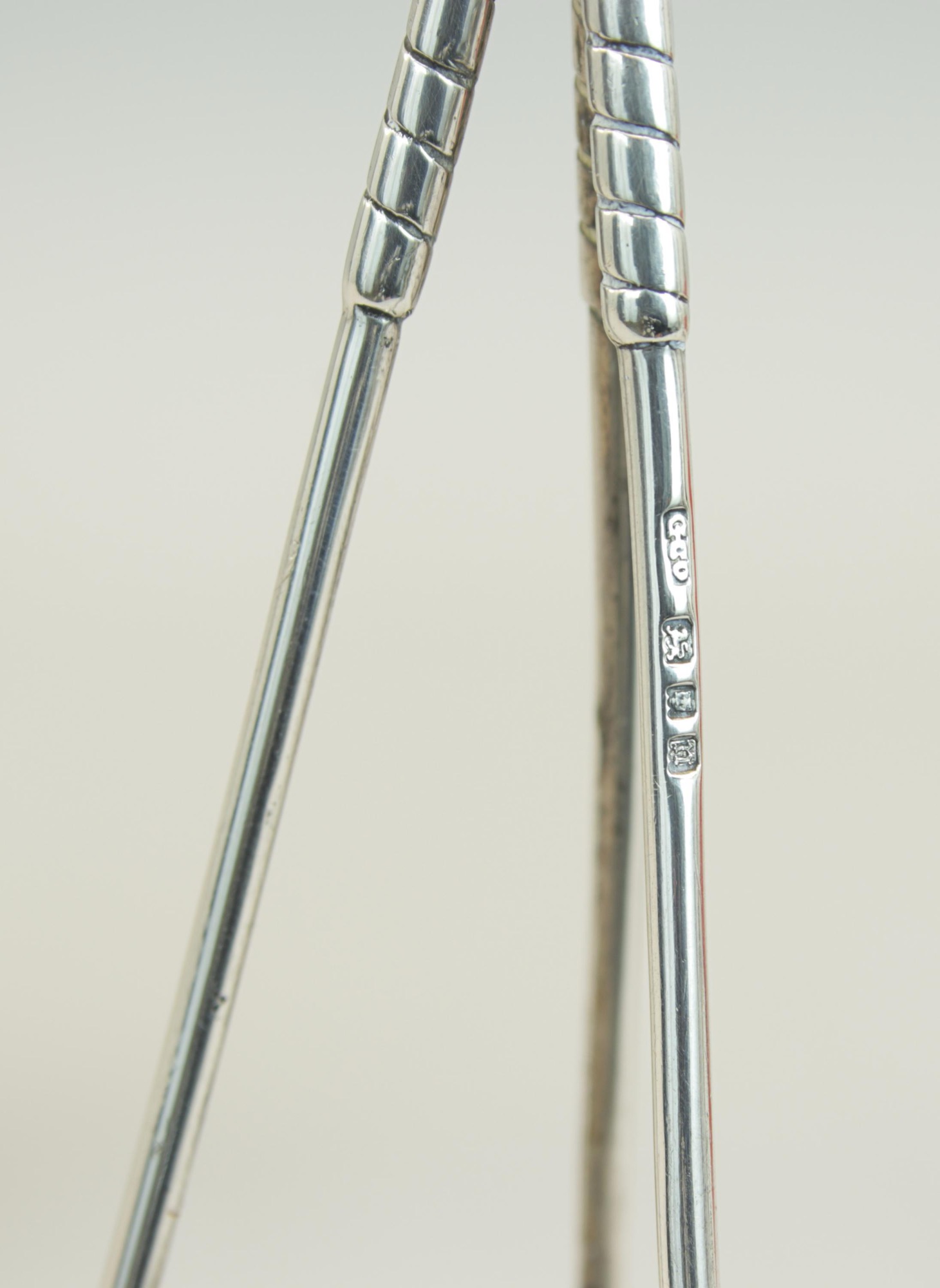
One of the clubs bears a full set of hallmarks comprising the lion passant for sterling silver, the leopard's head assay mark for London, the date letter 'n' for 1928, and the maker's mark 'G Co.', attributed to Glossoid Company Ltd.
Although trophies of this form are generally described as 'Hole In One' trophies, the absence of a presentation plaque or other inscription means that the original recipient and circumstances of this trophy remain unknown. Regardless, this is an unusual and appealing piece of golfing memorabilia, combining an attractive piece of inter-war silverware with an original period golf ball. It would make an excellent addition to a collection of golfing memorabilia and could, indeed, still be used as a trophy today.
The Silvertown Company and the 'Silver King' Golf Ball:-
The golf ball housed within the trophy provides an interesting connection to the history of British golf-ball manufacture. The Silvertown Company developed from the India Rubber, Gutta Percha and Telegraph Works Company, established in Silvertown in 1864. The business was initially best known for rubber and gutta-percha products, telegraph equipment and submarine cables, before expanding into other rubber products, including bicycle and later motor-vehicle tyres. It was subsequently controlled by British Goodrich and became the British Tyre & Rubber Company in 1934.
Silvertown also became an important name in the development and manufacture of golf balls. During the early twentieth century, the company was closely associated with the work of Albert E. Penfold, one of the most influential figures in British golf-ball development.
Penfold began his career with Silvertown and was placed in charge of golf-ball development in 1911. He subsequently developed a number of important improvements to golf-ball design, including his patented mesh and lattice patterns of 1912. The rights to the mesh pattern were assigned to Silvertown, while Penfold retained the rights to his lattice design, which would later play an important part in the development of the Penfold golf-ball brand.
The 'Silver King' became one of Silvertown's best-known golf-ball names. Surviving examples and period advertising demonstrate that Silver King balls were established premium products by the 1920s and continued to be manufactured for many years afterwards.
Glossoid Company Ltd.:-
The Glossoid Company Ltd., also recorded as Glossoid Co. Ltd., was a British silversmithing and manufacturing firm active during the early twentieth century. Its hallmark and production records are particularly well documented from the 1920s and 1930s. The company was associated with premises at Thavies Inn, London EC1, and was known for producing a range of sterling-silver goods, including novelty items, vanity pieces and sporting trophies. Contemporary records also describe Glossoid Co. Ltd. as dealing in watches, clocks, jewellery, cutlery, silver, electro-plate, cups and sports prizes, with an address at 45-50 Holborn Viaduct, London EC1.
Dimensions:
1900-1949
1928
Silver
England
Good condition. Some of the black finish has rubbed away on the base and some of the surface paint is missing on the golf ball. You can just make out the pin holes where two plaques were once fixed to the base.
RELATED ITEMS