
Cricket Print, Vanity Fair, The Demon Bowler
Cricket Print, Vanity Fair, The Demon Bowler
Single Vanity Fair Cricket Print, The Demon Bowler.
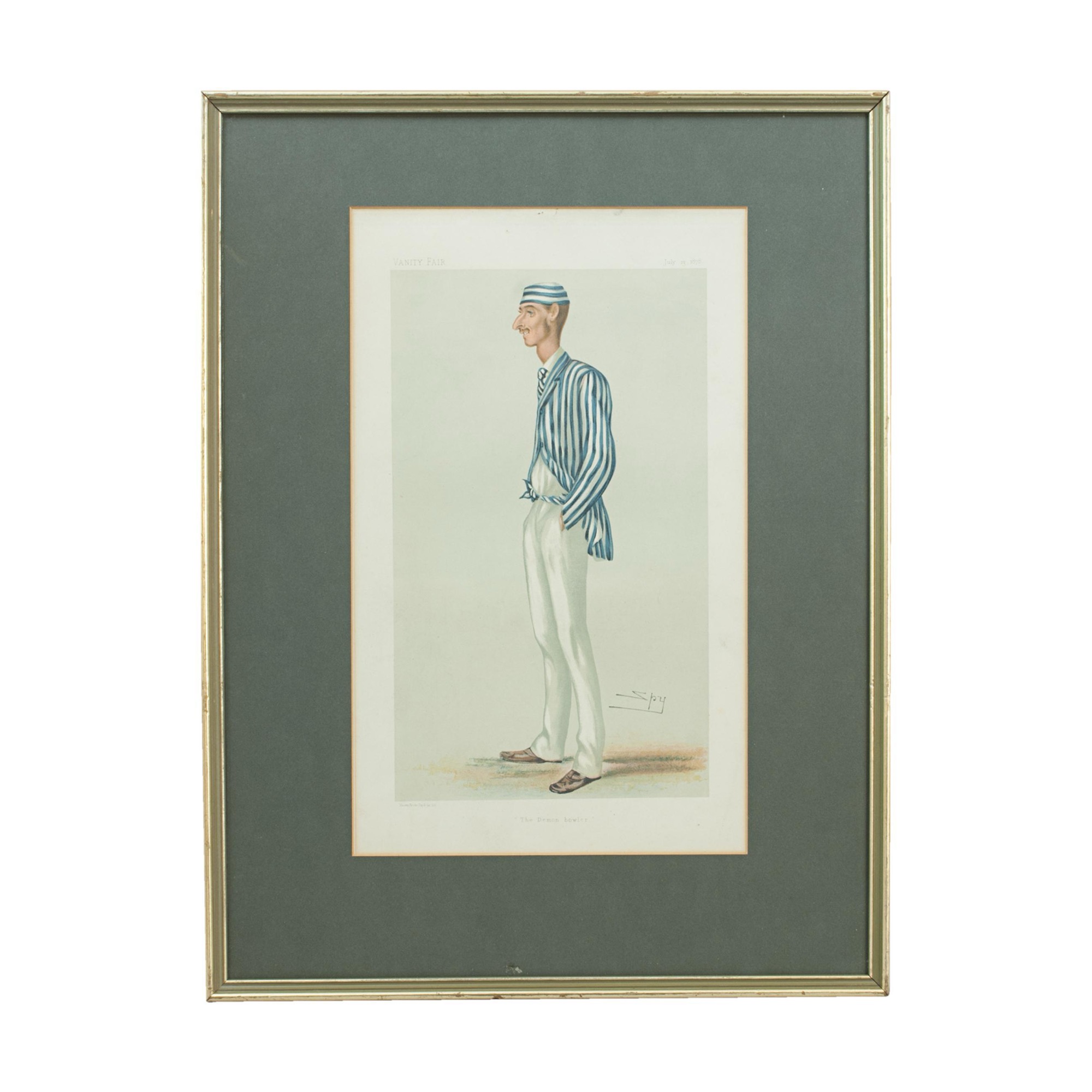
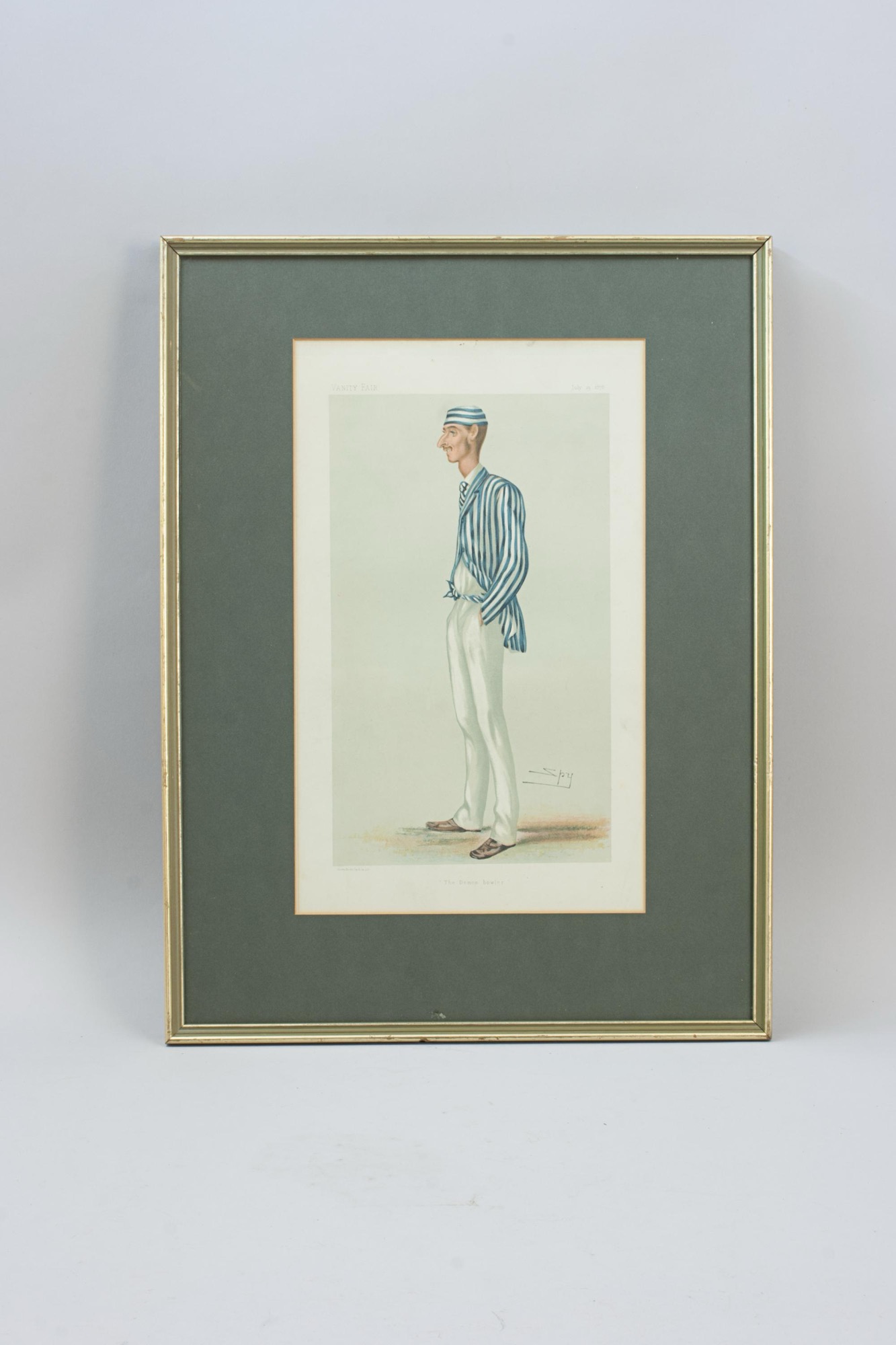
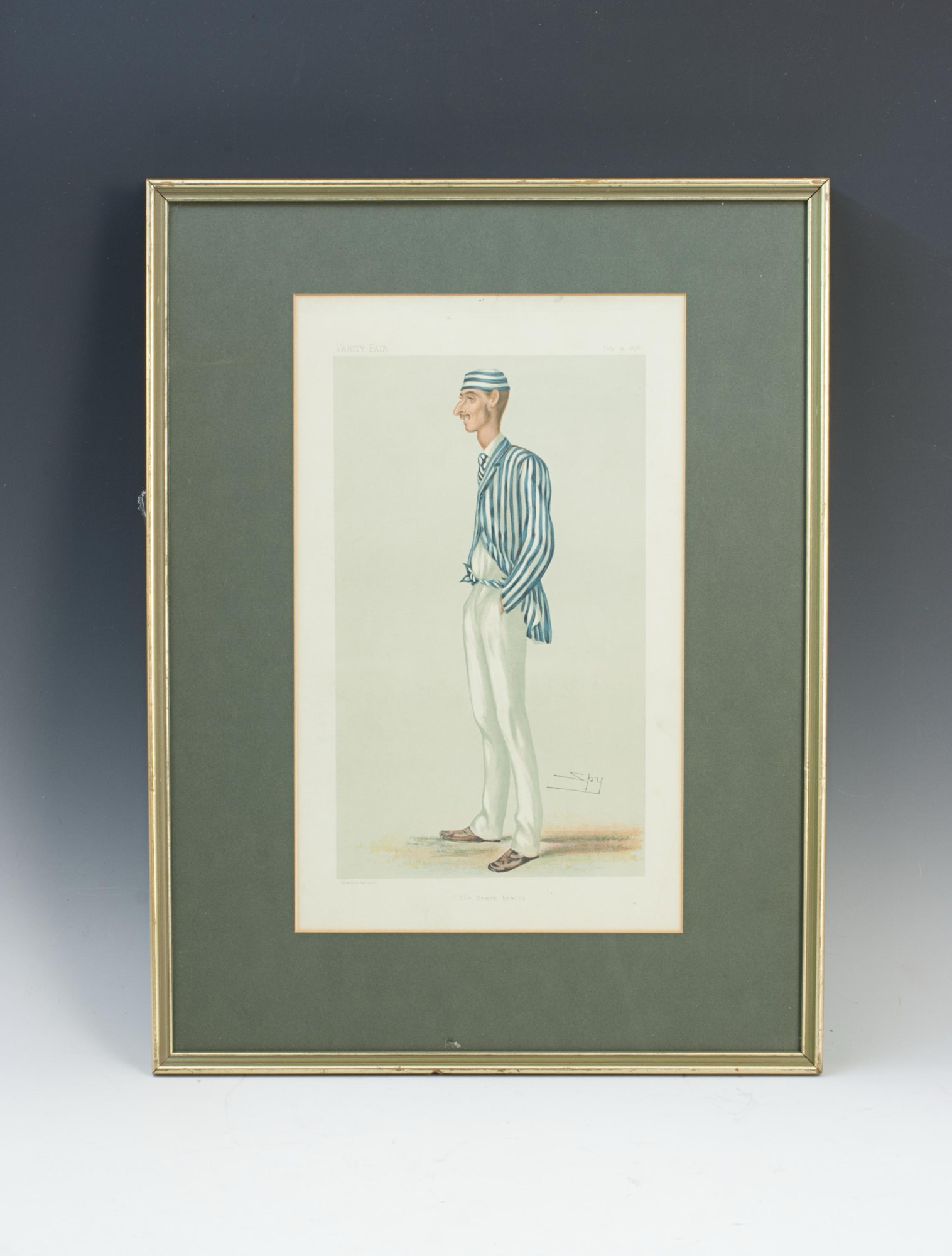
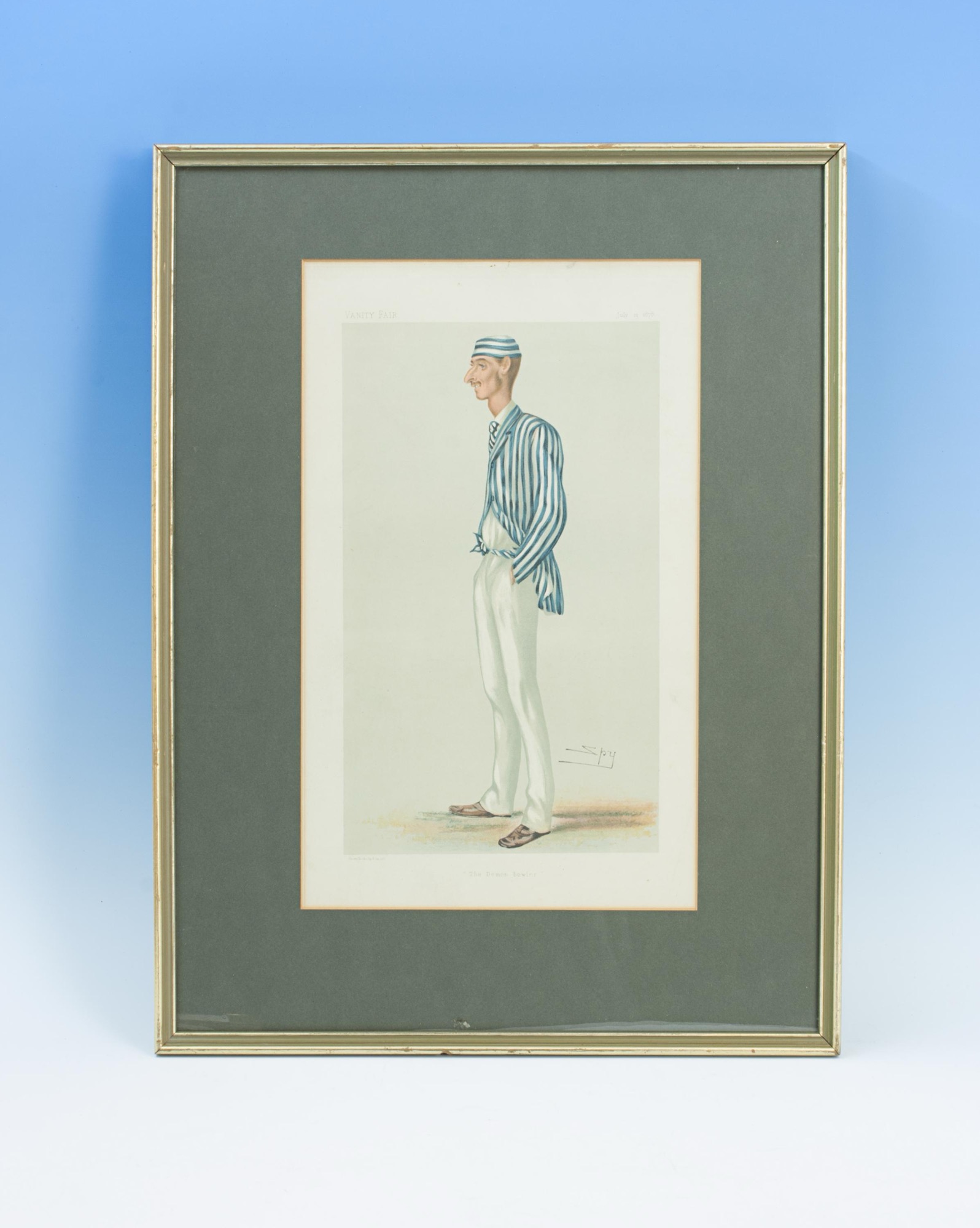
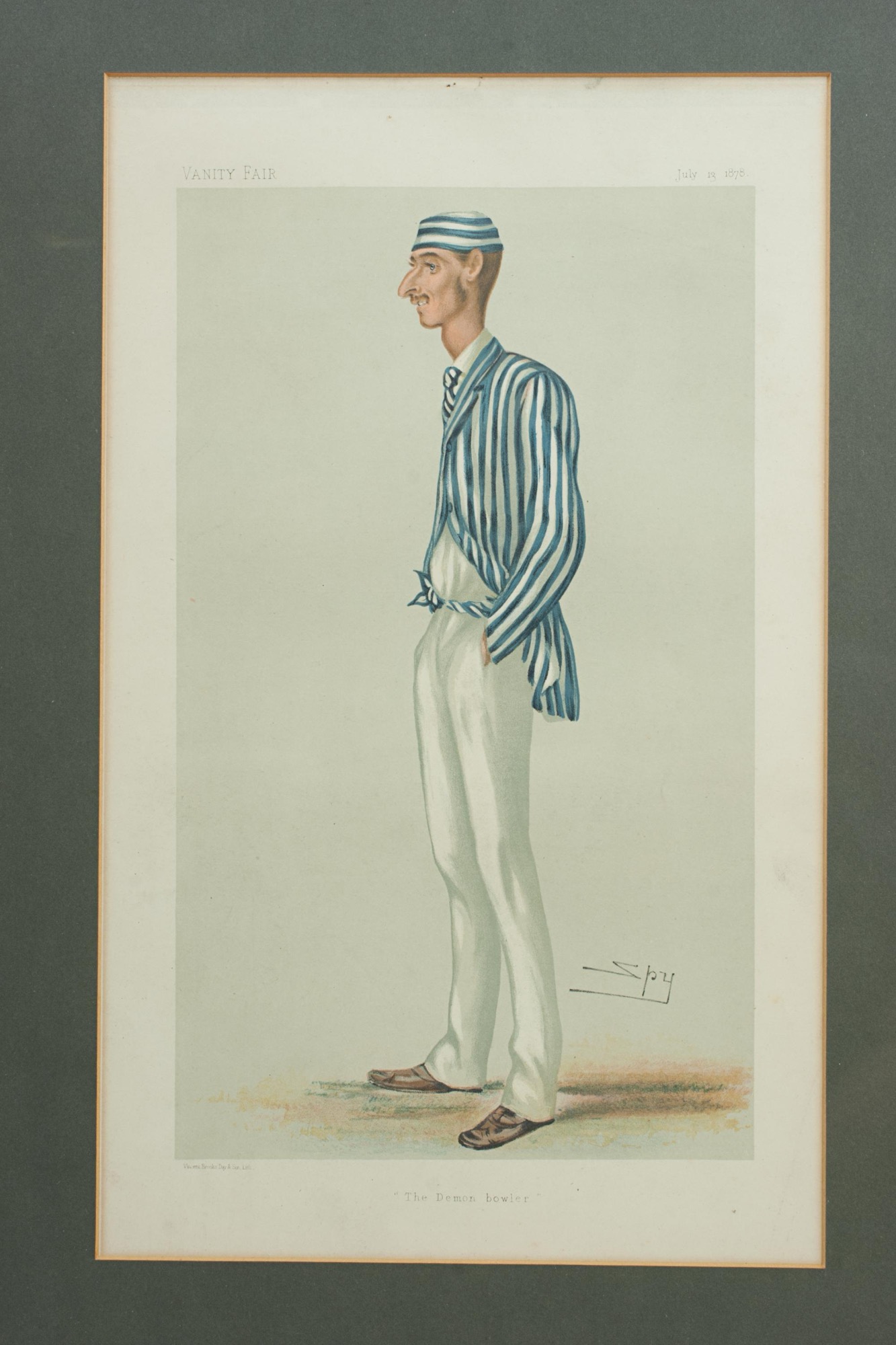
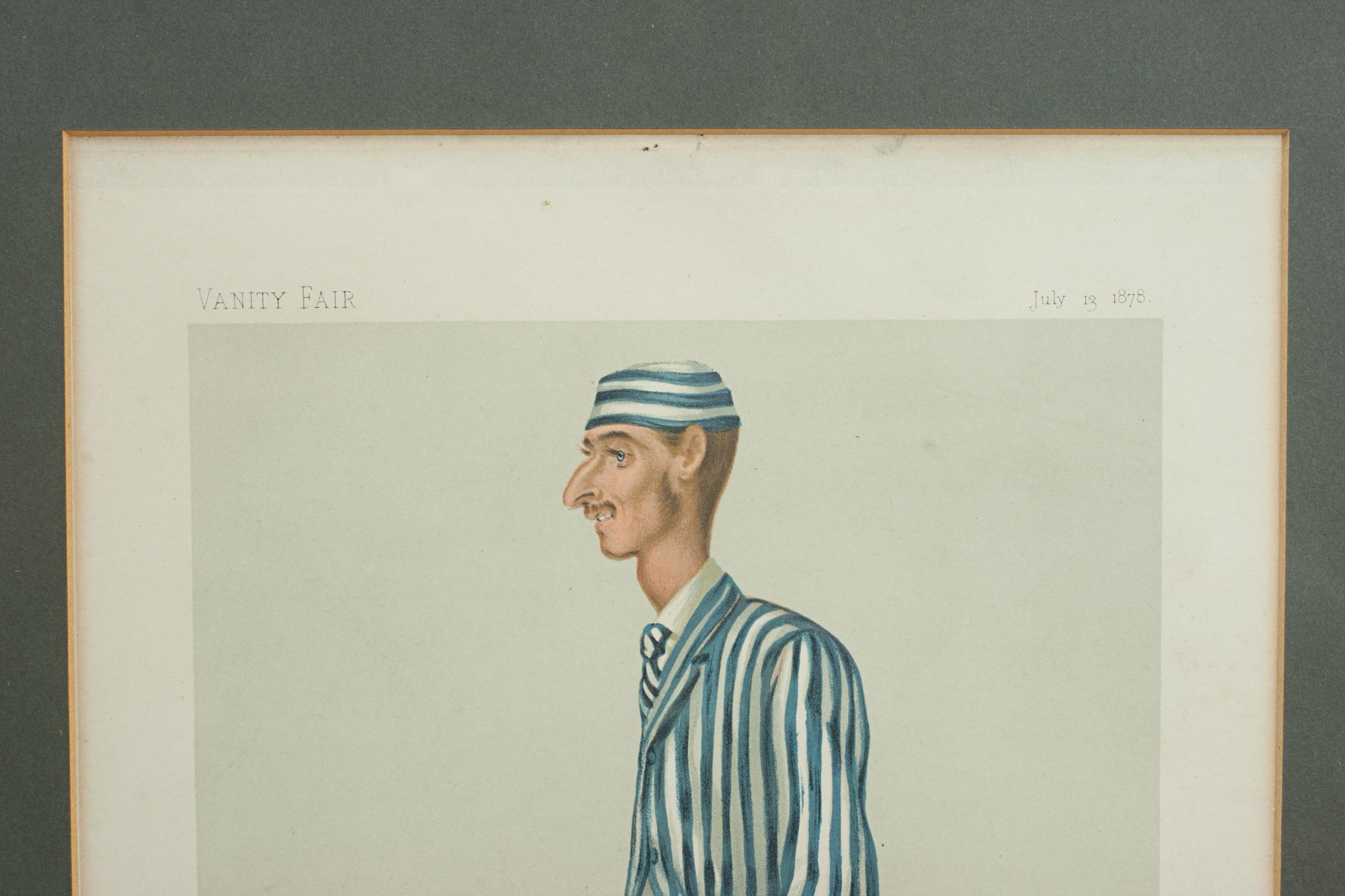
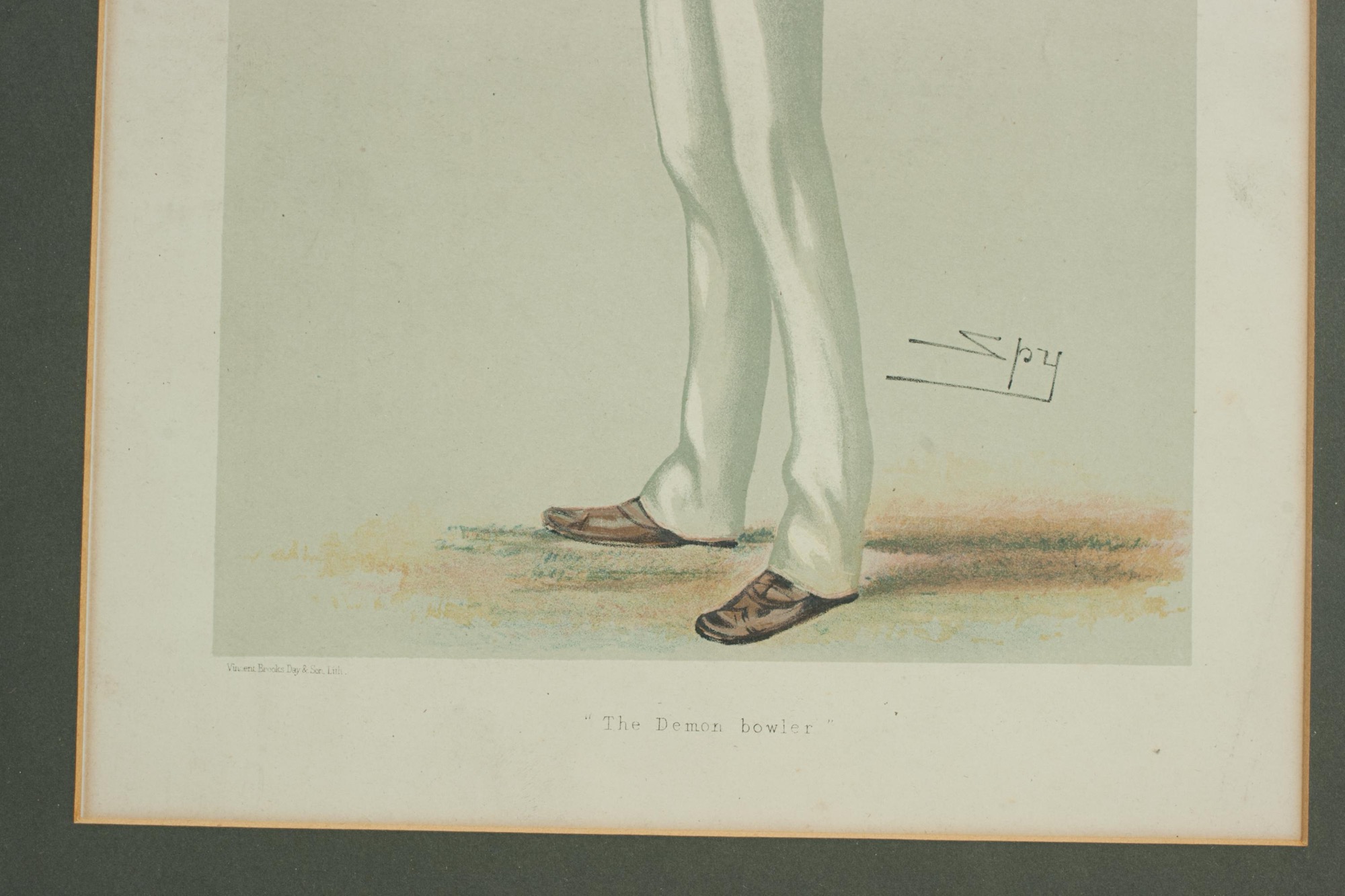
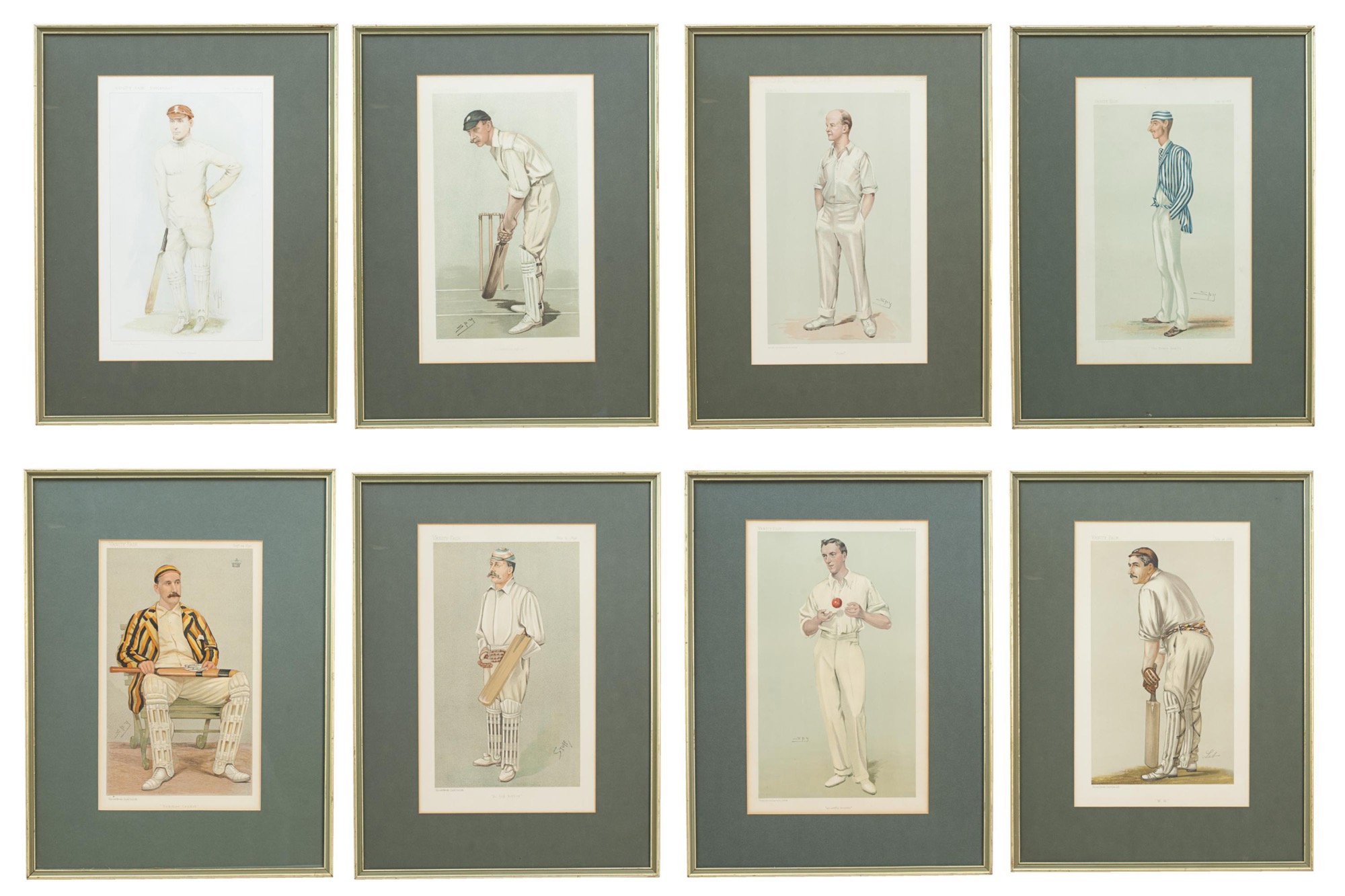
A wonderful framed single cricket Vanity Fair chromolithograph entitled The Demon Bowler, drawn by the celebrated caricaturist 'Spy' (Sir Leslie Ward) and published on 13 July 1878 by Vincent Brooks, Day & Son.
This Vanity Fair caricature features one of the most notable sporting figures of the Victorian era, Frederick Robert Spofforth, the celebrated Australian fast bowler, appearing as Men of the Day No. 183 at the age of just 25.
The nickname "The Demon" was particularly apt. During the Australian team's 1878 tour of England, Spofforth produced one of the outstanding bowling performances of the nineteenth century, taking 10 wickets for just 20 runs against the Marylebone Cricket Club at Lord's on 27 May 1878. This extraordinary performance helped establish his reputation as "The Demon Bowler".
Spy depicts Spofforth as an exceptionally tall, lean and slightly angular figure, exaggerating his long limbs and distinctive features. He is shown in the fashionable cricket attire of the period, wearing a blue-and-white striped cricket jacket, white trousers and a matching striped cap. His elongated proportions emphasise the physical qualities that contributed to his distinctive bowling style.
Interestingly, Spy later recalled Spofforth as the first cricketer he ever caricatured, before going on to portray many other great names from the game, including W. G. Grace and C. B. Fry.
Photographed alongside seven other cricket Vanity Fair prints, which are available separately. Please enquire regarding availability.
Born one-and-twenty years ago in Sydney, Mr Spofforth is Australian by origin and breeding, yet, like all the better kind of Australians, he is not distinguishable from an English gentleman. He comes, indeed, of a good English family, being the son of the late Mr Edward Spofforth, of Howden, Yorkshire, who some forty years ago distinguished himself by accompanying Captain, afterwards Sir George Grey, on an expedition to rescue the survivors of an exploring party which had adventured into the interior. He subsequently married in New Zealand the daughter of Captain McDonnell, one of the earliest settlers in that colony, established himself near Sydney, and in due course of time presented to his adopted colony the boy who has become known as "The Demon Bowler".
Mr Spofforth has been destined for the trade of banking, which he is still learning, rather than practising, in the New South Wales Bank. The love of athletic pastimes, which has been imported from Home by the Australian Colonies only to be increased and improved upon, seized him at an early age, and from his schooldays onwards he has been known for his quick eye, true hand, and good judgment as a bowler. He is, withal, of excellent manners, modest and diffident, and has become a favourite with all who have known him in England. One of his sisters married a brother of Lady Lyttelton, whose stepsons are considered by the Australian cricketers to be the finest batsmen they have encountered since their arrival in England.
Vanity Fair was a British weekly magazine published in London from 1869 to 1914, renowned for its satirical caricatures of prominent public figures. Each issue featured a loose colour lithograph accompanied by a witty biographical sketch in letterpress. The magazine employed a number of artists, but its most prolific and celebrated caricaturist was 'Spy' (Sir Leslie Ward), who contributed to the publication for 40 years, until its closure.
The exact number of Vanity Fair cricket caricatures is open to interpretation. While 31 individuals are depicted in full cricket attire, a number of others had strong associations with the game - including former MCC presidents, multi-sport athletes and prominent patrons of cricket - and are often included at the collector's discretion. The distinction between a cricket caricature and one depicting someone closely connected with the game can therefore be rather subjective, ultimately leaving the boundaries of inclusion to the individual enthusiast or collector of cricketana.
For example, Oxford Athletics depicts C. B. Fry in athletic kit rather than cricket clothing. Although he is not shown as a cricketer, Fry is remembered as one of England's greatest all-round sportsmen, excelling in both cricket and football, while remaining particularly associated with the former.
Similarly, Patiala depicts Maharaja Sir Rajinder Singh in polo attire. A fearless horseman, he was also a keen cricketer, maintaining his own cricket team alongside his polo team and a vast stable of racehorses, including hacks, hunters and pigstickers.
Artists and Their Pseudonyms
Spy - Sir Leslie Ward
Ape - Carlo Pellegrini
Lib - Liberio Prosperi
Stuff - H. C. Sepping, or possibly H. C. Sepping Wright
WH - Unknown
CG - Sir Francis Carruthers Gould
ALS - Unknown
Owl - Unknown
Much of the background information used was sourced from The Cricketers of Vanity Fair by Russell March, an invaluable reference for collectors and enthusiasts alike.
Dimensions:
1850-1899
1892
Chromolithograph
England
Good, ready to hang.
RELATED ITEMS


 and published on 13 July 1878 by Vincent Brooks, Day & Son.This Vanity Fair caricature features one of the most notable sporting figures of the Victorian era, Frederick Robert Spofforth, the celebrated Australian fast bowler, appearing as Men of the Day No. 183 at the age of just 25.The nickname "The Demon" was particularly apt. During the Australian team's 1878 tour of England, Spofforth produced one of the outstanding bowling performances of the nineteenth century, taking 10 wickets for just 20 runs against the Marylebone Cricket Club at Lord's on 27 May 1878. This extraordinary performance helped establish his reputation as "The Demon Bowler".Spy depicts Spofforth as an exceptionally tall, lean and slightly angular figure, exaggerating his long limbs and distinctive features. He is shown in the fashionable cricket attire of the period, wearing a blue-and-white striped cricket jacket, white trousers and a matching striped cap. His elongated proportions emphasise the physical qualities that contributed to his distinctive bowling style.Interestingly, Spy later recalled Spofforth as the first cricketer he ever caricatured, before going on to portray many other great names from the game, including W. G. Grace and C. B. Fry.Photographed alongside seven other cricket Vanity Fair prints, which are available separately. Please enquire regarding availability.Born one-and-twenty years ago in Sydney, Mr Spofforth is Australian by origin and breeding, yet, like all the better kind of Australians, he is not distinguishable from an English gentleman. He comes, indeed, of a good English family, being the son of the late Mr Edward Spofforth, of Howden, Yorkshire, who some forty years ago distinguished himself by accompanying Captain, afterwards Sir George Grey, on an expedition to rescue the survivors of an exploring party which had adventured into the interior. He subsequently married in New Zealand the daughter of Captain McDonnell, one of the earliest settlers in that colony, established himself near Sydney, and in due course of time presented to his adopted colony the boy who has become known as "The Demon Bowler".Mr Spofforth has been destined for the trade of banking, which he is still learning, rather than practising, in the New South Wales Bank. The love of athletic pastimes, which has been imported from Home by the Australian Colonies only to be increased and improved upon, seized him at an early age, and from his schooldays onwards he has been known for his quick eye, true hand, and good judgment as a bowler. He is, withal, of excellent manners, modest and diffident, and has become a favourite with all who have known him in England. One of his sisters married a brother of Lady Lyttelton, whose stepsons are considered by the Australian cricketers to be the finest batsmen they have encountered since their arrival in England.Vanity Fair was a British weekly magazine published in London from 1869 to 1914, renowned for its satirical caricatures of prominent public figures. Each issue featured a loose colour lithograph accompanied by a witty biographical sketch in letterpress. The magazine employed a number of artists, but its most prolific and celebrated caricaturist was 'Spy' (Sir Leslie Ward), who contributed to the publication for 40 years, until its closure.The exact number of Vanity Fair cricket caricatures is open to interpretation. While 31 individuals are depicted in full cricket attire, a number of others had strong associations with the game - including former MCC presidents, multi-sport athletes and prominent patrons of cricket - and are often included at the collector's discretion. The distinction between a cricket caricature and one depicting someone closely connected with the game can therefore be rather subjective, ultimately leaving the boundaries of inclusion to the individual enthusiast or collector of cricketana.For example, Oxford Athletics depicts C. B. Fry in athletic kit rather than cricket clothing. Although he is not shown as a cricketer, Fry is remembered as one of England's greatest all-round sportsmen, excelling in both cricket and football, while remaining particularly associated with the former.Similarly, Patiala depicts Maharaja Sir Rajinder Singh in polo attire. A fearless horseman, he was also a keen cricketer, maintaining his own cricket team alongside his polo team and a vast stable of racehorses, including hacks, hunters and pigstickers.Artists and Their PseudonymsSpy - Sir Leslie WardApe - Carlo PellegriniLib - Liberio ProsperiStuff - H. C. Sepping, or possibly H. C. Sepping WrightWH - UnknownCG - Sir Francis Carruthers GouldALS - UnknownOwl - UnknownMuch of the background information used was sourced from The Cricketers of Vanity Fair by Russell March, an invaluable reference for collectors and enthusiasts alike.)