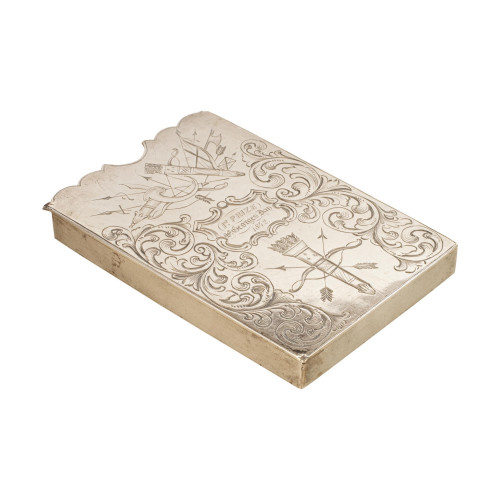
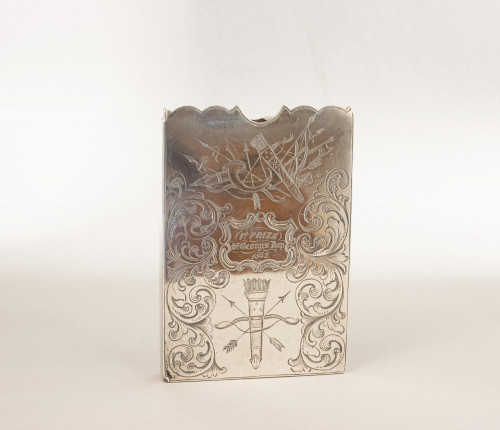
Pair Of Antique Fencing Swords
Pair Of Antique Fencing Swords
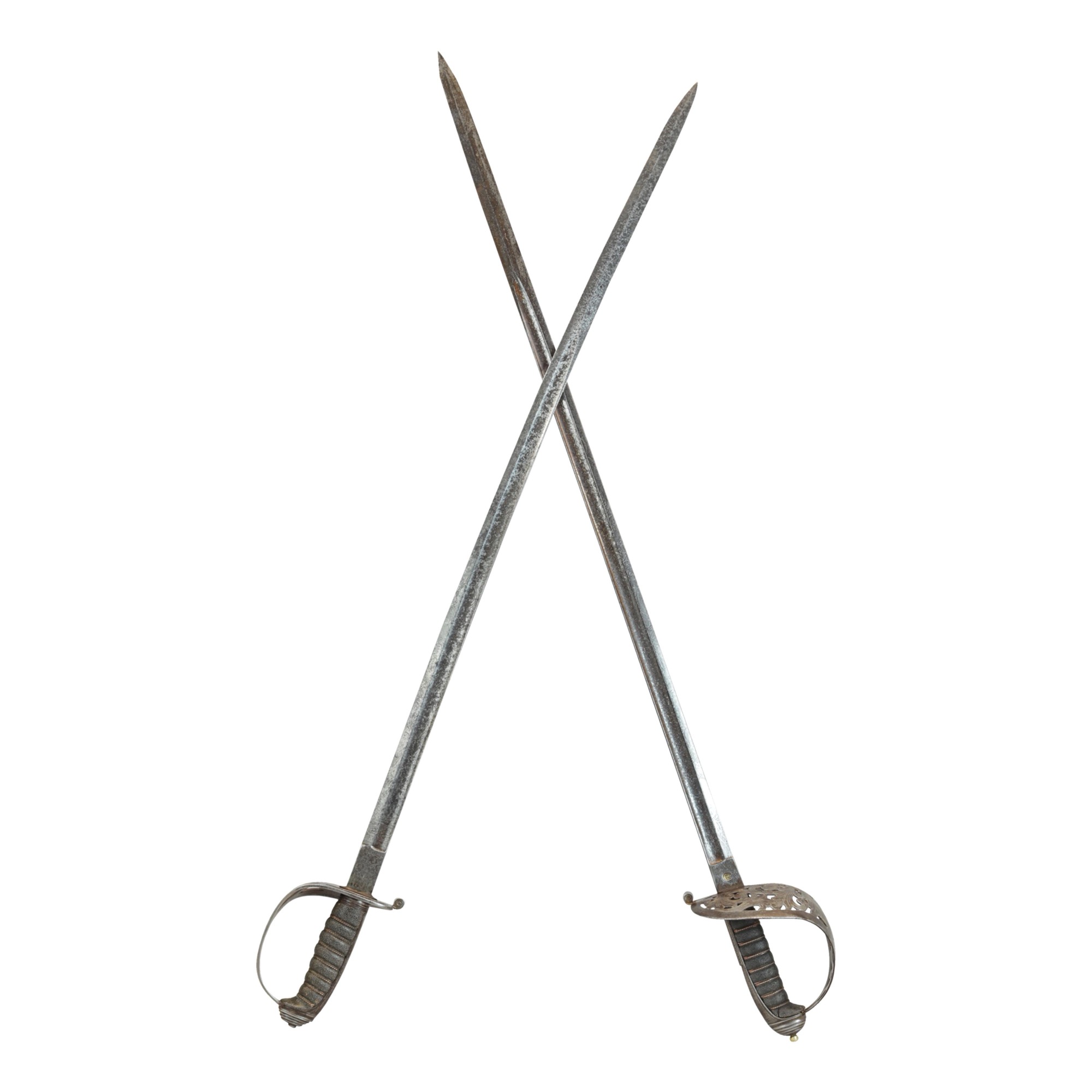
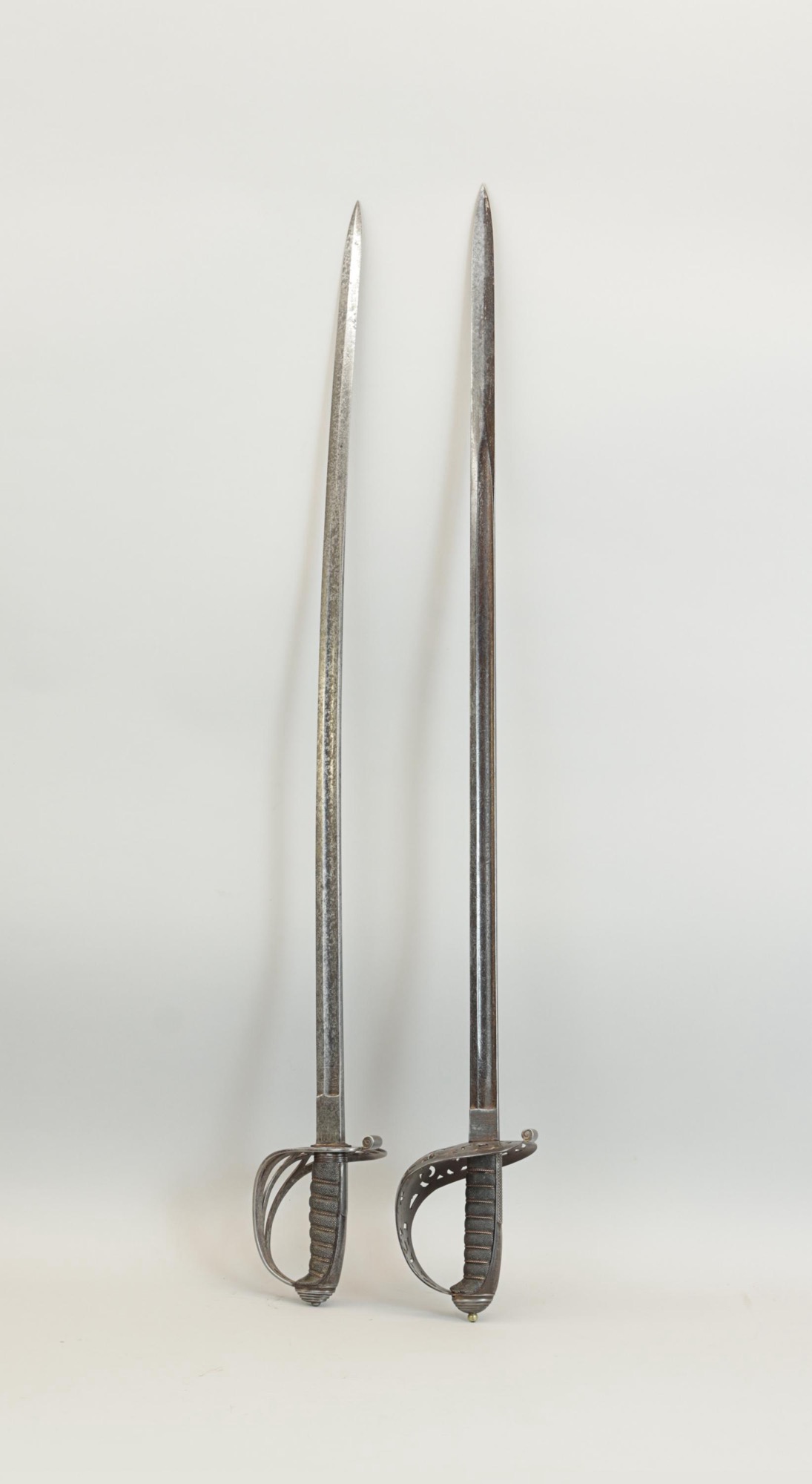
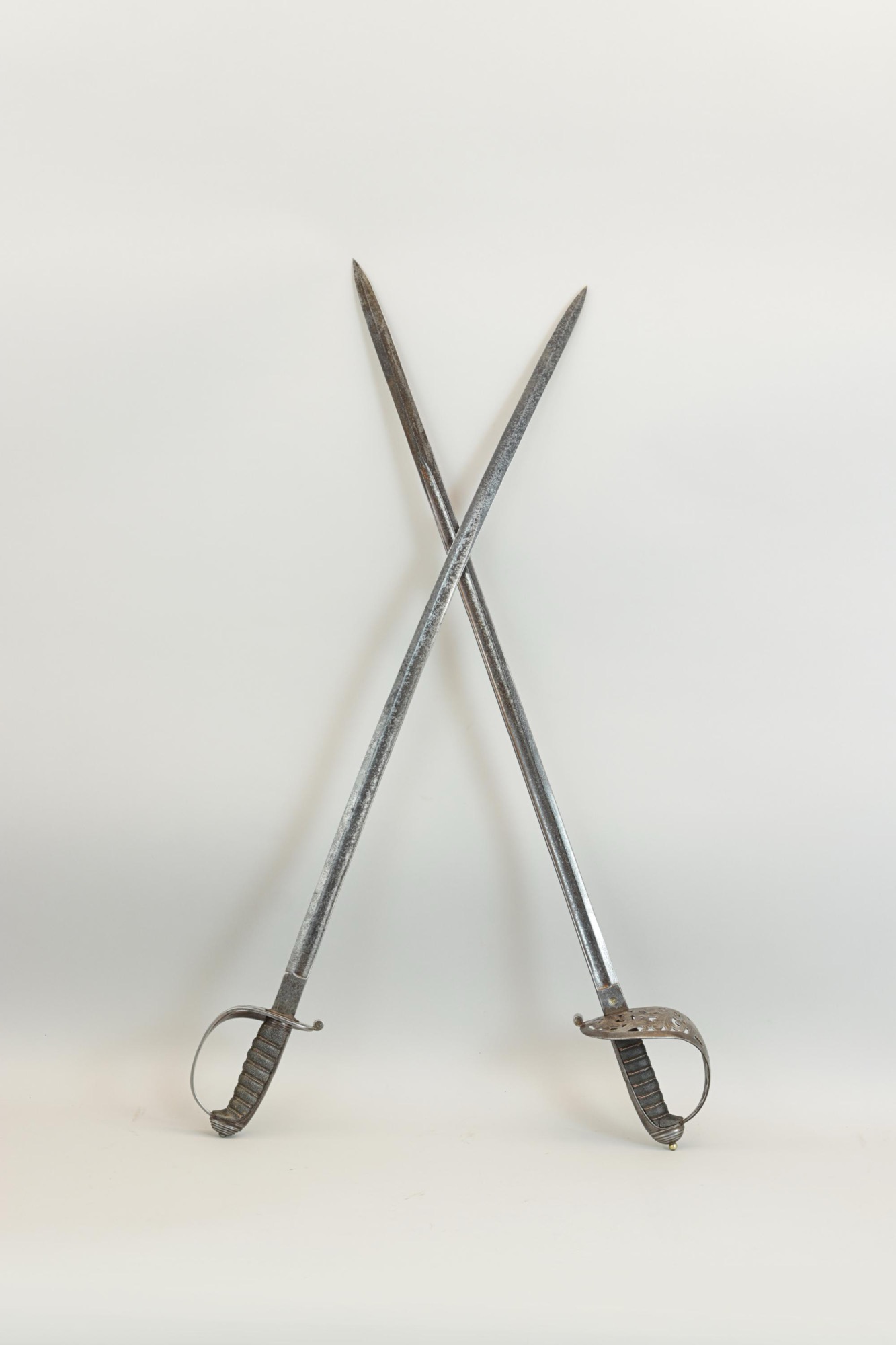
Matched Pair of Victorian British Military Dress Swords.
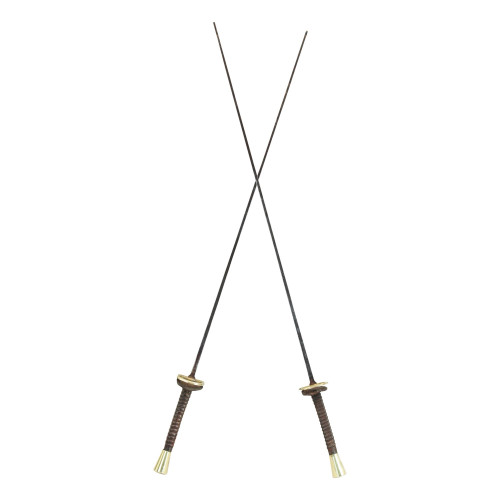
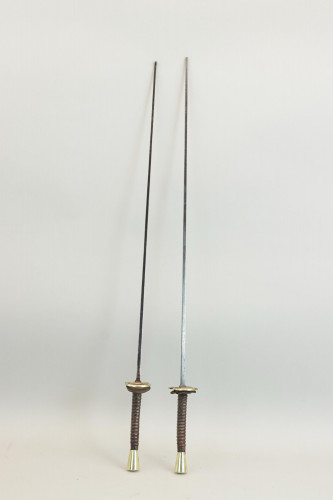
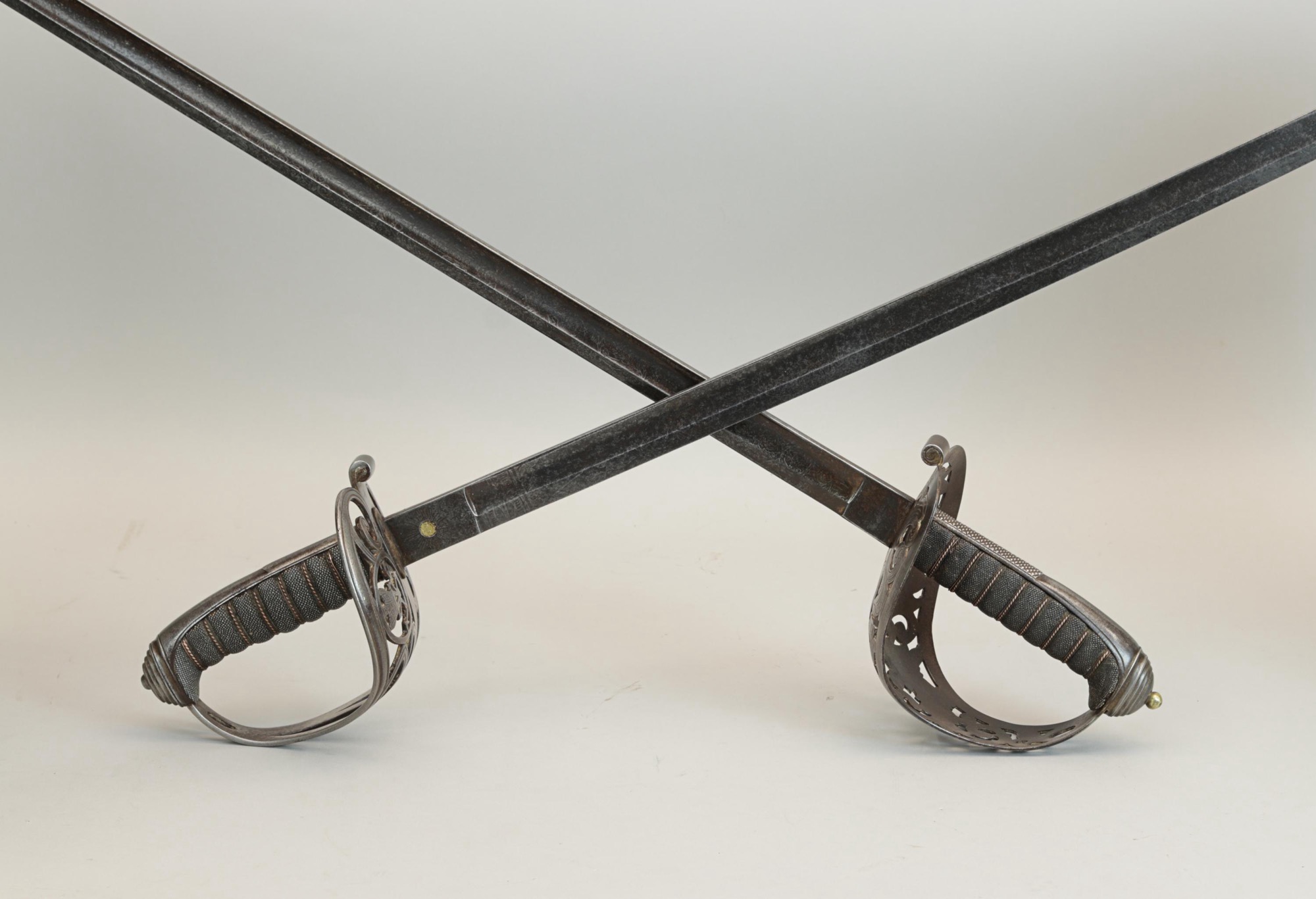
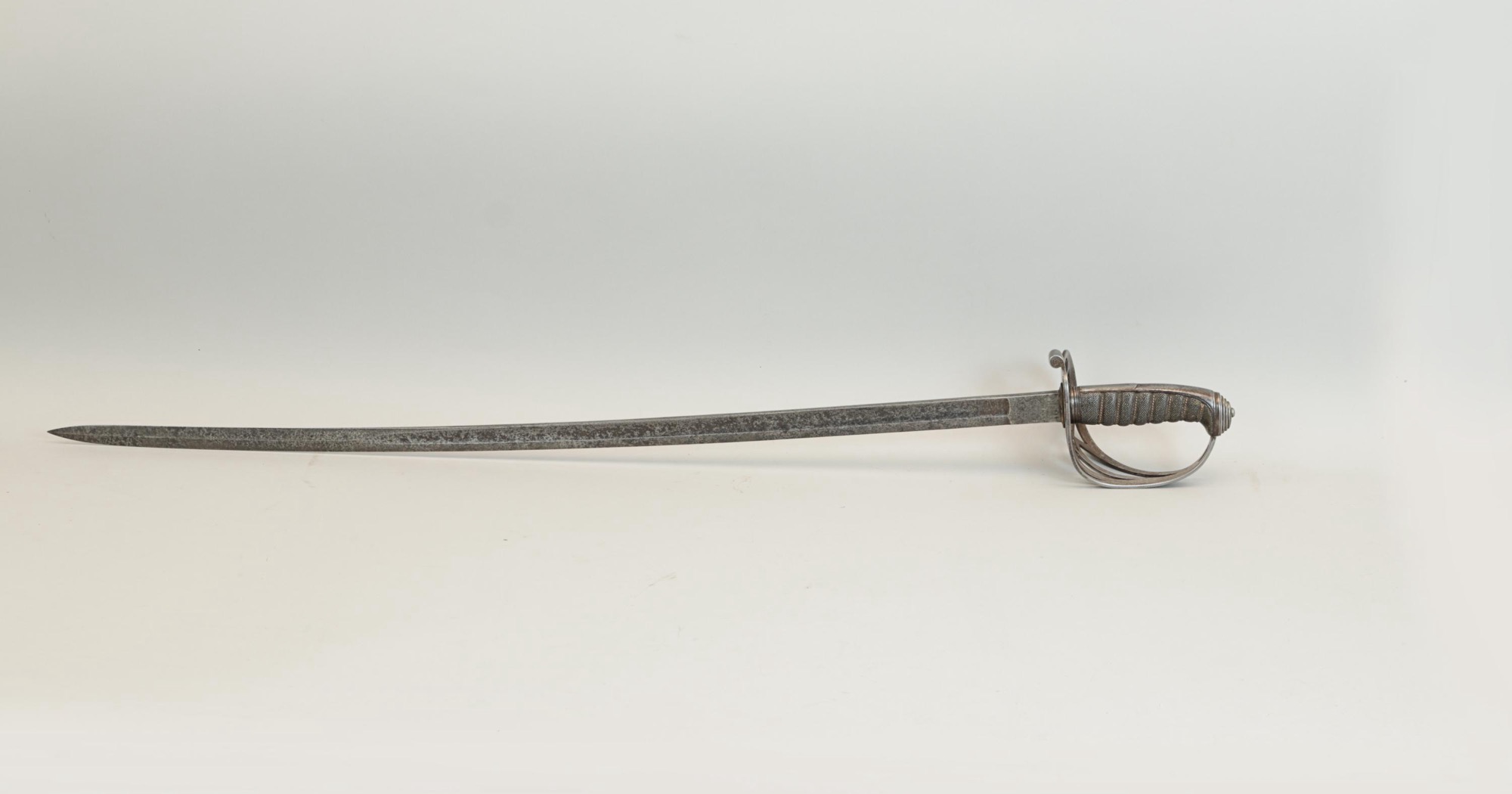
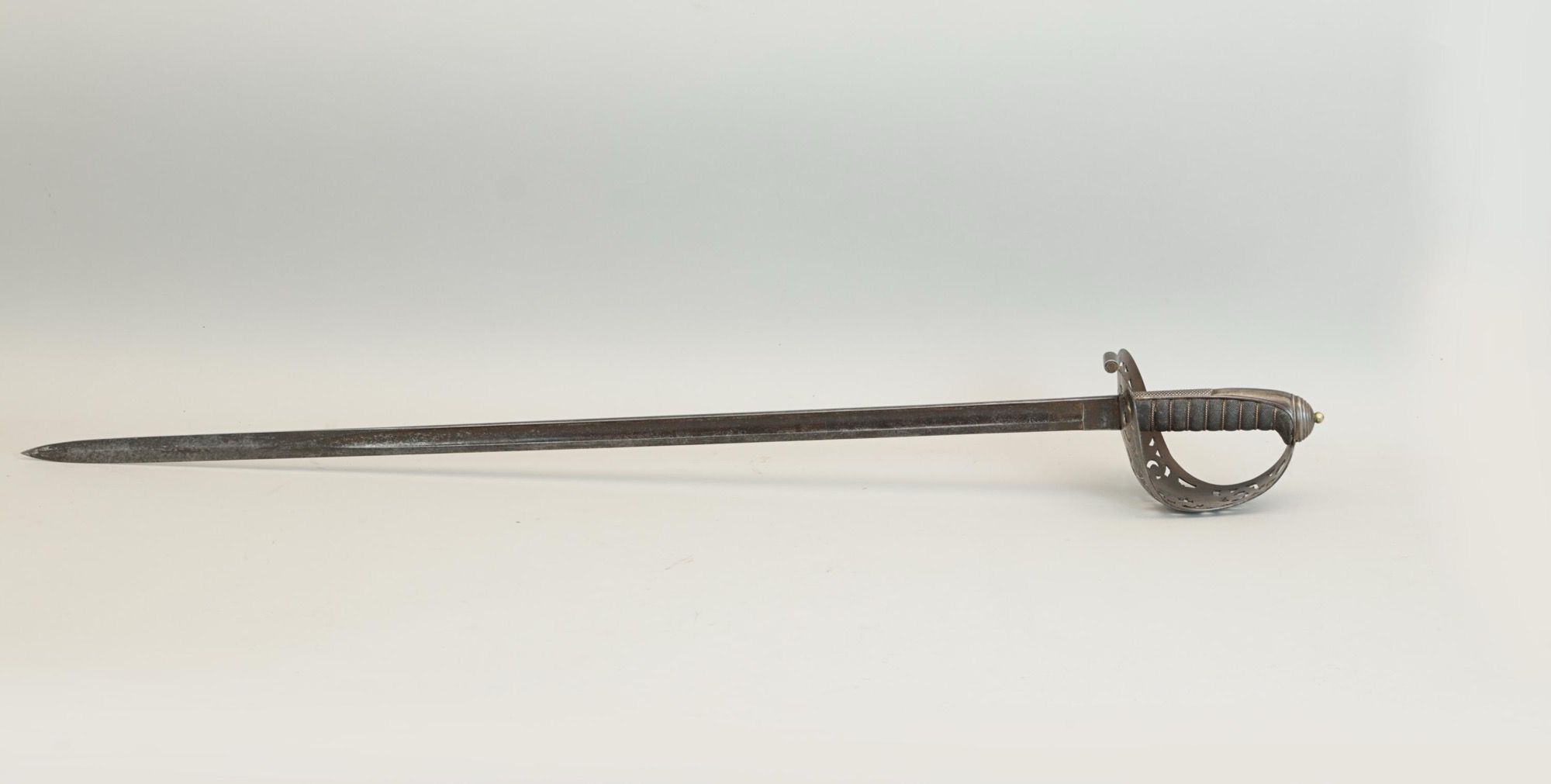
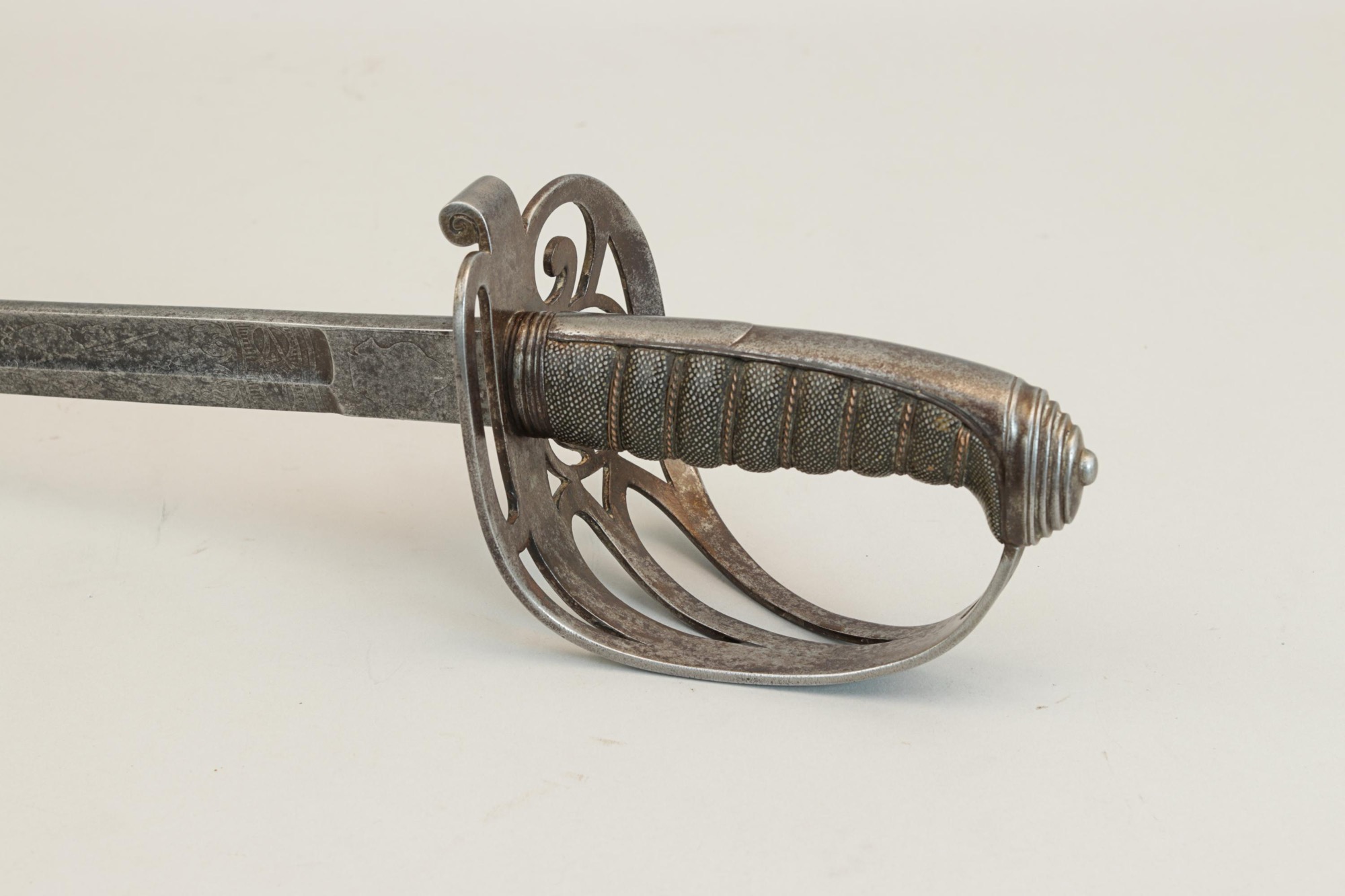
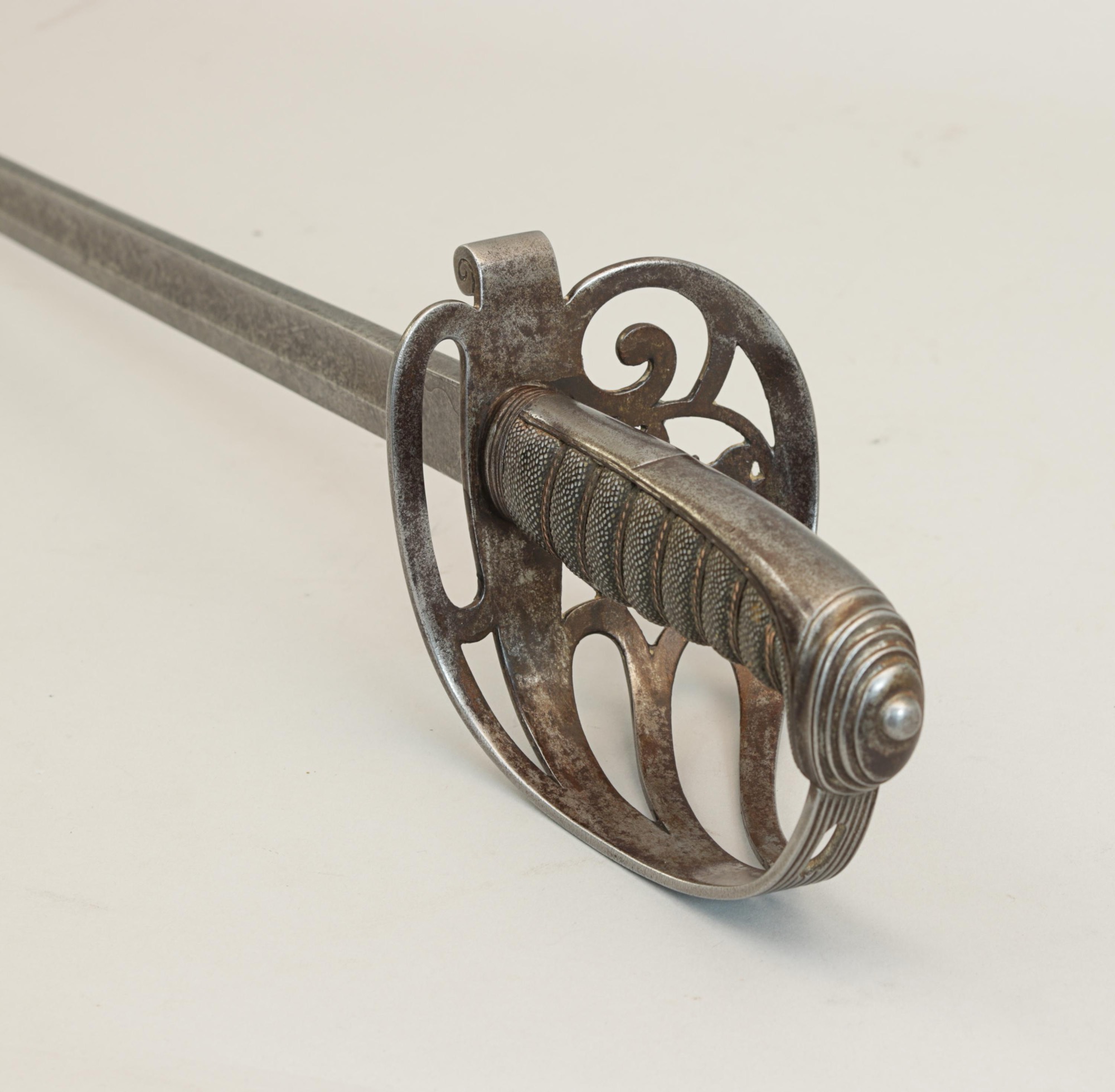
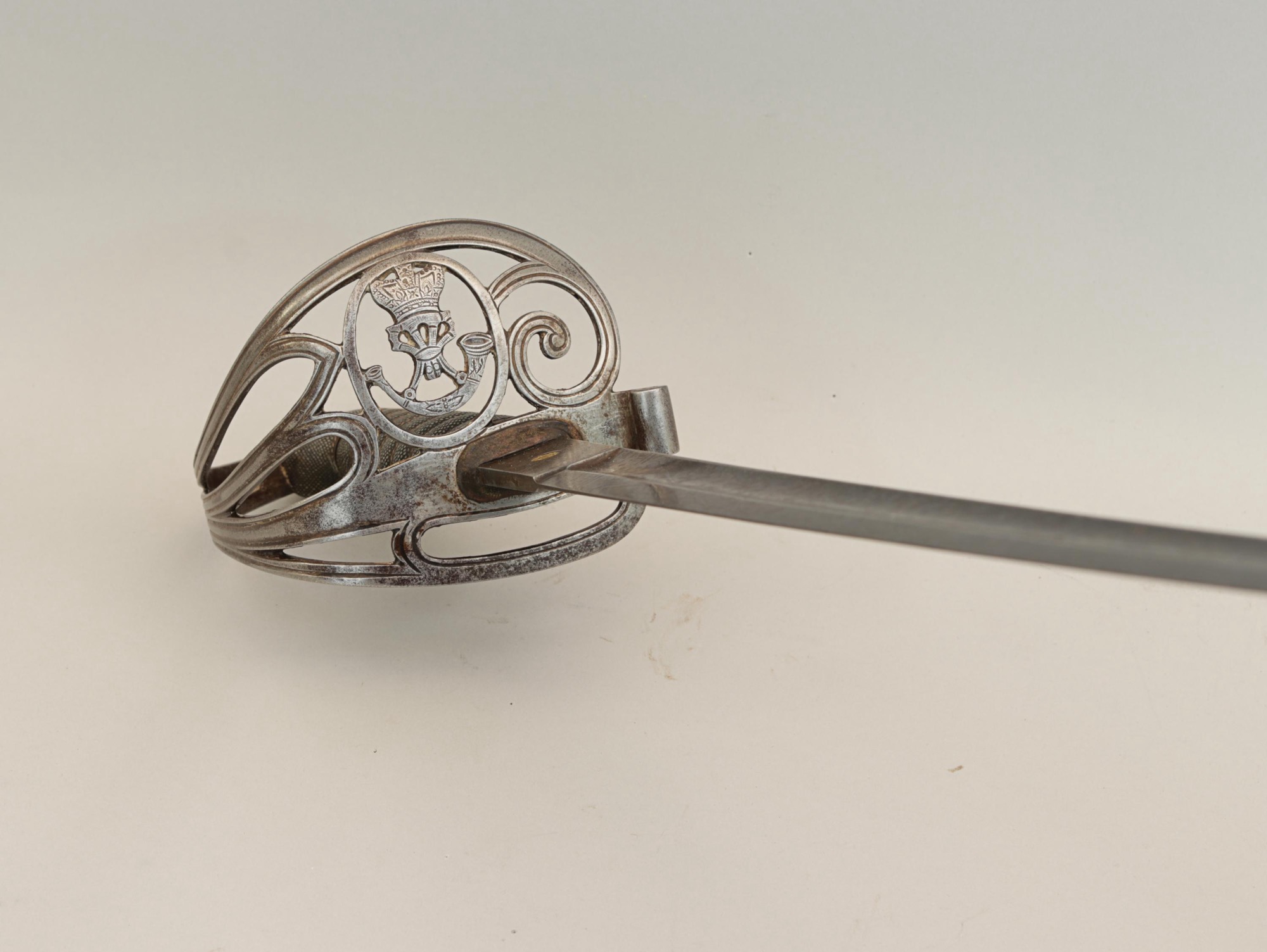
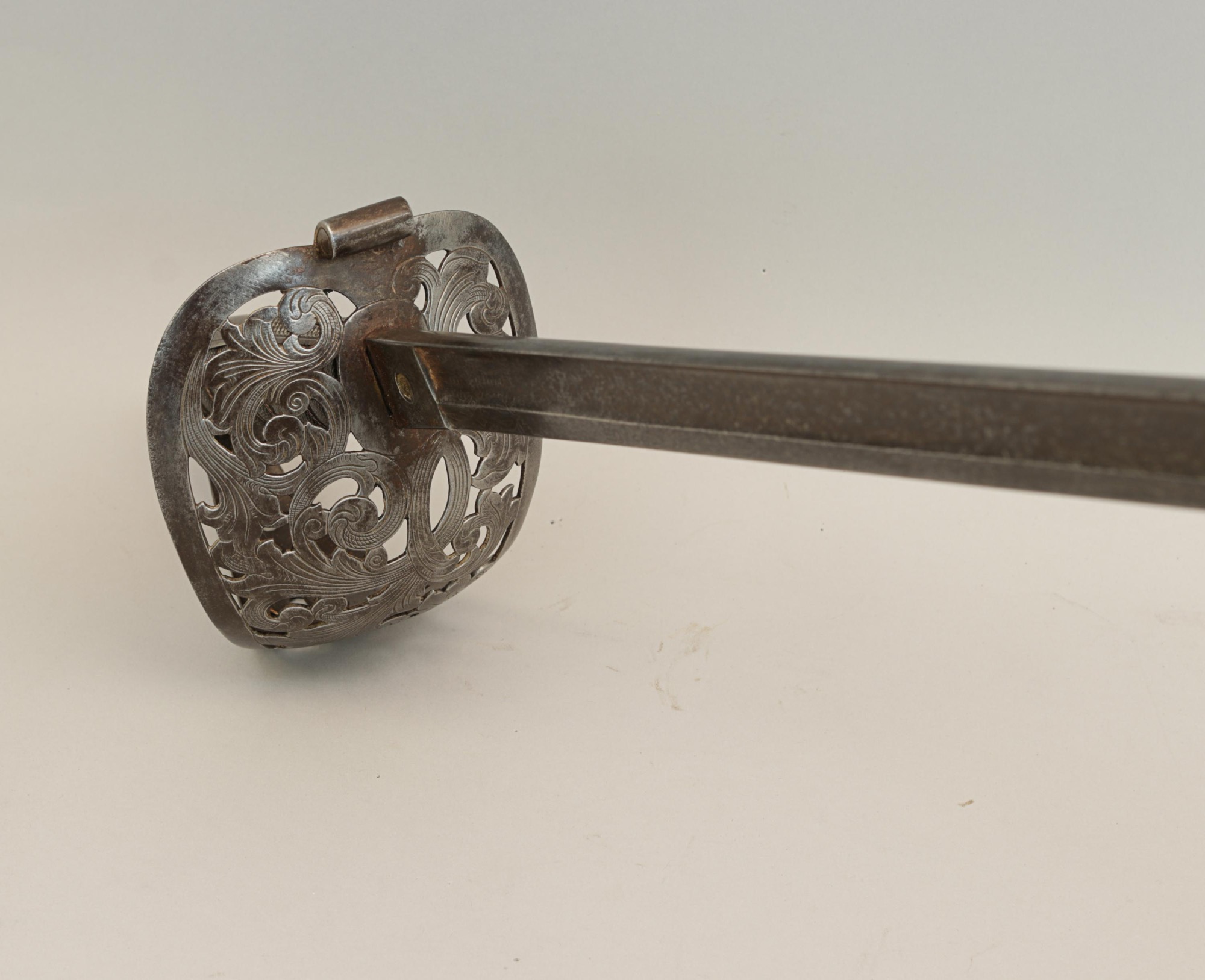
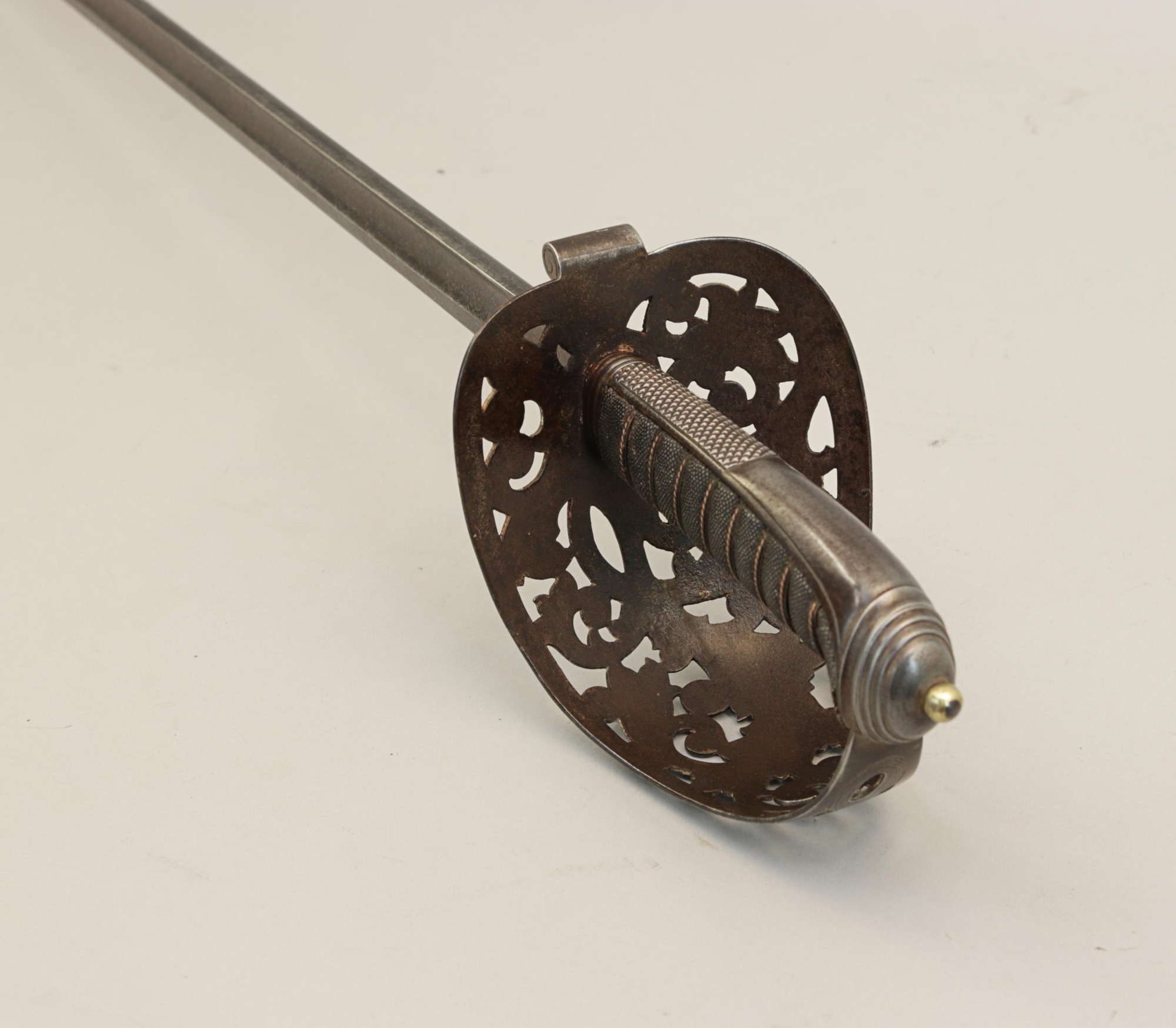
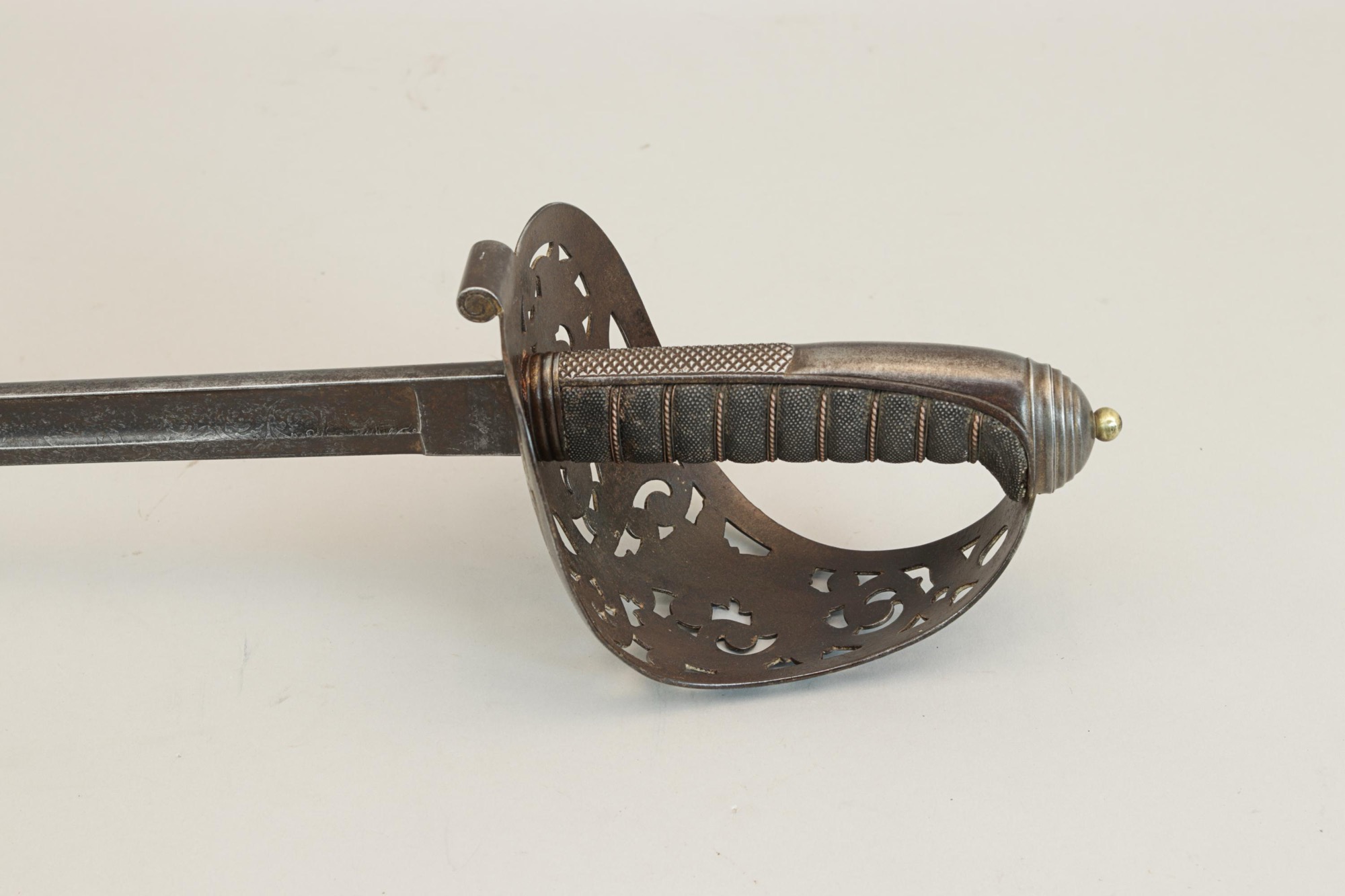
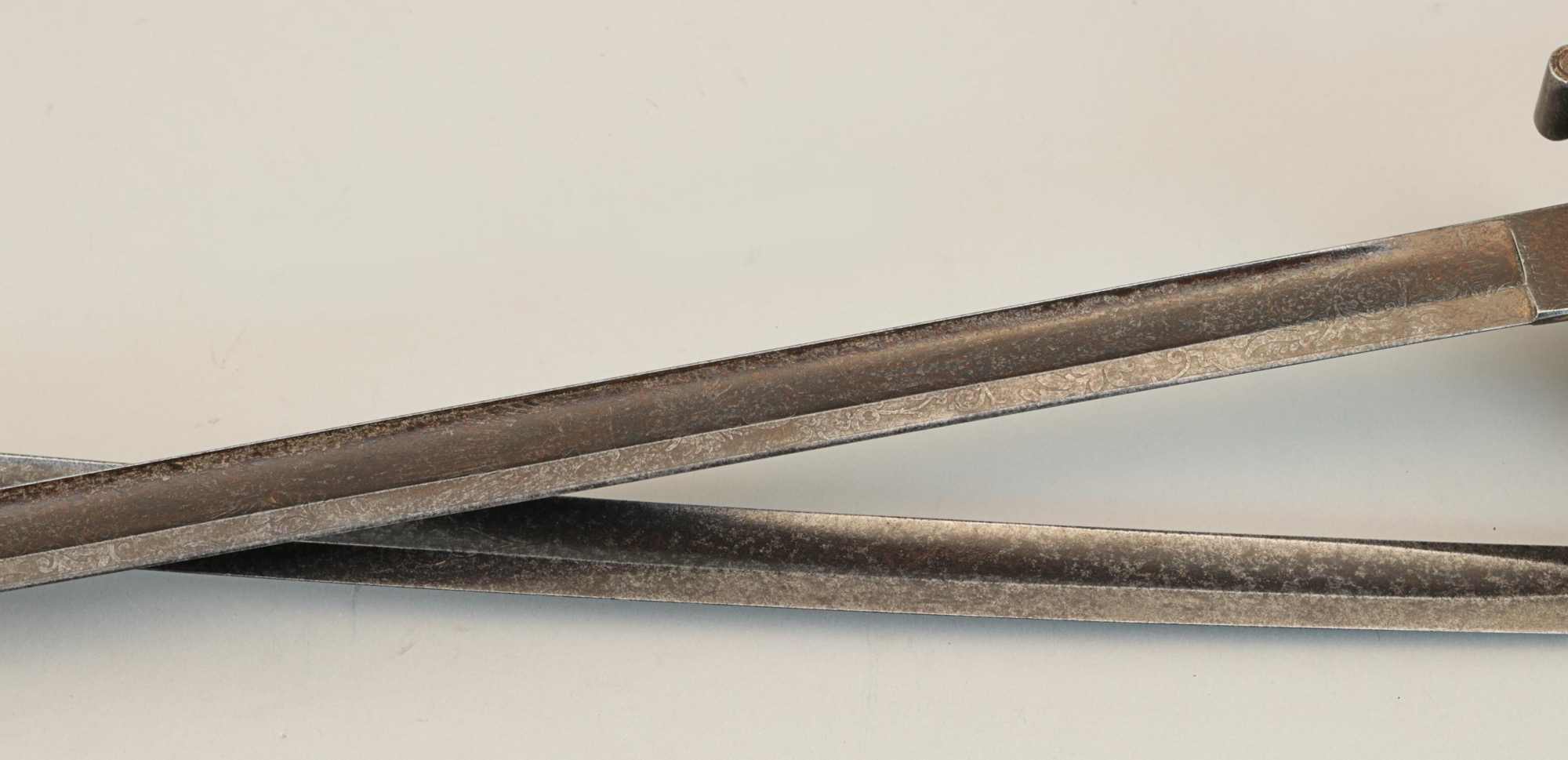
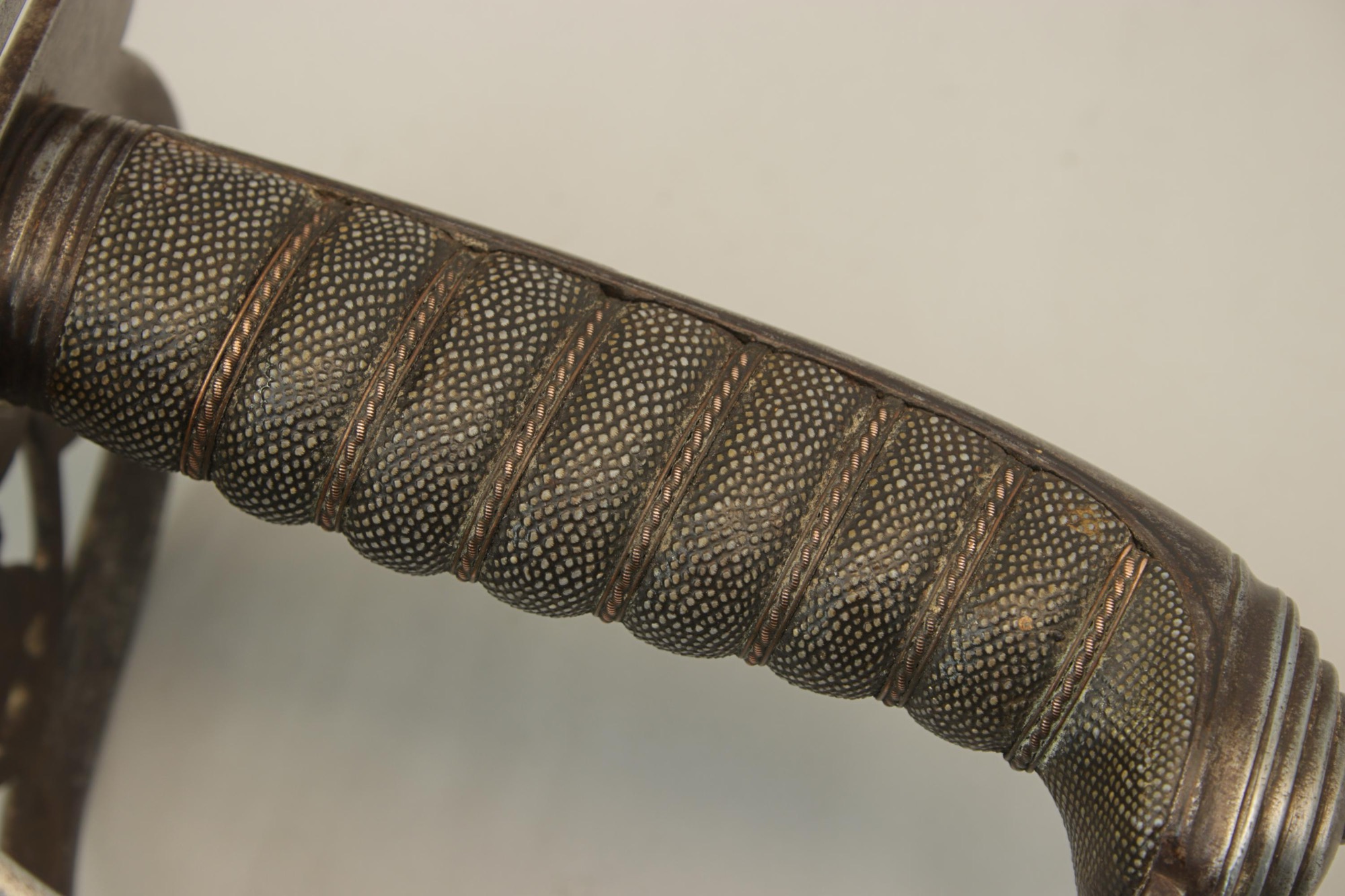
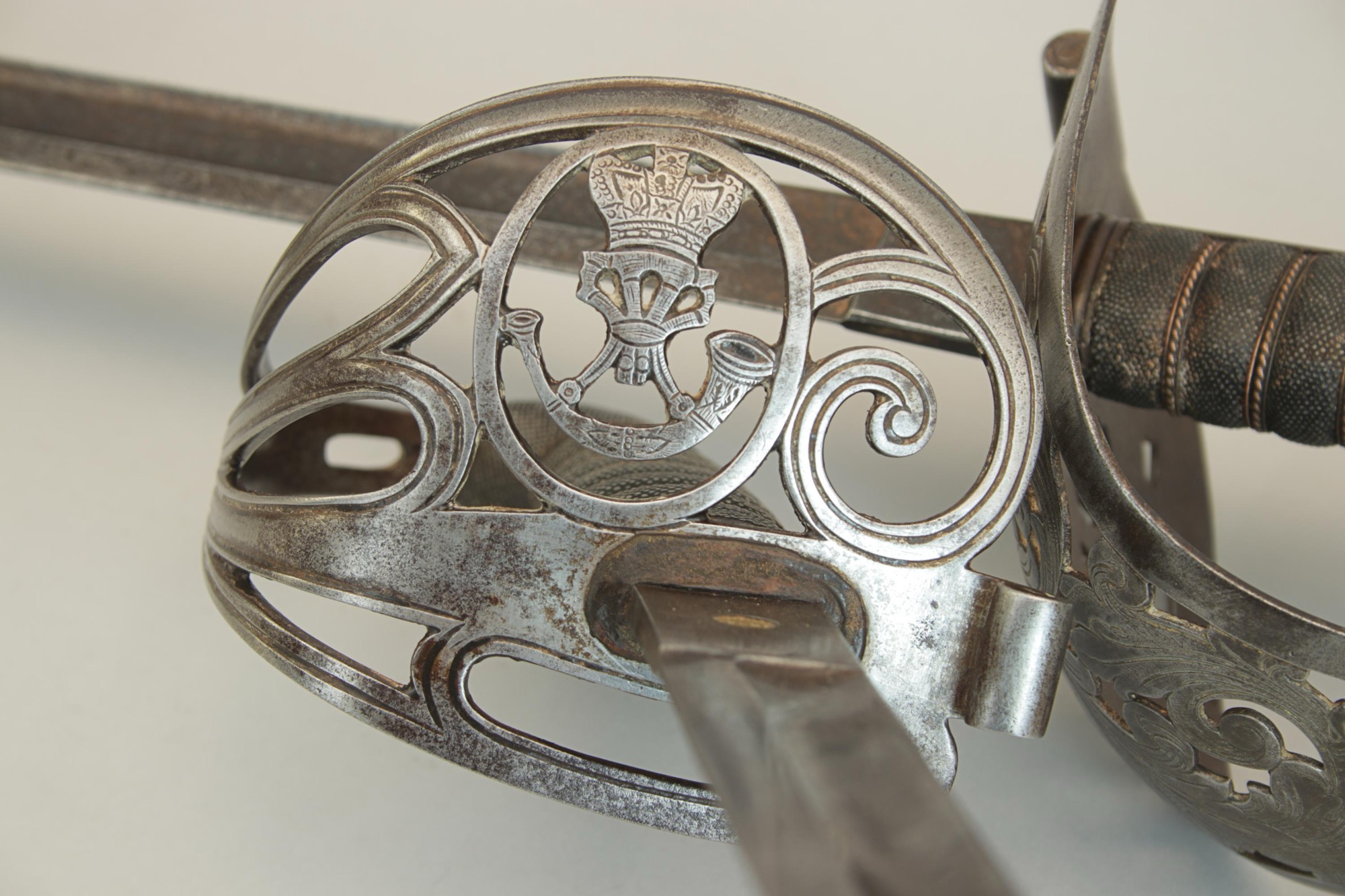
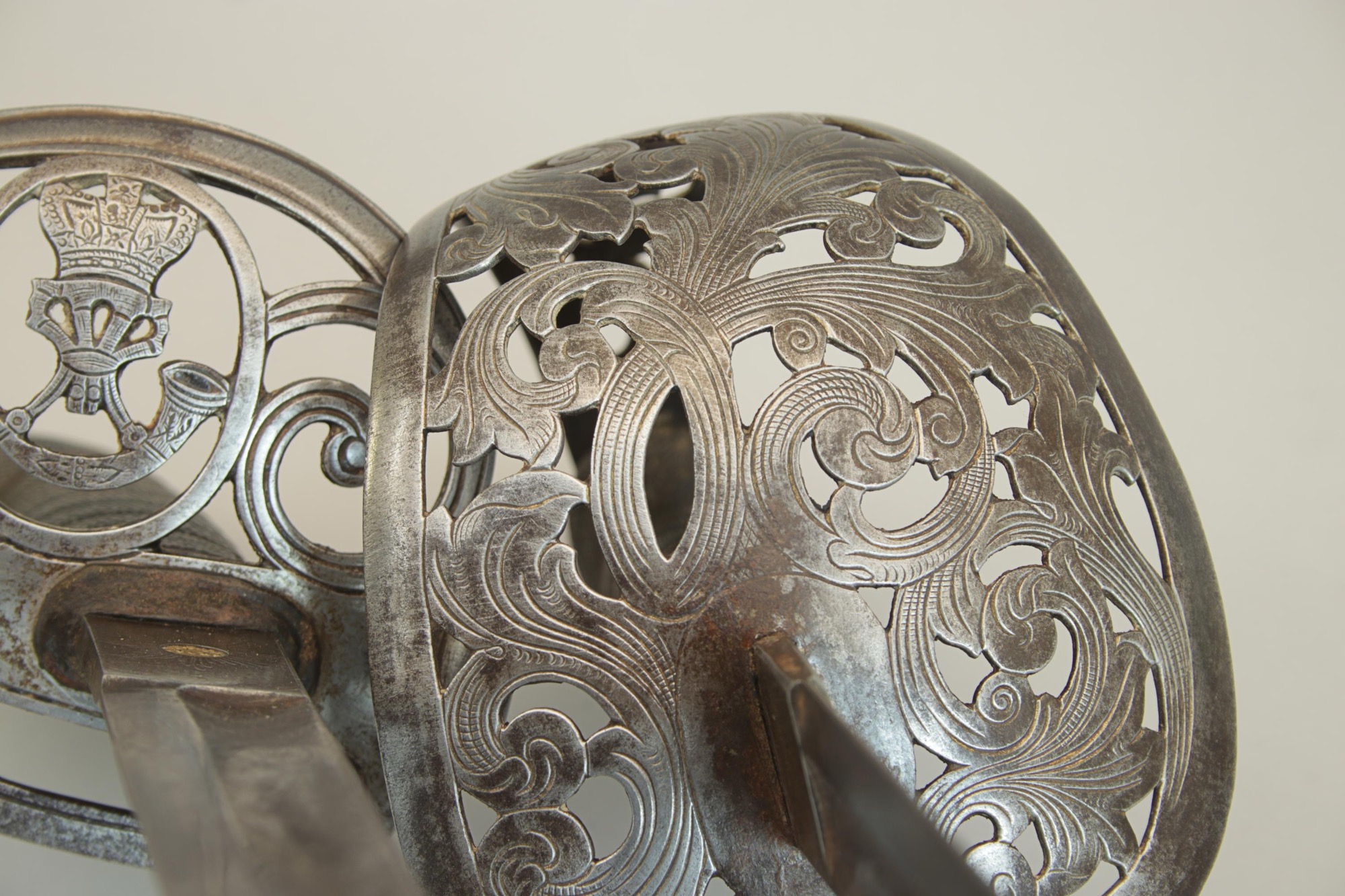
A fine and unusual matched pair of Victorian Pattern 1827/45 British officers' dress swords, with the later fullered blade form introduced in 1845. The pair are of very similar construction, each retaining a pierced steel Gothic-style half-basket guard, shagreen grip with wire binding and stepped pommel terminating in a ball finial. The two swords are particularly interesting in having contrasting blade forms: one is straight whilst the other has a pleasing slight curve. Both blades are single edged with wide fullers on both sides below a flat spine, terminating in spear points, and both retain extensive etched decoration of scrolling foliage and other Victorian ornamental motifs. Comparable Pattern 1827 Rifle Officers' swords are known with similarly elaborate floral etching extending over much of the blade.
The curved sword is etched "VOLUNTEER RIFLES" beneath a crown, while its steel guard incorporates an oval cartouche displaying a strung bugle surmounted by a Victorian crown. The combination is characteristic of the Rifle/Volunteer Rifle sword tradition, and numerous Volunteer Rifle officers purchased swords incorporating their particular corps or Volunteer designation into the blade decoration.
The corresponding inscription on the straight sword appears to read "ENGINEERS", although the worn condition of the etching makes it difficult to read.
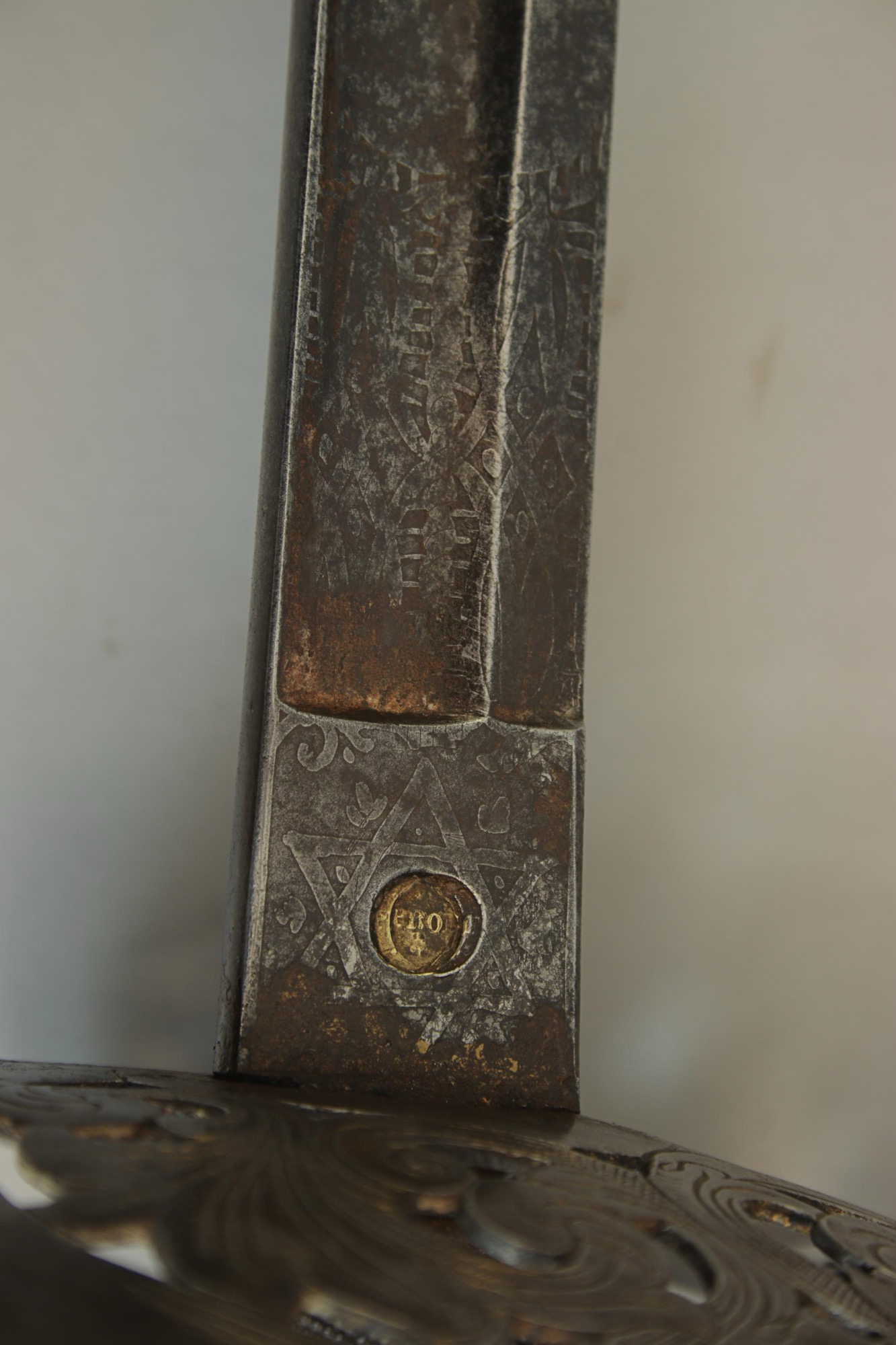
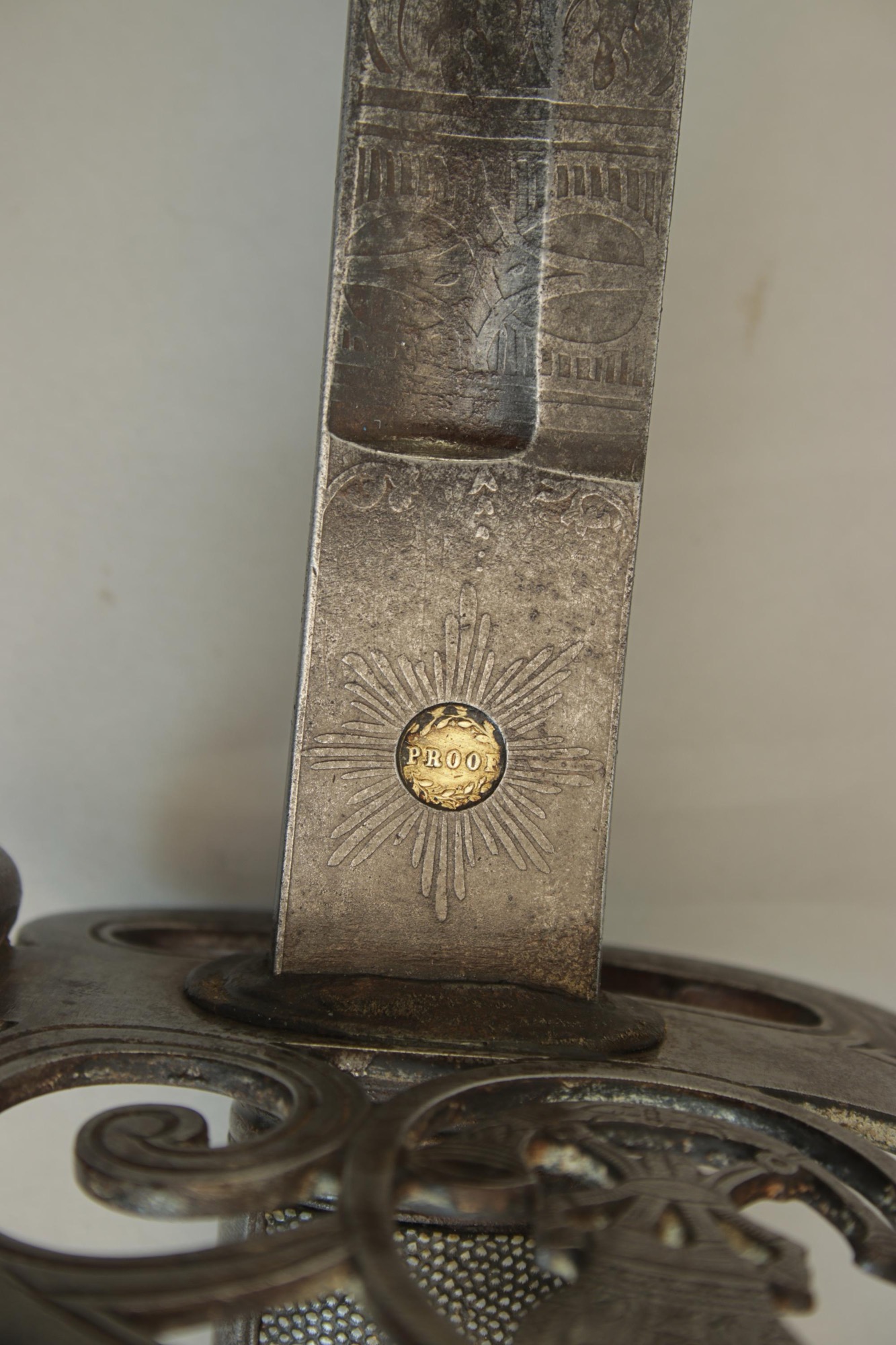
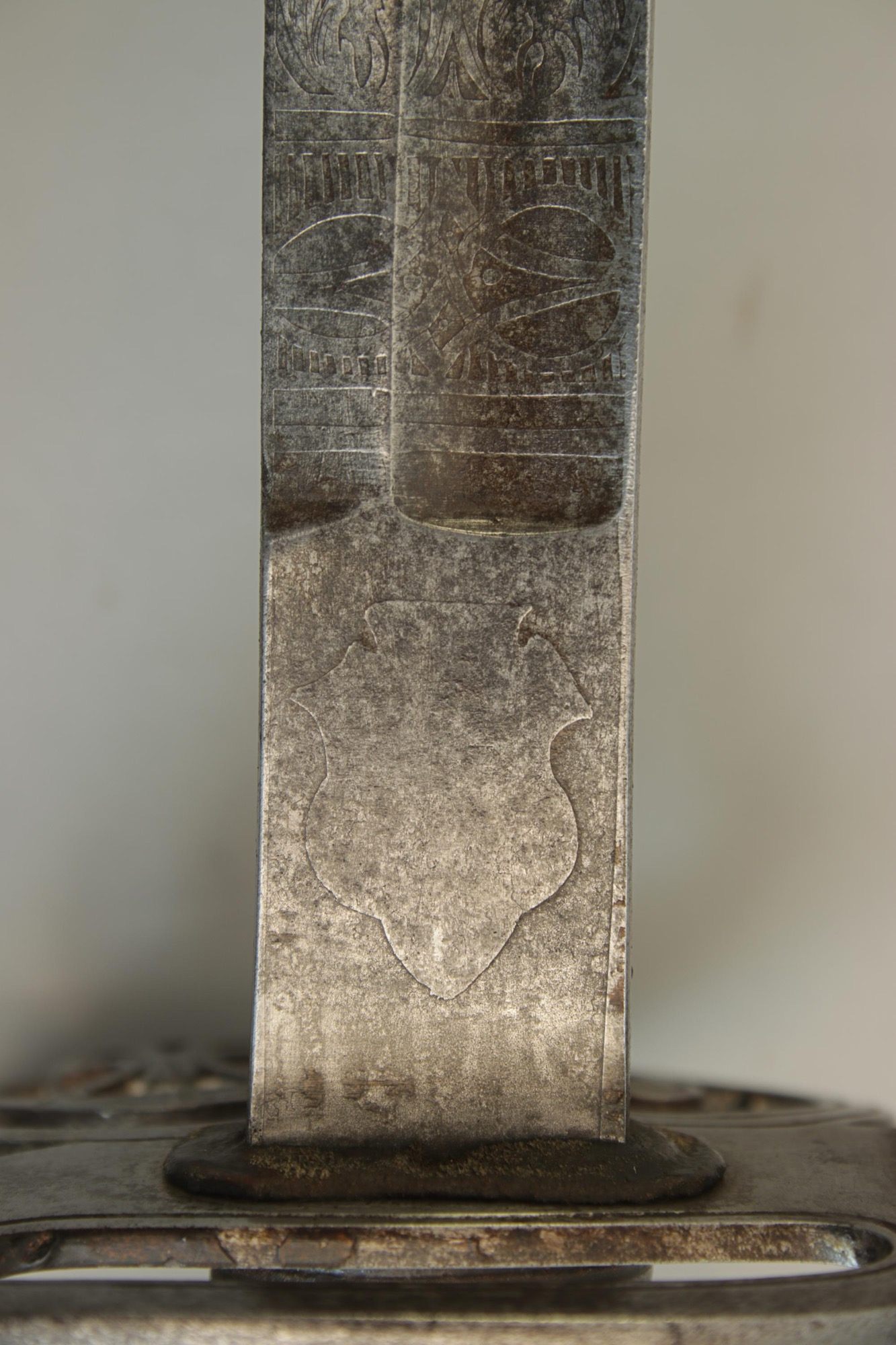
Both swords bear distinctive brass proof discs on the ricassos, but the two proof arrangements are notably different.
The straight, Firmin-marked sword carries an inset brass disc stamped "PROOF", surrounded by a prominent six-pointed interlocking-triangle proof-star. This is a particularly interesting form of proof mark, belonging to the family of proof devices strongly associated with the Wilkinson tradition and subsequently adopted or imitated by other British sword makers and retailers. Brass proof slugs became a common feature of British military sword blades during the Victorian period.
The curved Volunteer Rifles sword has a different and particularly attractive proof arrangement, with the brass "PROOF" disc surrounded by a laurel decoration and a radiating sunburst.
The contrasting proof marks are an appealing feature of the pair and provide evidence of the different commercial or manufacturing sources involved
Firmin & Sons
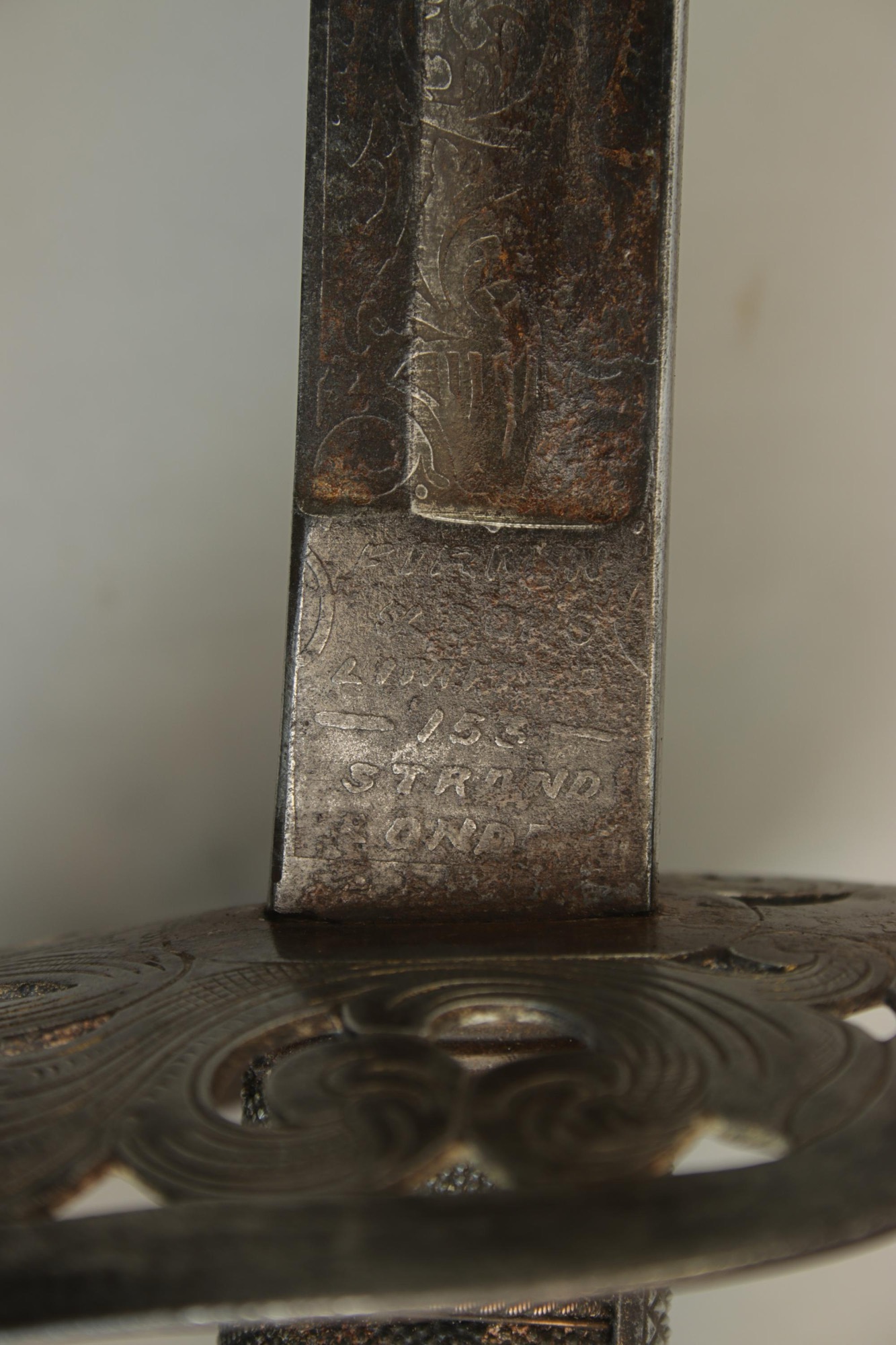
The straight sword is particularly notable for the ricasso marking: "FIRMIN & SONS LIMITED,153 STRAND, LONDON".
Firmin & Sons was one of Britain's long-established military suppliers. The firm traces its origins to 1655, initially as a button-making concern, and subsequently became involved in the manufacture and supply of military insignia, accoutrements and swords. The company's own history records that it became a public company in 1875, while surviving museum examples confirm Firmin's involvement in the retailing and supply of swords during the Victorian period.
The 153 Strand address is particularly useful in dating the present sword. Firmin & Sons used 153 Strand during the later 19th century, and examples of swords bearing the Firmin & Sons 153 Strand address are documented in museum collections. The firm subsequently moved its London premises to St Martin's Lane in 1894.
The "Limited" form of the firm's name therefore places this sword firmly in the later Victorian period, and a date of approximately 1876 - 1894 is a reasonable attribution.
Both swords retain their original-looking hilts, which are firm and secure, with the pierced steel guards, shagreen-covered grips, wire bindings and stepped pommels all displaying attractive age and patina.
The deeply etched blades retain a considerable amount of their original decoration, although both show age-related wear, surface marking and areas of oxidation, discolouration commensurate with their age. The etching remains sufficiently clear to appreciate the elaborate Victorian decoration and inscriptions.
Both swords have excellent display presence, particularly when shown together, and the contrasting straight and slightly curved blades make an attractive comparison between two variations of the Victorian British military sword.
Neither sword is accompanied by its scabbard.
The combination of two closely related swords with different blade profiles, inscriptions and proof-mark arrangements, together with the surviving Firmin & Sons retail marking, makes this an appealing pair of Victorian British military swords.
Dimensions:
1900-1949
Victorian
Steel
Great sound
RELATED ITEMS