
Vintage Display Of Archery Bows
Vintage Display Of Archery Bows
31199
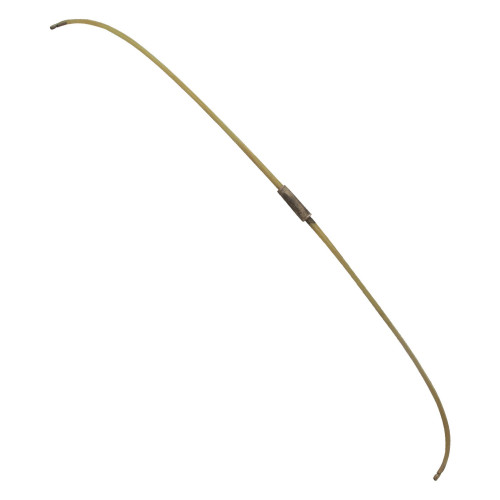
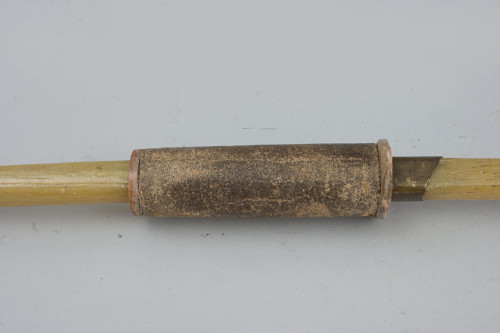
Longbow By Muir
31199 Muir,
L. 63 W. 27, Olive Green grip, Yew wood, C. 1890
Collection of Longbows.
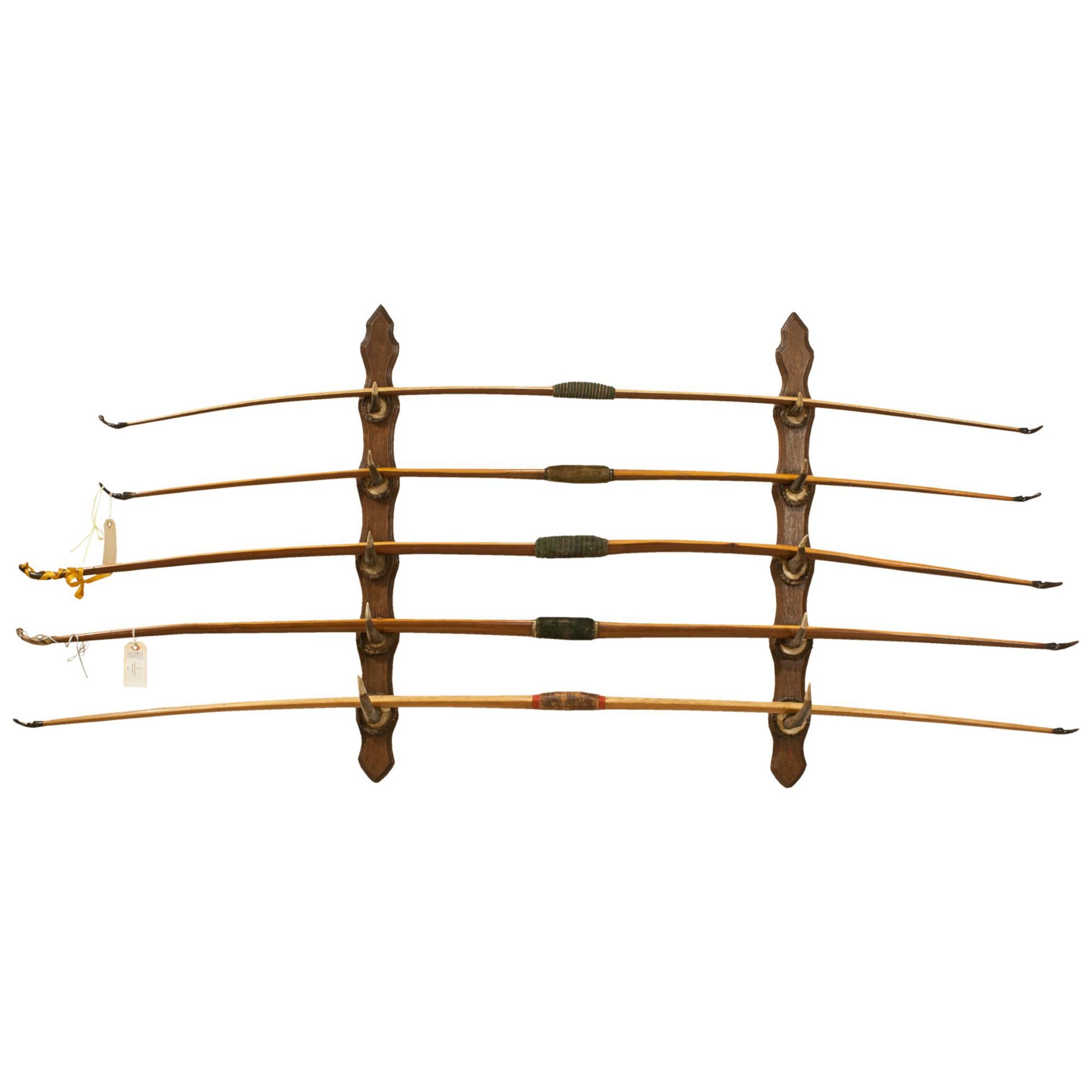
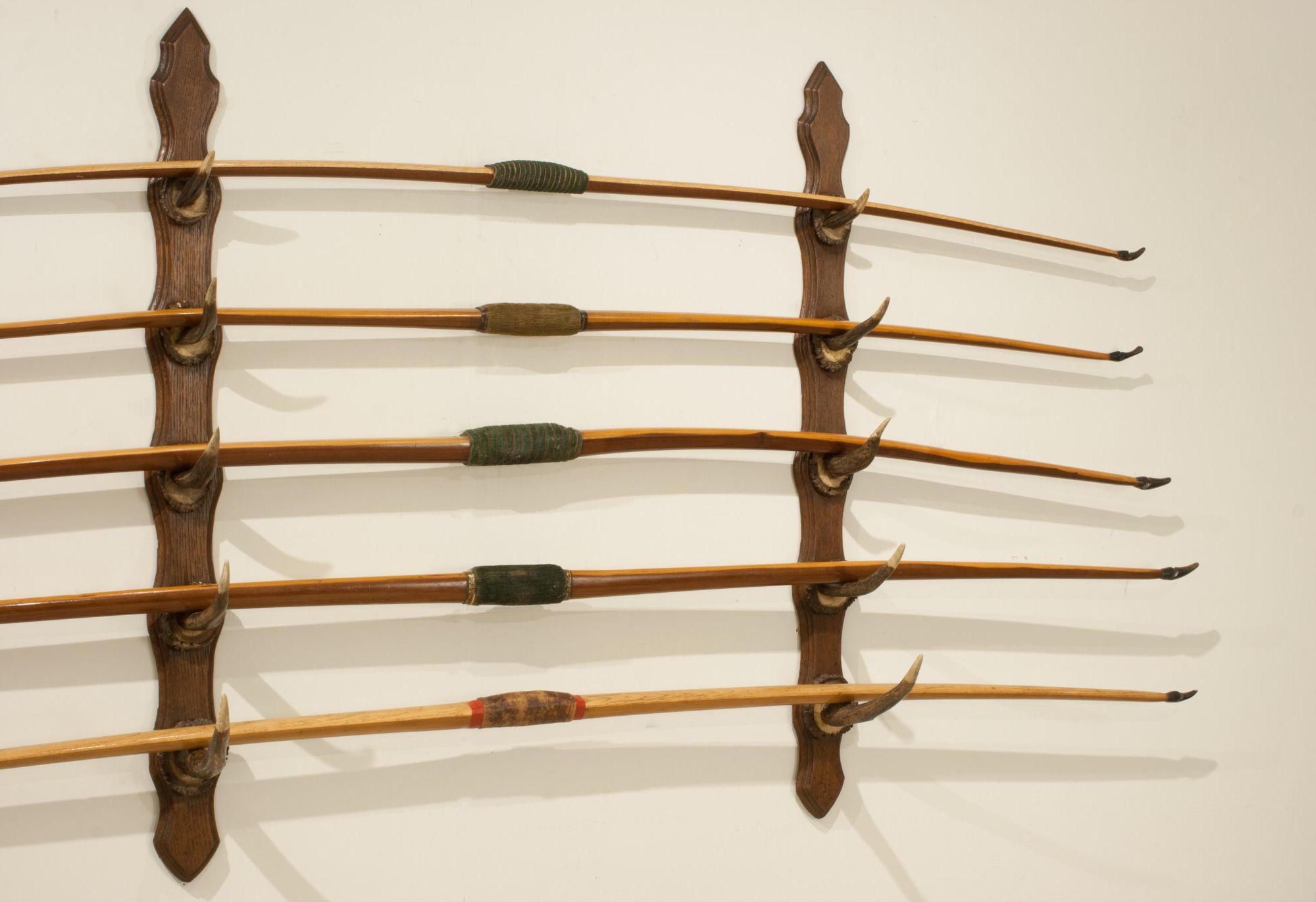
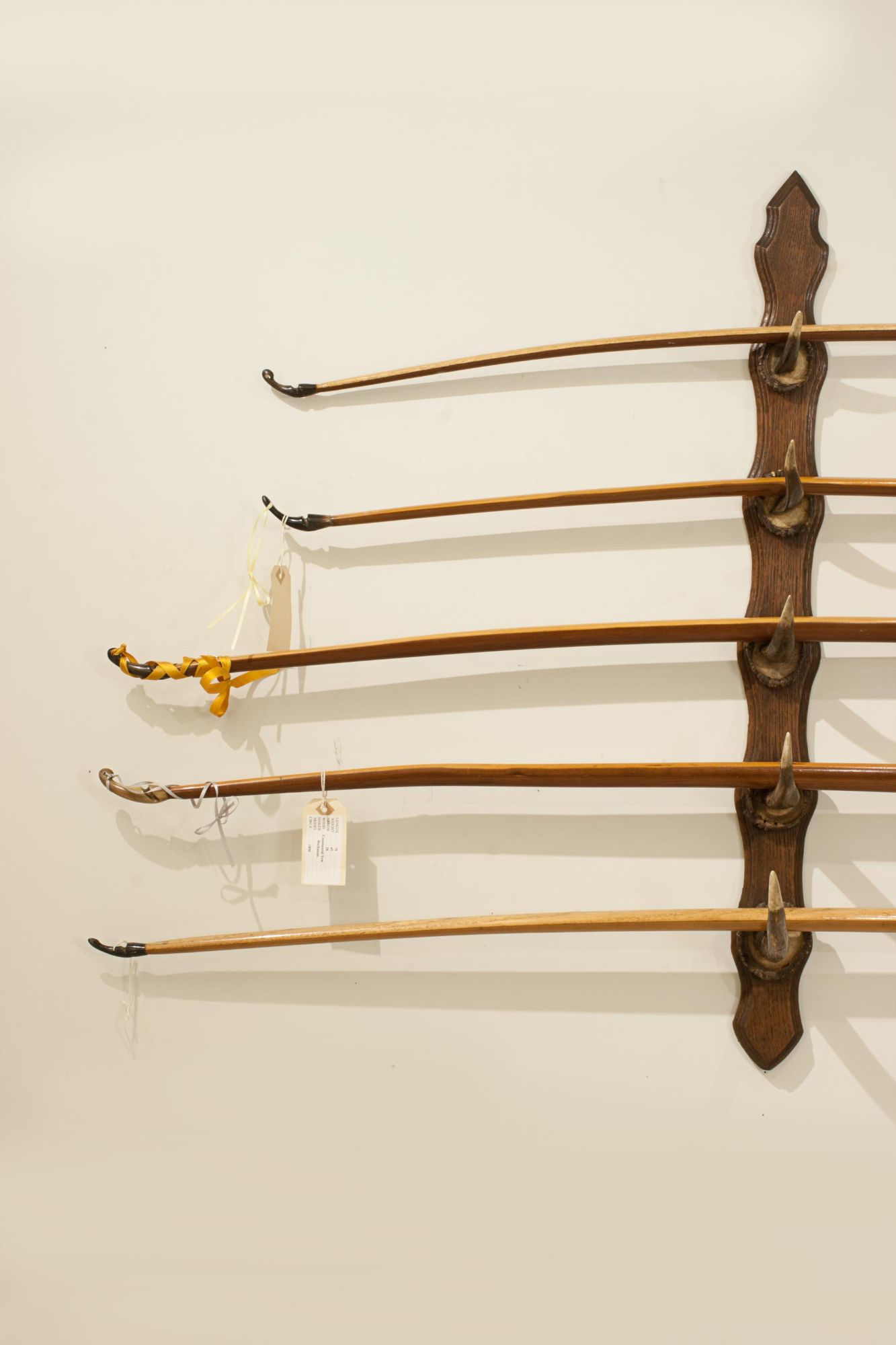
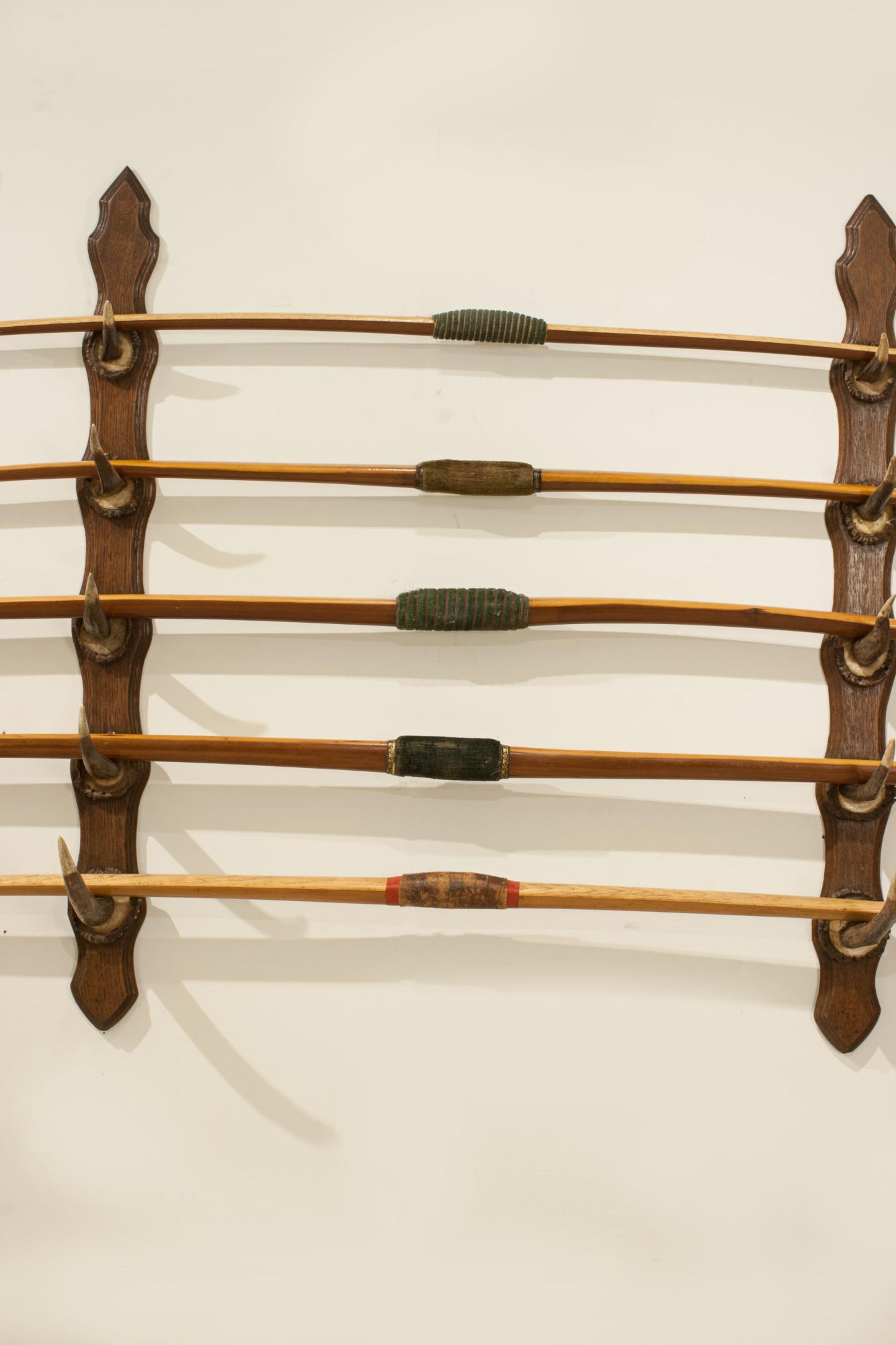
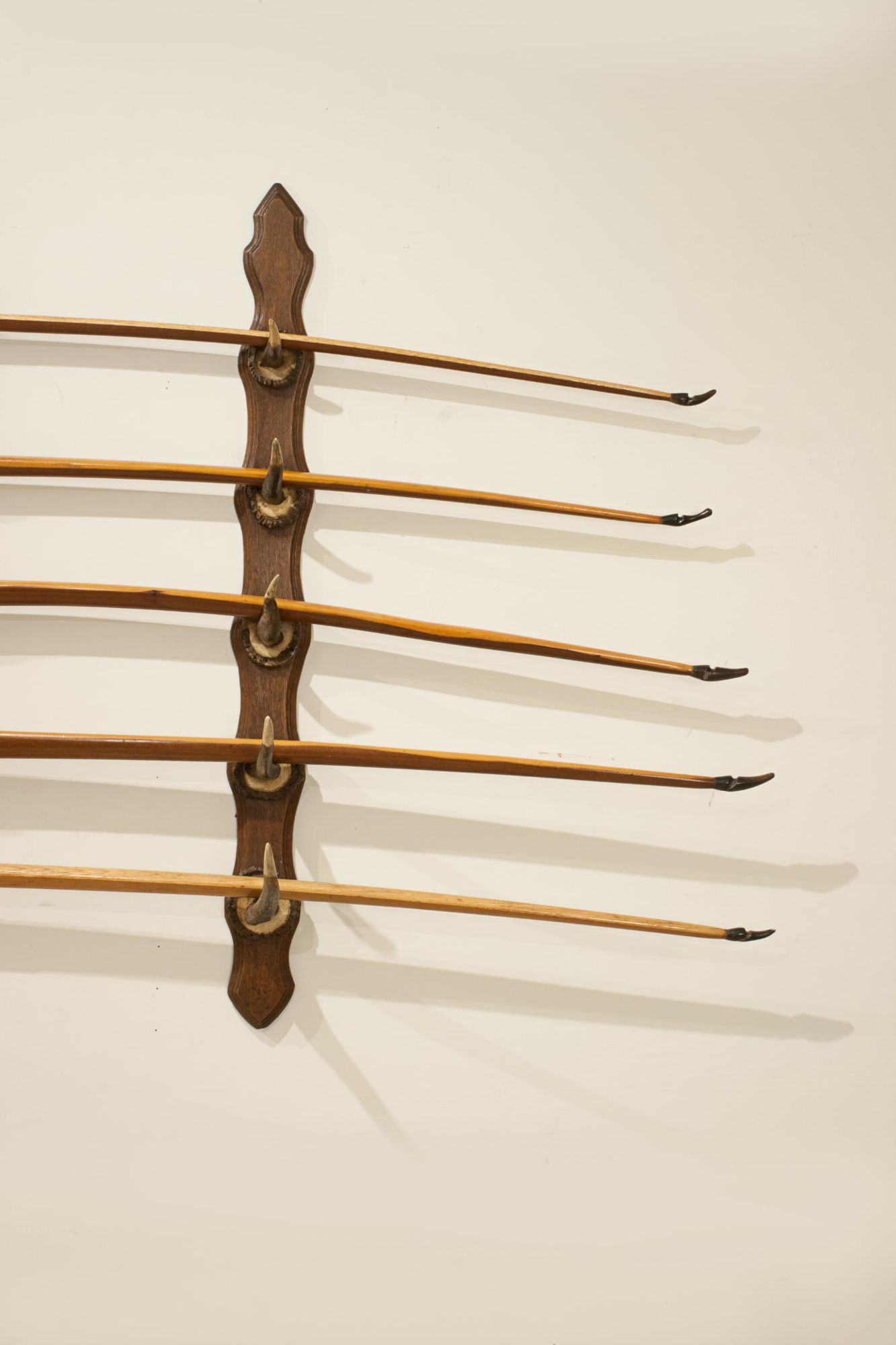
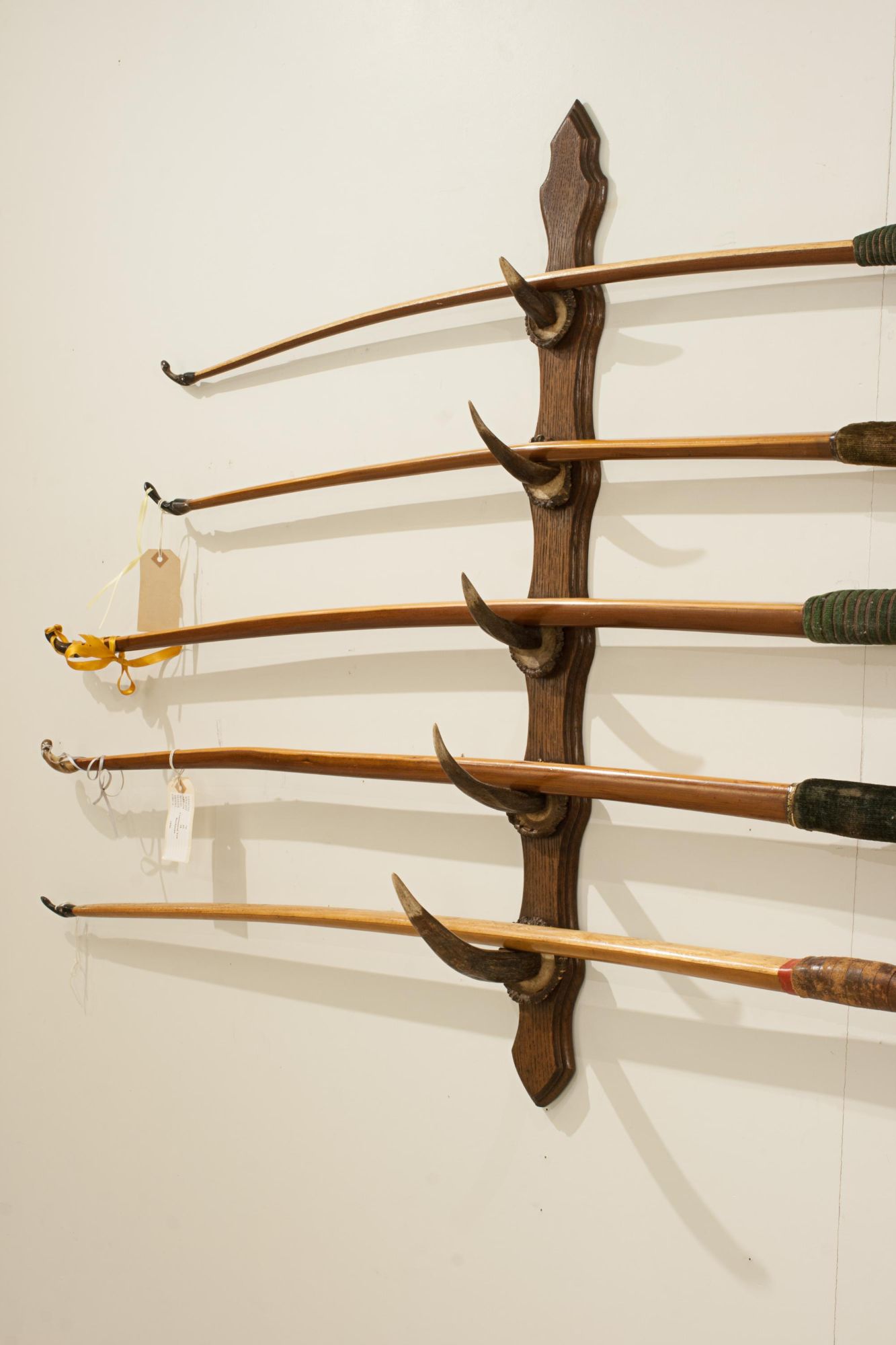
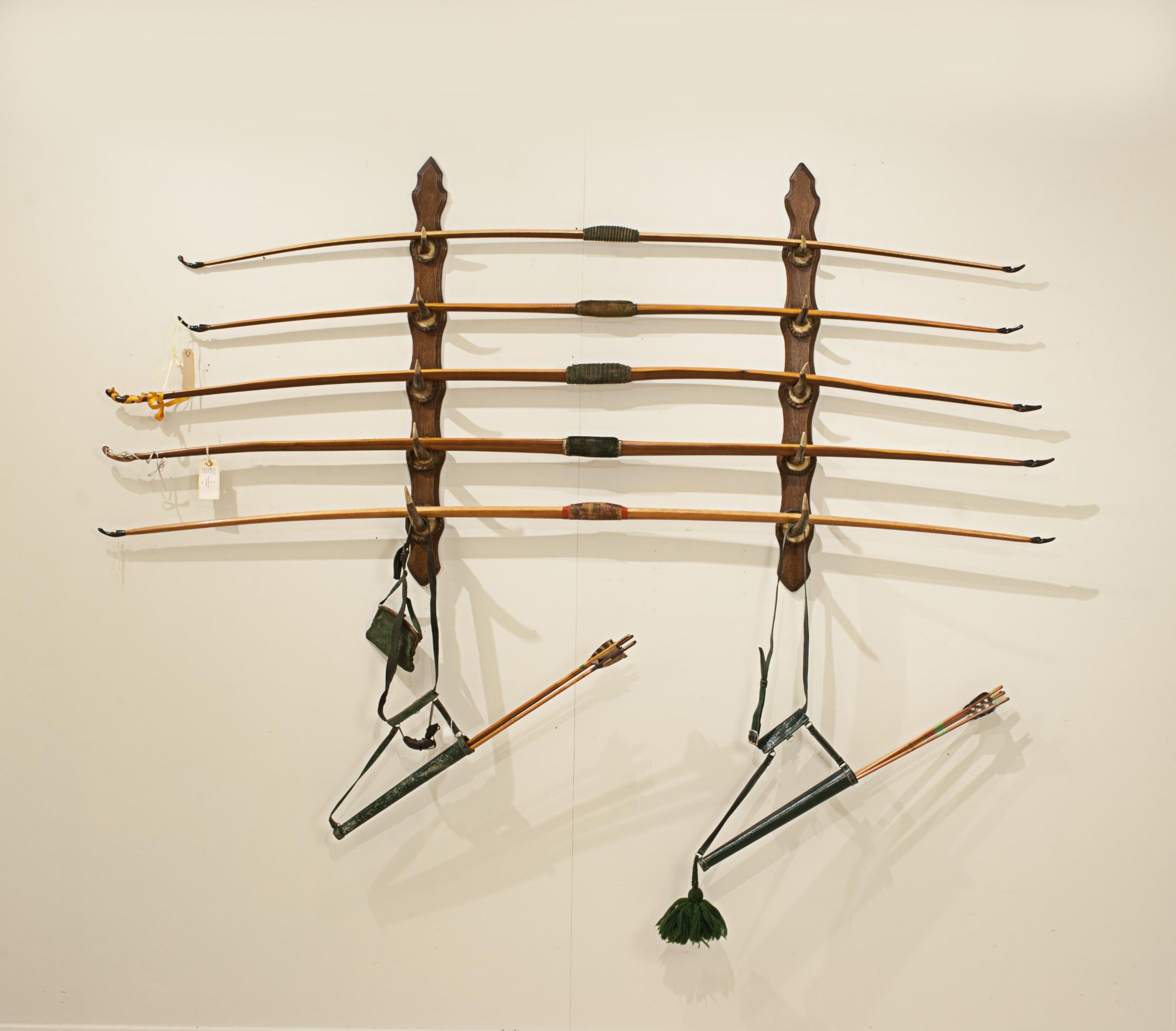
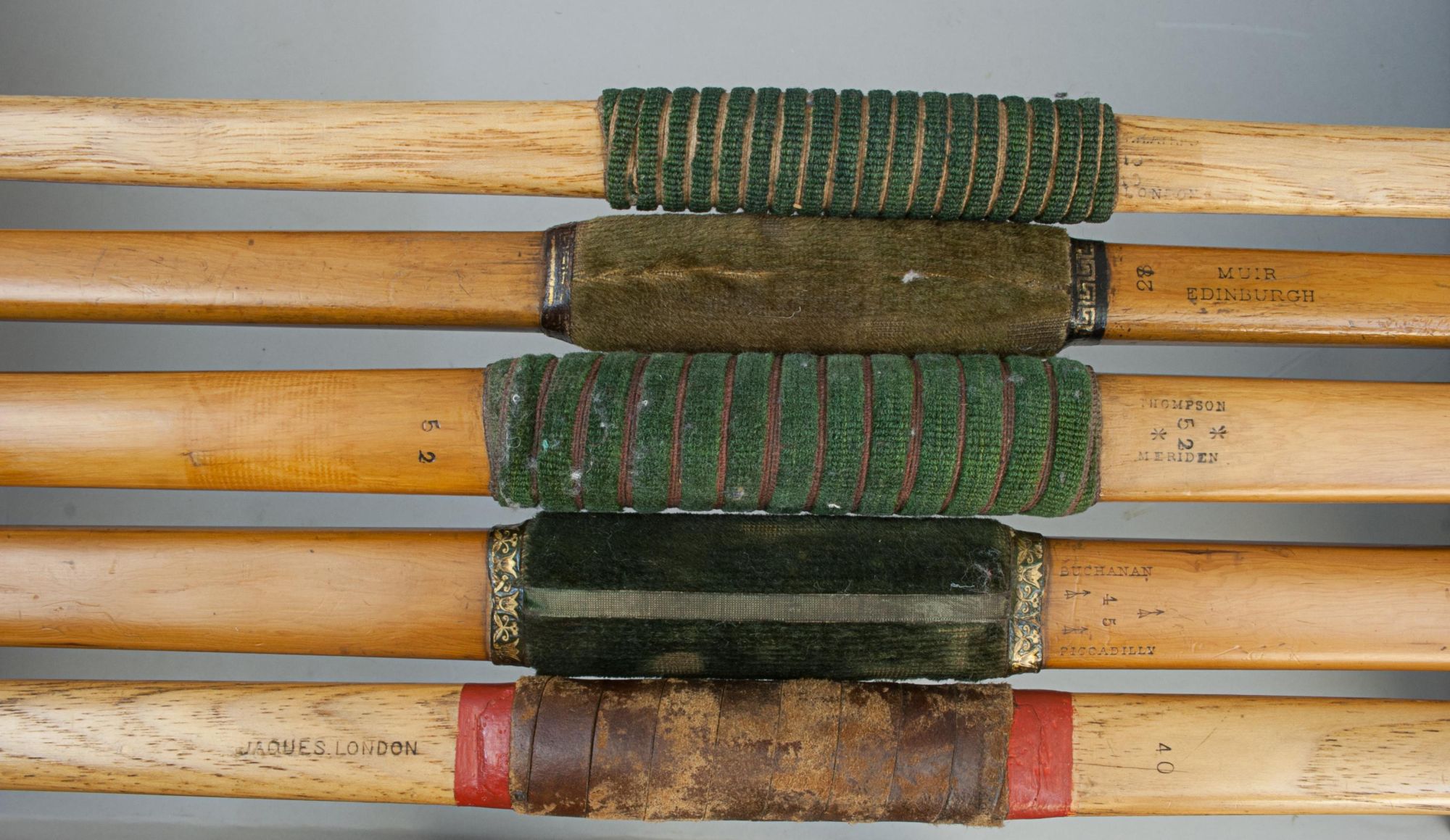
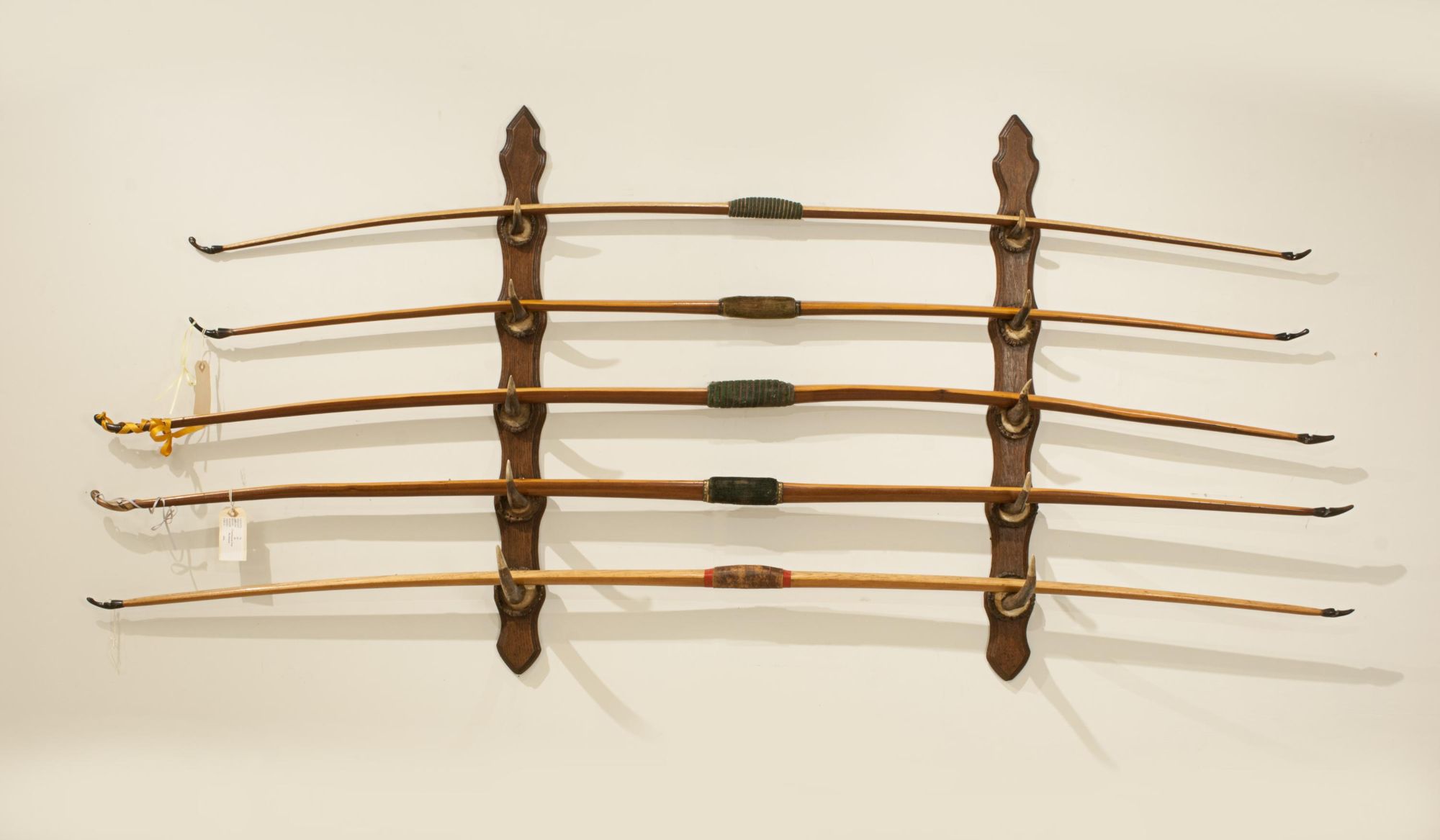
A wonderful display of an assortment of five vintage longbows on a Victorian antler rack. The wall-mounted oak brackets are elegantly tapered, featuring beautifully moulded edges that highlight the quality of the craftsmanship. Each bracket is mounted with five antler tips in graduating sizes. This rack beautifully displays a collection of five traditional longbows by five different bowyers: Thompson, Buchanan, Muir, Jaques, and F.H. Ayres.
Archery equipment, specifically the bow, is part of England's heritage, and almost everyone has heard of the legend of Robin Hood. The English longbow is probably the most famous bow in the world and is well known for leading England to victory over its enemies during the Medieval period. With its rich history, it is no surprise that the humble longbow has been making a resurgence and remains very much a part of modern-day archery.
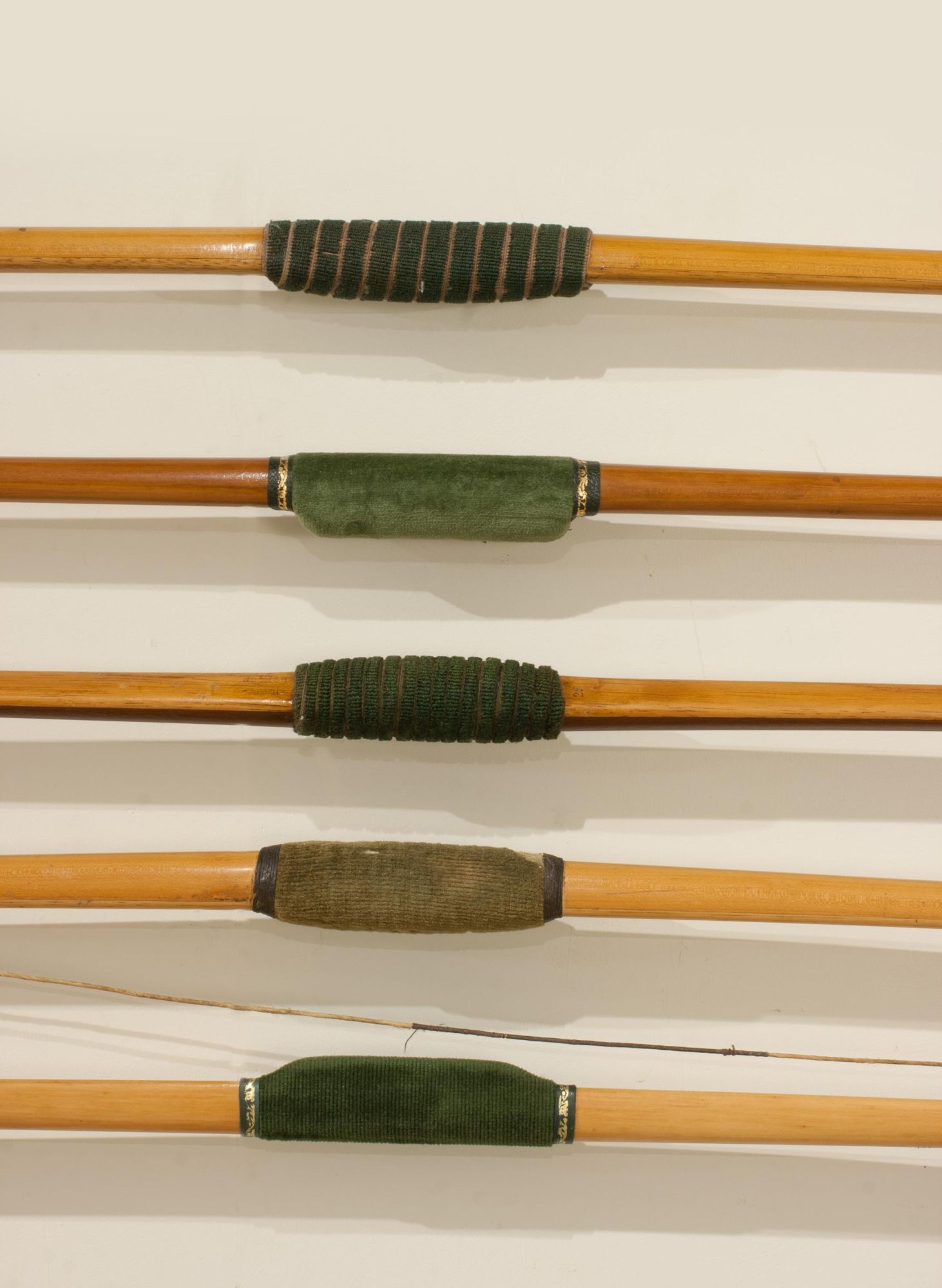
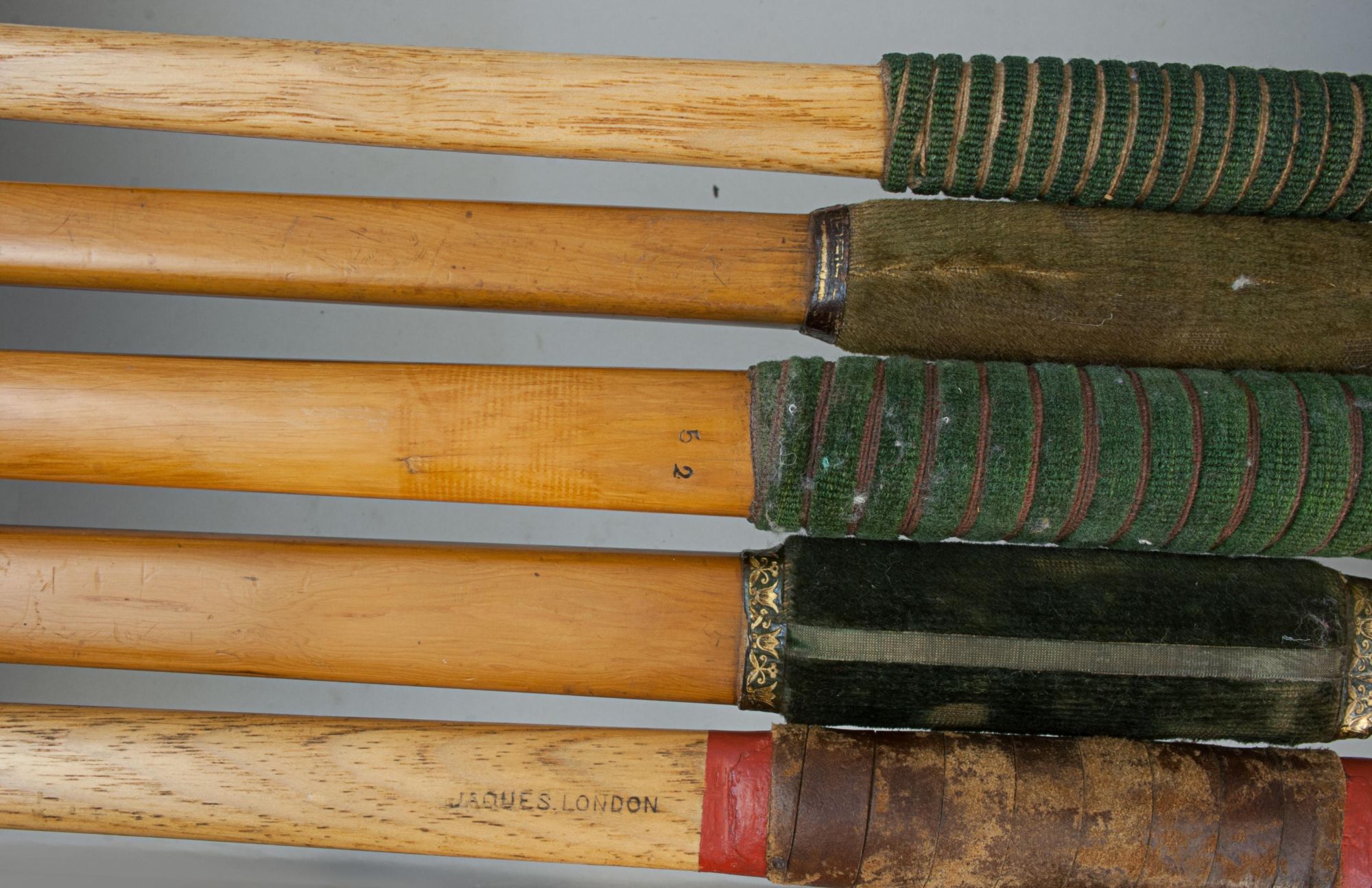
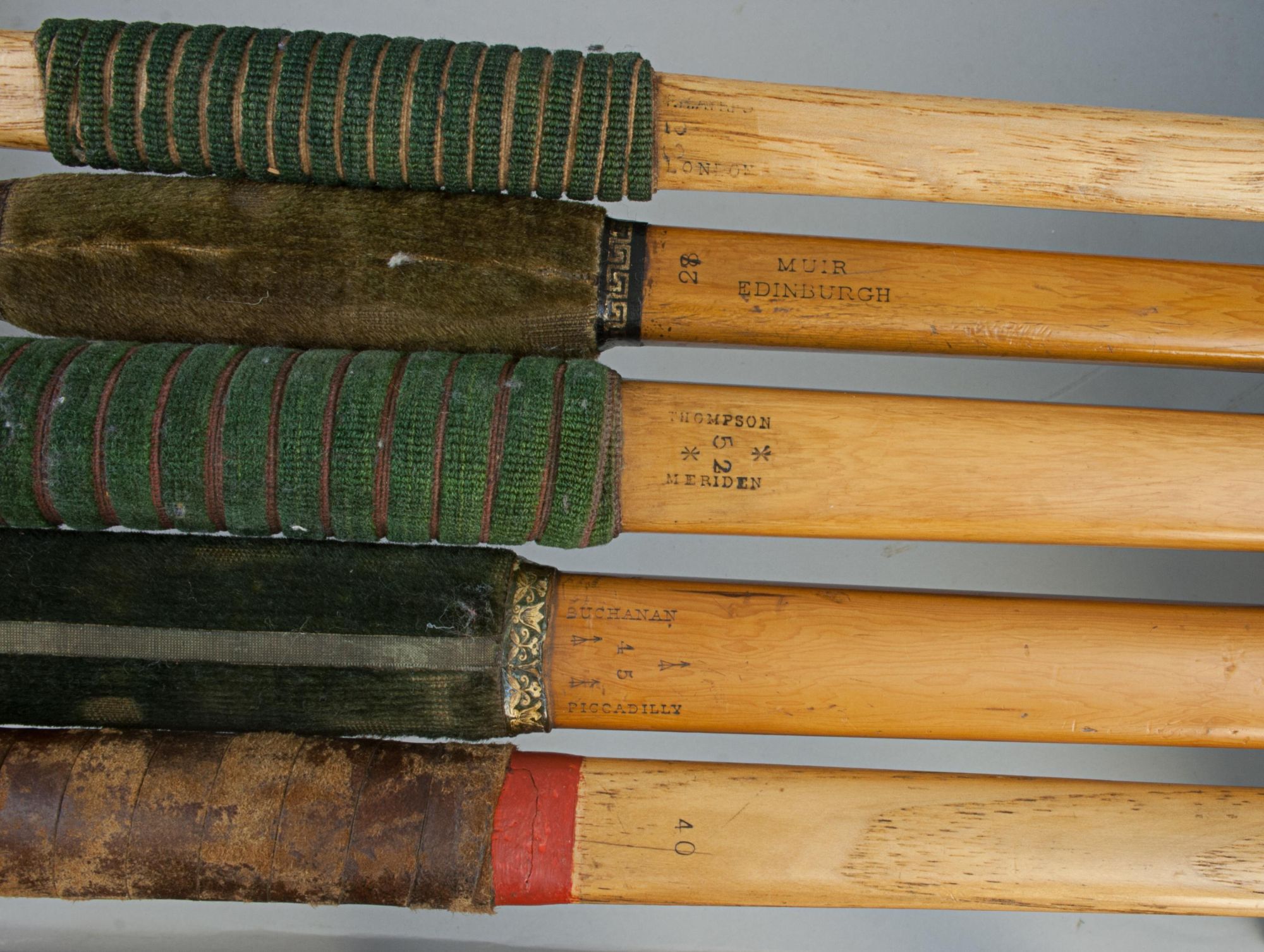
The five bows all feature horn nocks at the tips and a range of grips. The Jaques of London two-part bow (hickory and lancewood) has a draw weight of 40 lb and a simple wrapped brown leather grip, length 72" circa 1930). The F.H. Ayres, London bow is also a two-part (hickory and rosewood) with a draw weight of 22 lb, green braided cloth grip, length 63" (circa 1920).
The remaining three are yew wood longbows. The Thompson, Meriden bow has a draw weight of 52 lb, green braided cloth grip, length 69" )circa 1900). The last two both have green velvet grips with decorative leather wrapping, gilt tooling, and mother-of-pearl arrow passes: the Muir, Edinburgh bow has a draw weight of 27 lb and length 63" (circa 1890), while the Buchanan, Piccadilly bow has a draw weight of 45 lb and length 70" (circa 1880 - 1890).
Please note, if you intend to use these bows, due to their age and nature, their functionality cannot be guaranteed. Any attempt to string or use the longbow is undertaken entirely at your own risk.
The longbow came to prominence in the late Medieval period due to its success in military use. Bowyers flocked to the City of London in search of work, as demand for bows increased significantly following military victories. This success is largely attributed to battles such as Crécy (1346), Poitiers (1356), and Agincourt (1415), which were credited to the skill of English bowmen. In 1363, practising archery was made compulsory for men, and the trade continued to grow. A system of apprenticeships was introduced for bowyers, whereby apprentices were bound to the trade for seven years.
Target archery became popular during the Victorian period (1837-1901), when recreational archery reached its height of popularity. The heyday of archery as a social pursuit in the 19th century saw a number of highly skilled bow makers emerge. Alongside many accomplished craftsmen, some of whom were also makers of umbrellas, fishing tackle, and similar goods, it was Thomas Waring, Thomas Aldred, James Buchanan, and Peter Muir who became particularly well known for their quality, consistency, and scale of production. While Waring, Aldred, and Buchanan served English clubs and societies, in Scotland, Muir was especially highly regarded.
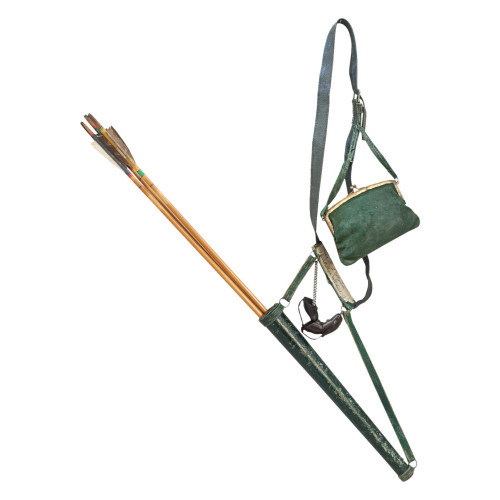
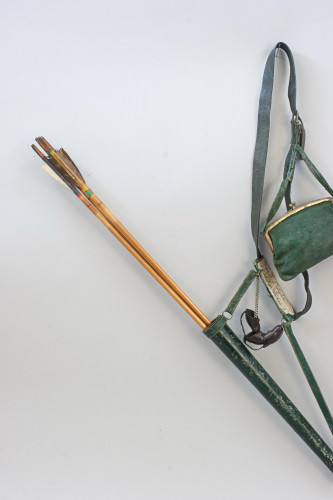
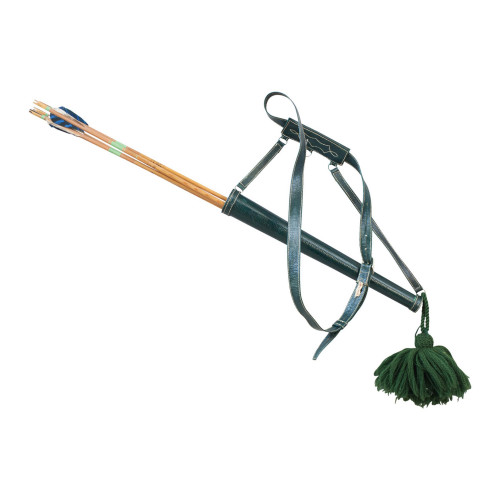
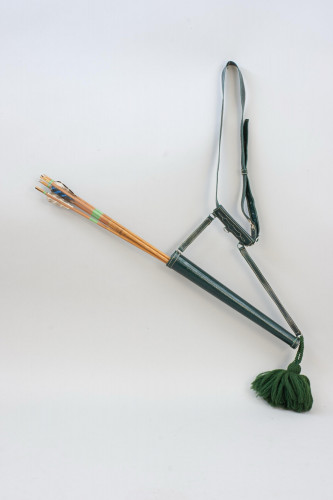
The two quivers and arrows in one image are for show only and are not part of this collection.
Dimensions:
1850-1899
Circa 1890 - 1930
Wood
United Kingdom
Thompson, Buchanan, Muir, Jaques, and F.H. Ayres
Private Archery Museum
Bill Terry Collection
Great condition. Ready to display.
RELATED ITEMS






 has a draw weight of 40 lb and a simple wrapped brown leather grip, length 72" circa 1930). The F.H. Ayres, London bow is also a two-part (hickory and rosewood) with a draw weight of 22 lb, green braided cloth grip, length 63" (circa 1920).The remaining three are yew wood longbows. The Thompson, Meriden bow has a draw weight of 52 lb, green braided cloth grip, length 69" )circa 1900). The last two both have green velvet grips with decorative leather wrapping, gilt tooling, and mother-of-pearl arrow passes: the Muir, Edinburgh bow has a draw weight of 27 lb and length 63" (circa 1890), while the Buchanan, Piccadilly bow has a draw weight of 45 lb and length 70" (circa 1880 - 1890).Please note, if you intend to use these bows, due to their age and nature, their functionality cannot be guaranteed. Any attempt to string or use the longbow is undertaken entirely at your own risk.The longbow came to prominence in the late Medieval period due to its success in military use. Bowyers flocked to the City of London in search of work, as demand for bows increased significantly following military victories. This success is largely attributed to battles such as Crécy (1346), Poitiers (1356), and Agincourt (1415), which were credited to the skill of English bowmen. In 1363, practising archery was made compulsory for men, and the trade continued to grow. A system of apprenticeships was introduced for bowyers, whereby apprentices were bound to the trade for seven years.Target archery became popular during the Victorian period (1837-1901), when recreational archery reached its height of popularity. The heyday of archery as a social pursuit in the 19th century saw a number of highly skilled bow makers emerge. Alongside many accomplished craftsmen, some of whom were also makers of umbrellas, fishing tackle, and similar goods, it was Thomas Waring, Thomas Aldred, James Buchanan, and Peter Muir who became particularly well known for their quality, consistency, and scale of production. While Waring, Aldred, and Buchanan served English clubs and societies, in Scotland, Muir was especially highly regarded.The two quivers and arrows in one image are for show only and are not part of this collection.)