
Pair Of Double-soled 'Ailsert' Curling Stones
Pair Of Double-soled 'Ailsert' Curling Stones
32202
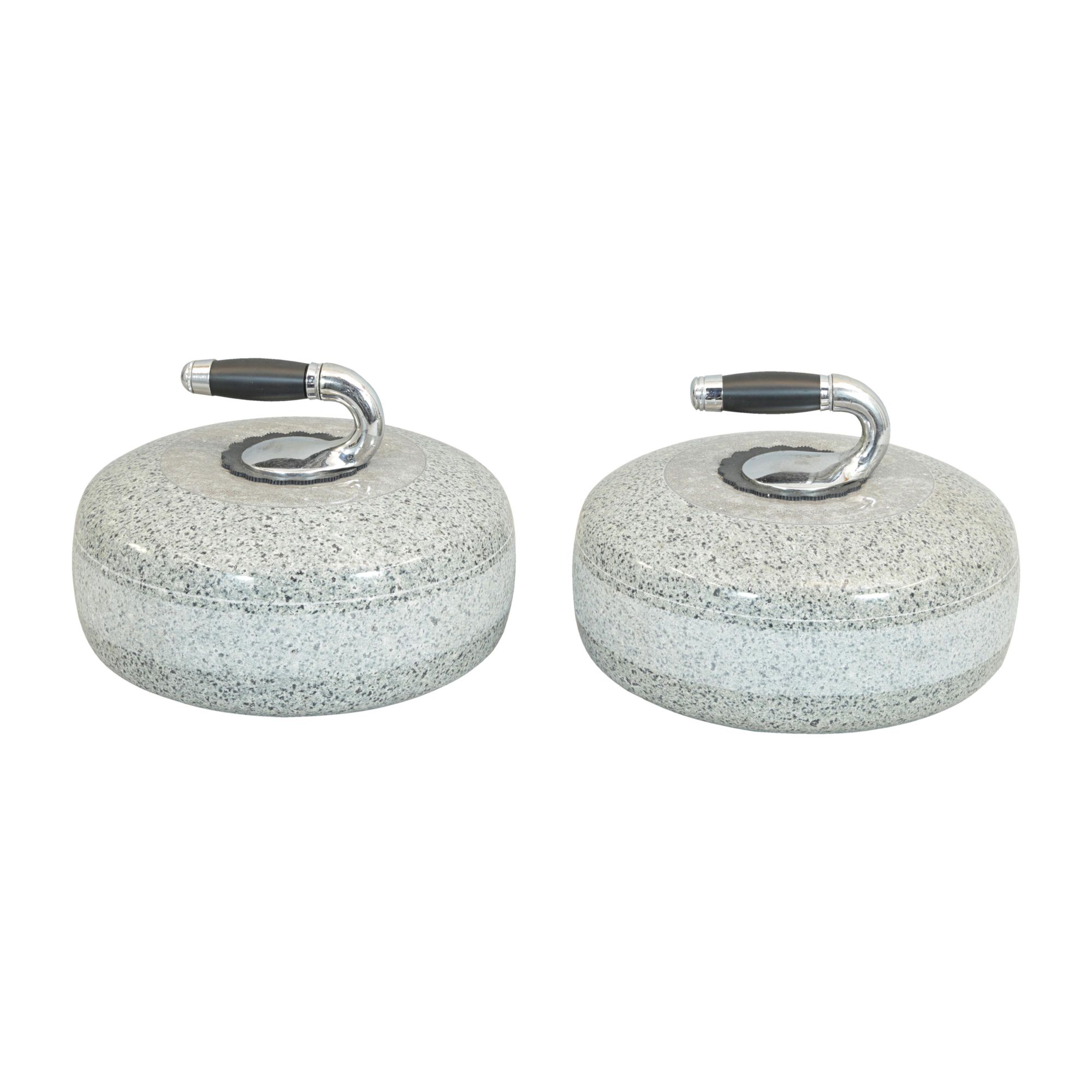
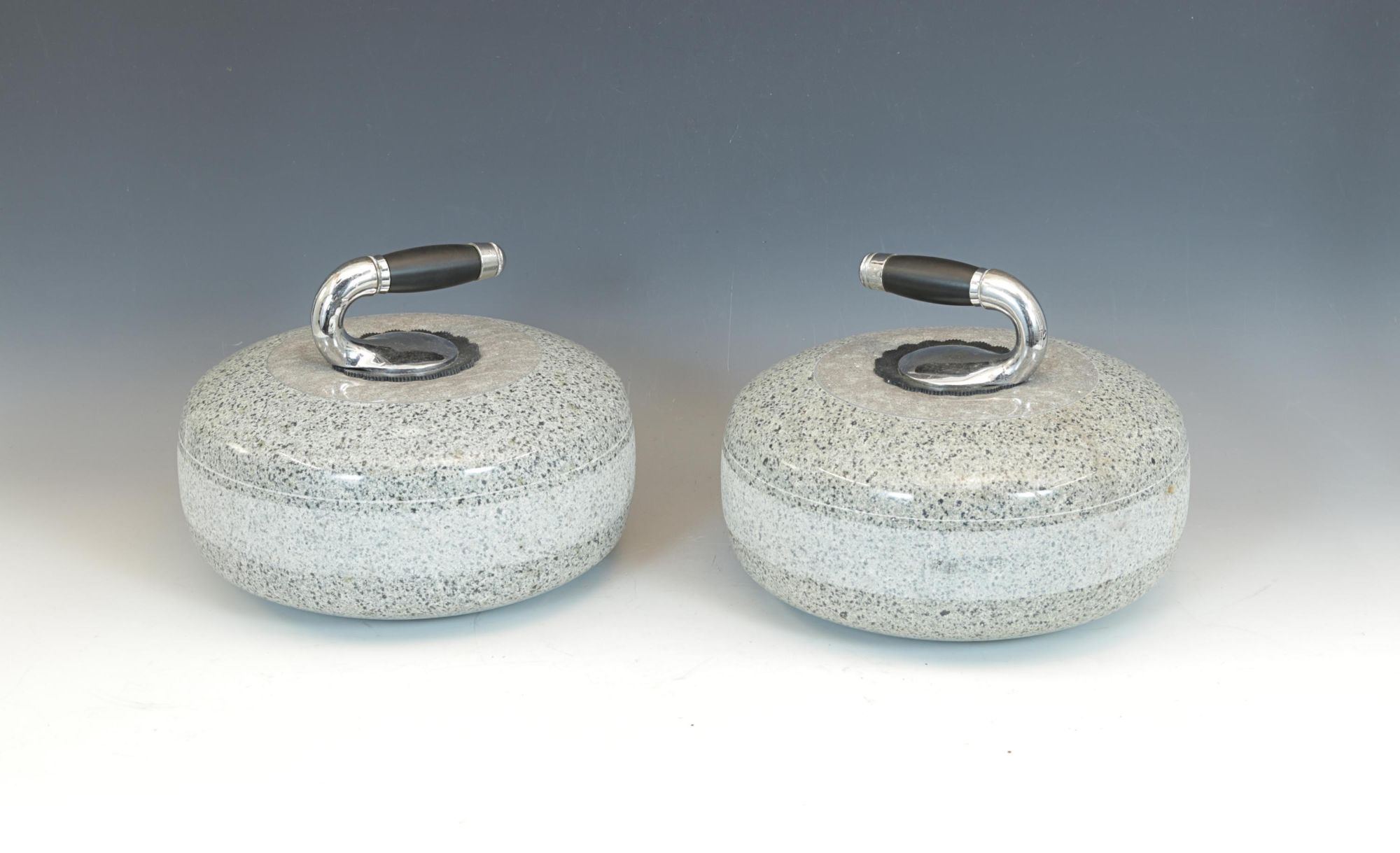
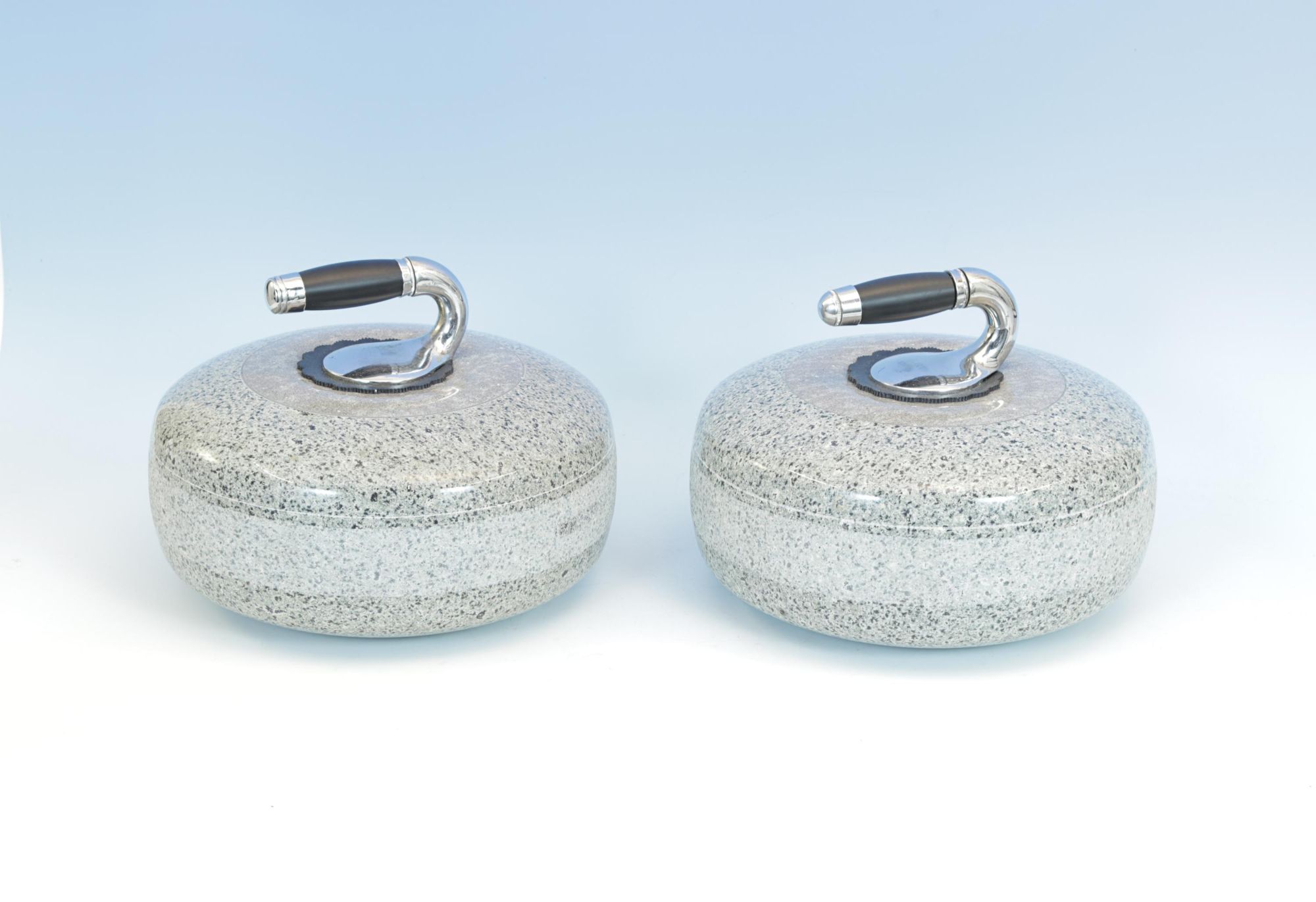
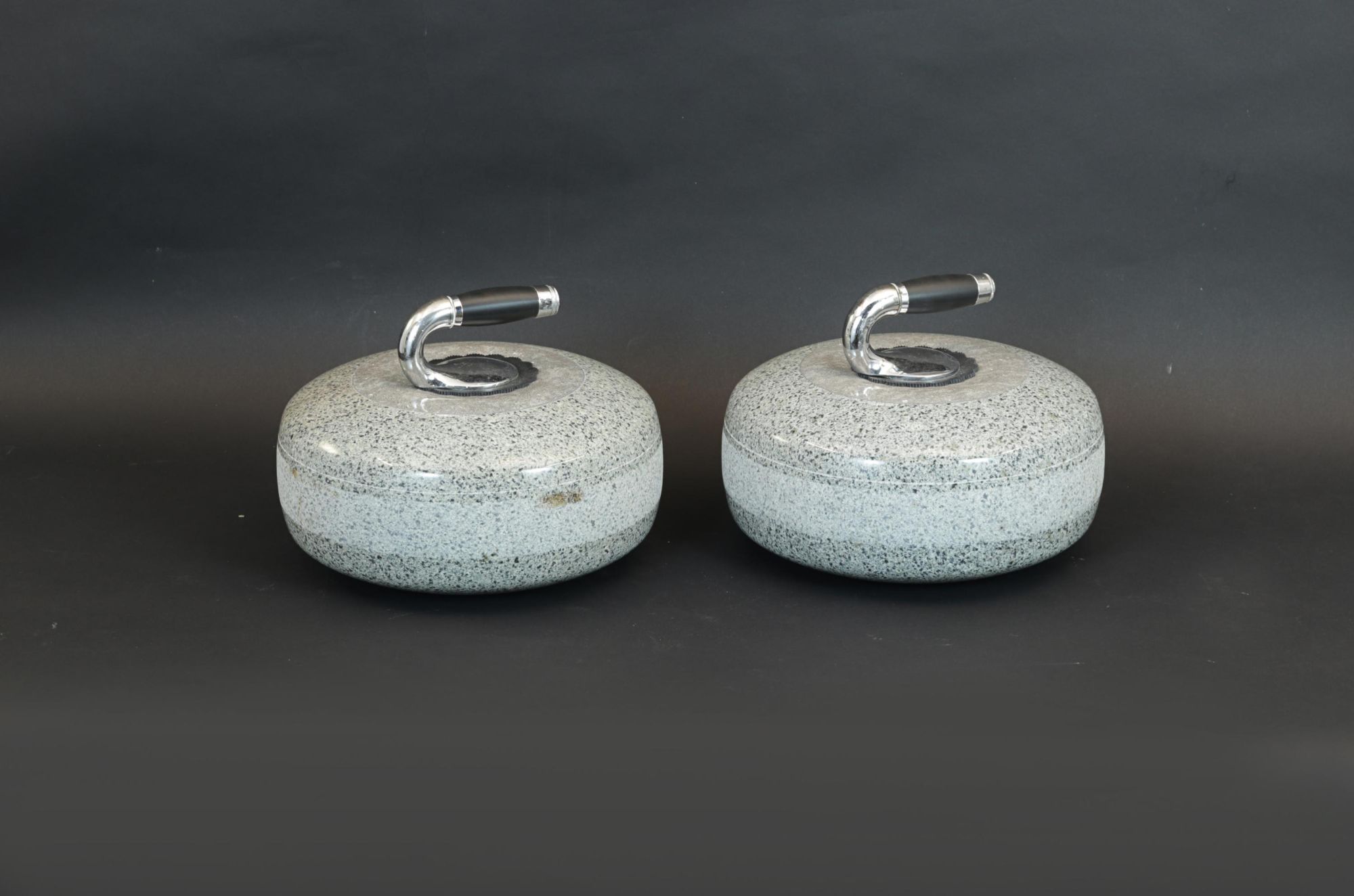
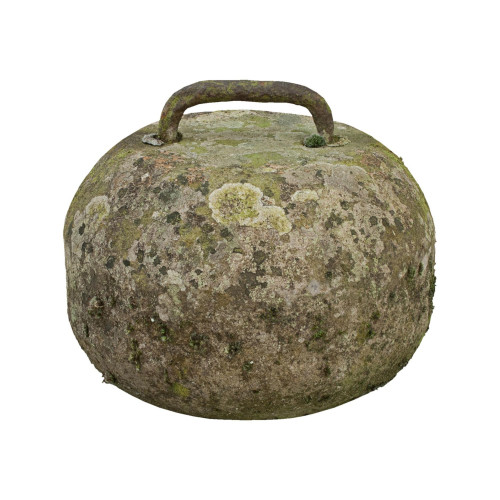
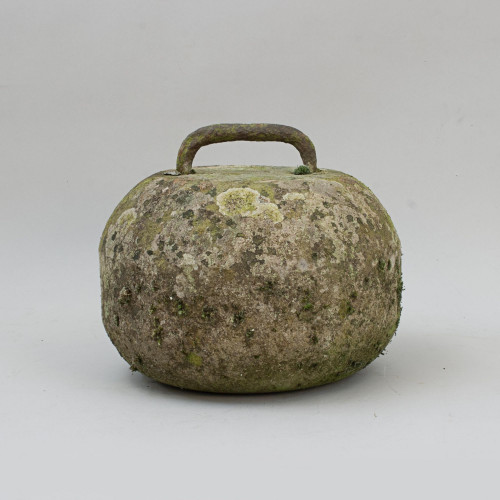
Pair of Composite Double Ailsert Curling Stones.
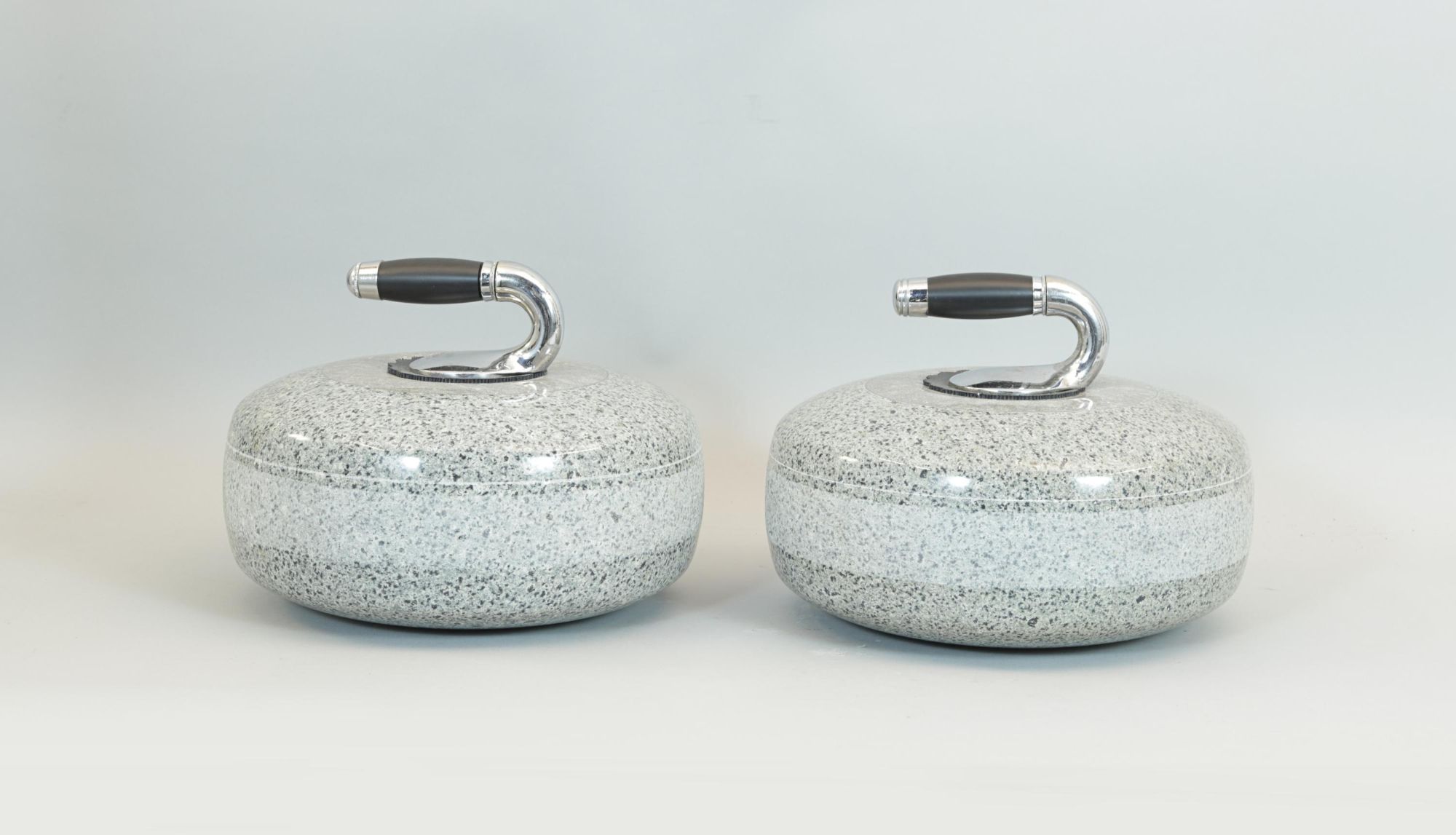
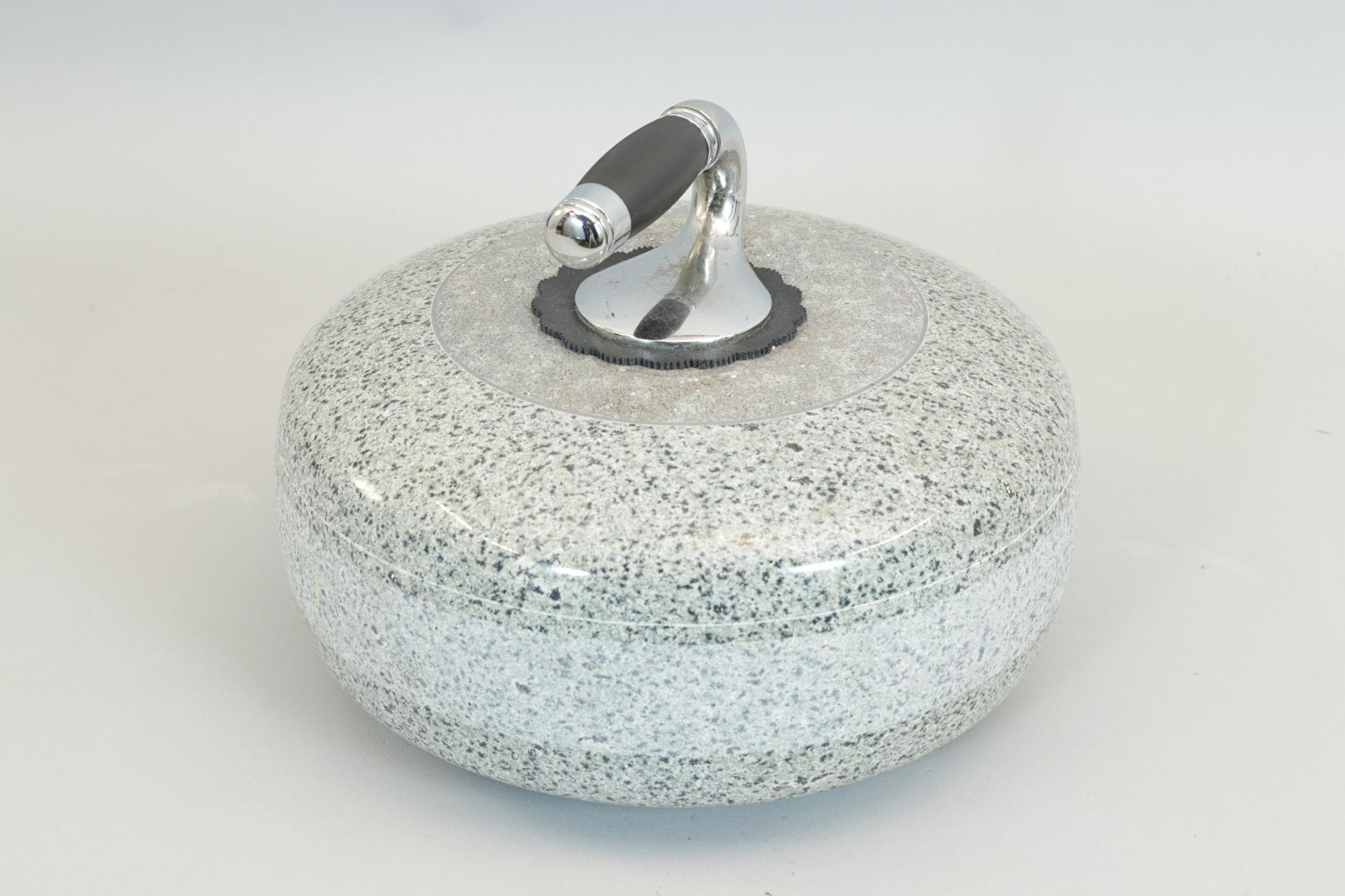
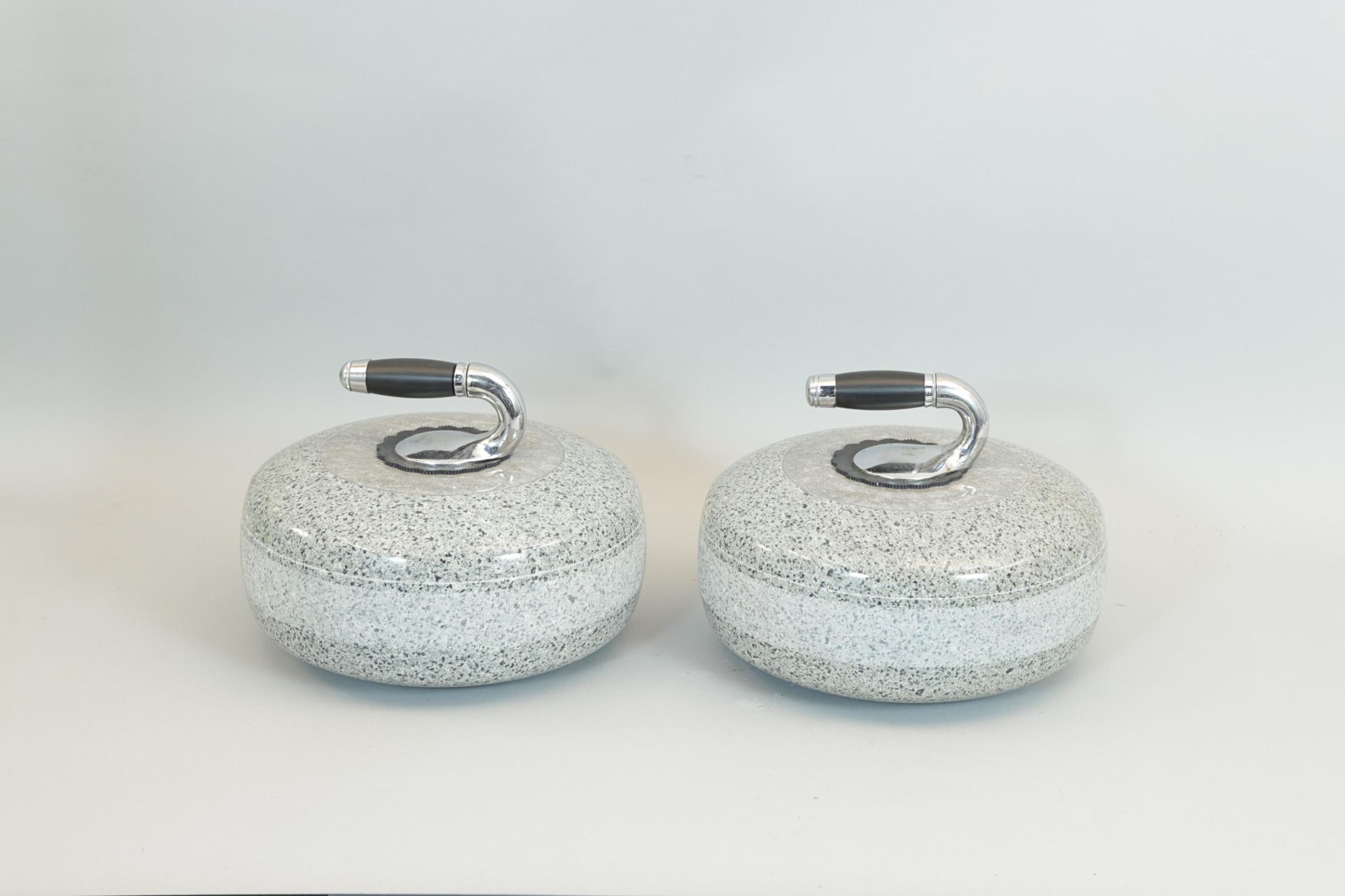
A particularly unusual and collectable pair of composite double-soled curling stones, believed to date from the mid-to-late 1980s, representing an interesting period in the development of modern curling stone manufacture.
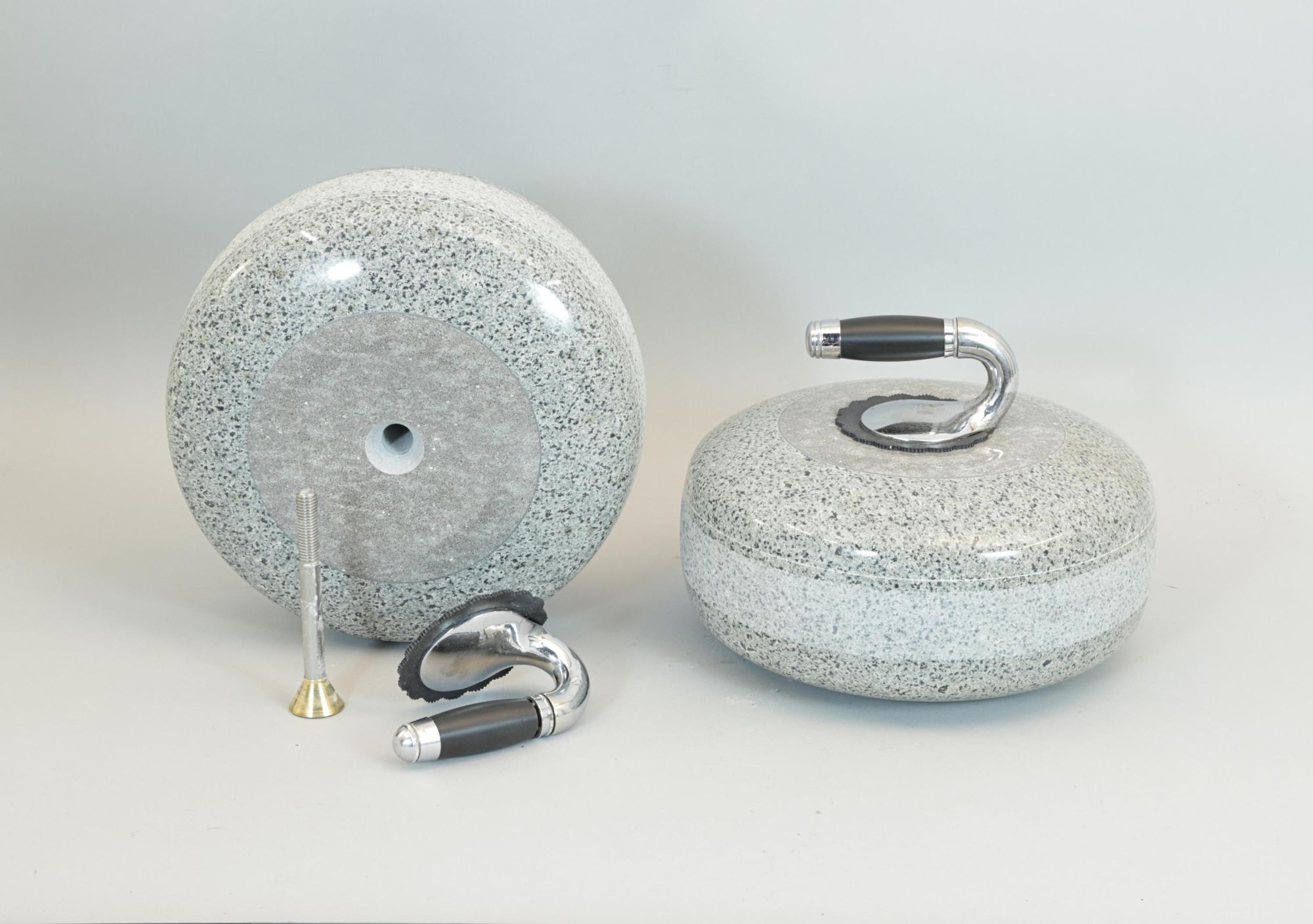
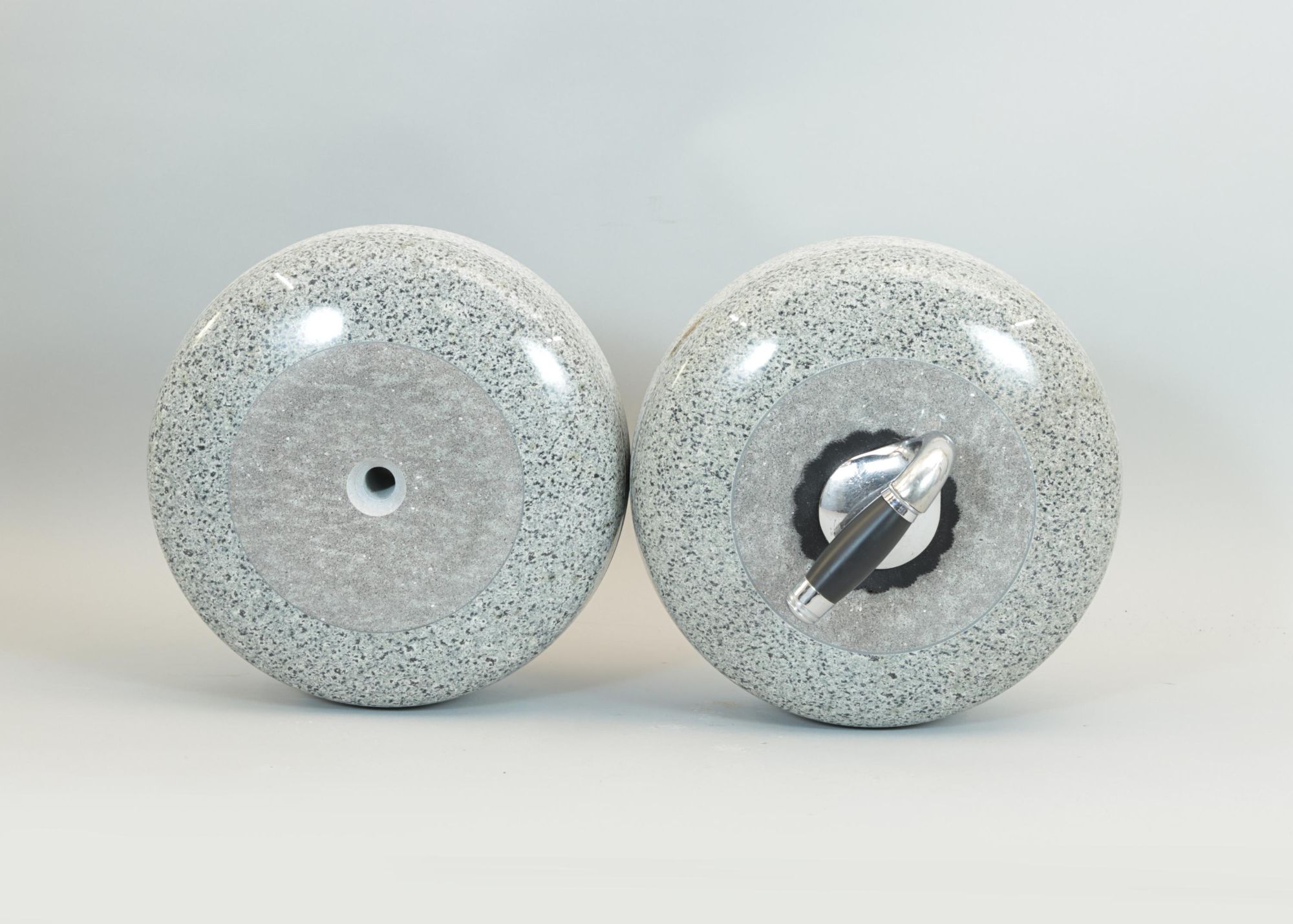
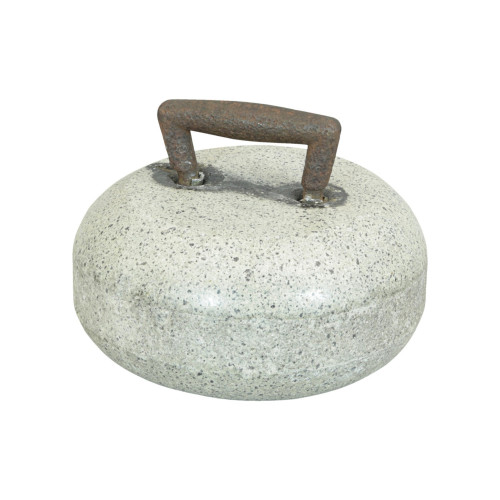
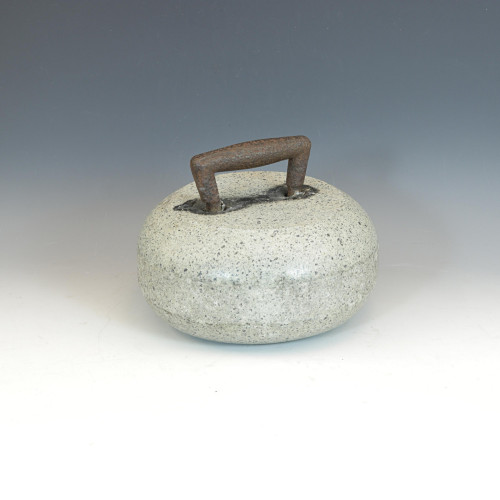
Unlike traditional curling stones, which were generally fashioned from a single piece of granite, these examples feature a substantial central granite core running completely through each stone, measuring approximately 16.5 cm (6½ inches) in diameter. The core is clearly distinguishable from the coarser, heavily speckled granite forming the outer body, producing a striking contrast between the two materials.
This construction is characteristic of the Ailsert system, developed to combine an alternative granite for the main body of the stone with the superior running qualities of Ailsa Craig Blue Hone granite. Historical accounts of the North Wales curling stone industry record the use of Trefor granite, quarried on the Llŷn Peninsula, for the main body, with a central core of Ailsa Craig granite inserted through the stone. These composite stones became known as Ailserts.
The purpose of this innovative construction was to conserve the increasingly limited supplies of suitable Ailsa Craig granite while retaining its desirable qualities for the running surfaces. The central core provided the material required for both soles, allowing the stones to be used on either side.
An interesting historical reference comes from Richmond Curling Club in Canada, whose records document the acquisition of a complete set of Ailsert double-core curling stones made from Blue Trefor granite in 1985. This provides a useful indication of the period in which this particular form of composite construction was being produced and exported.
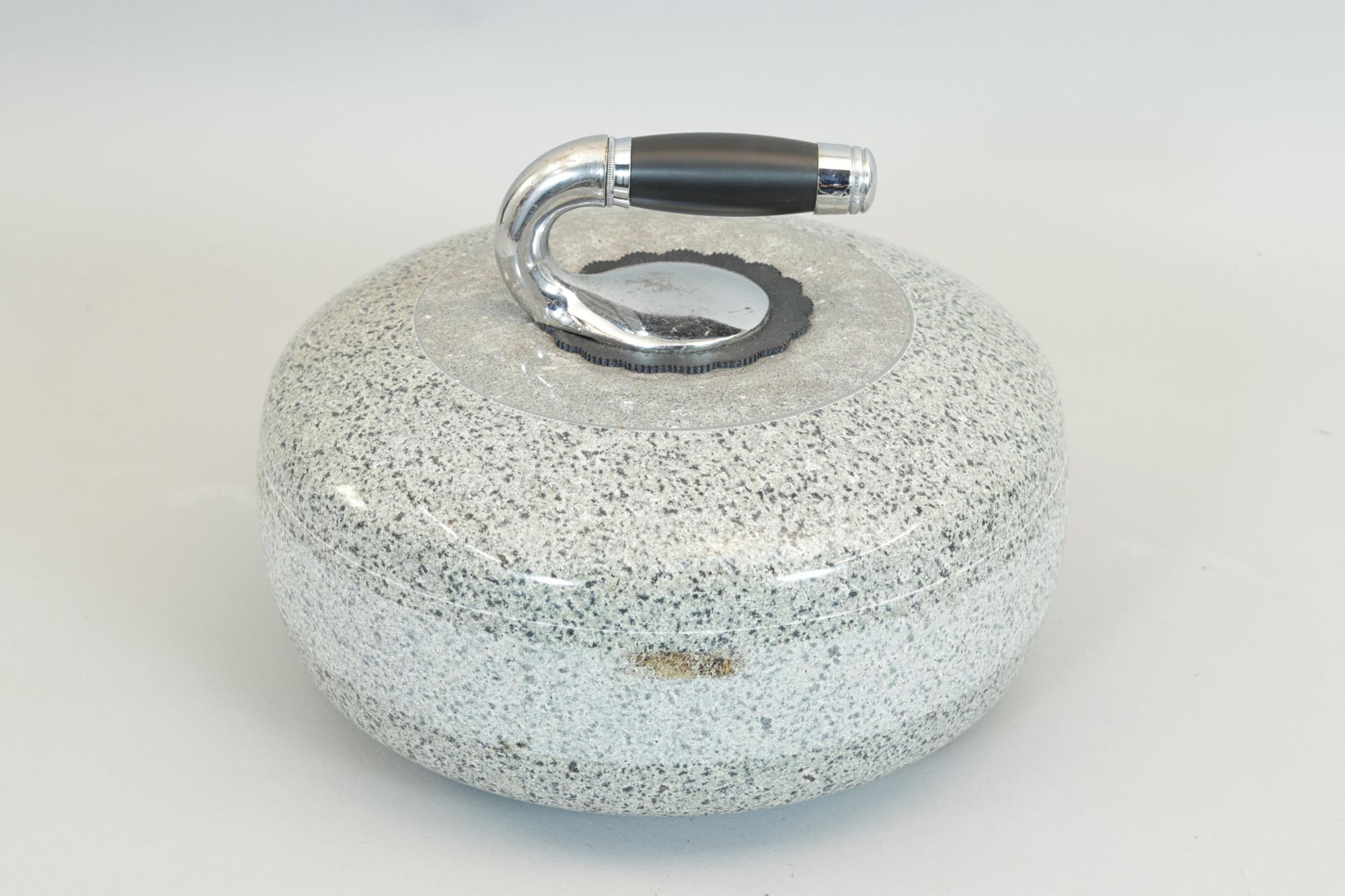
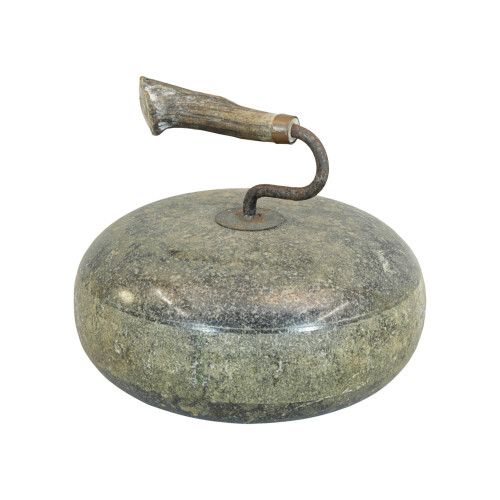
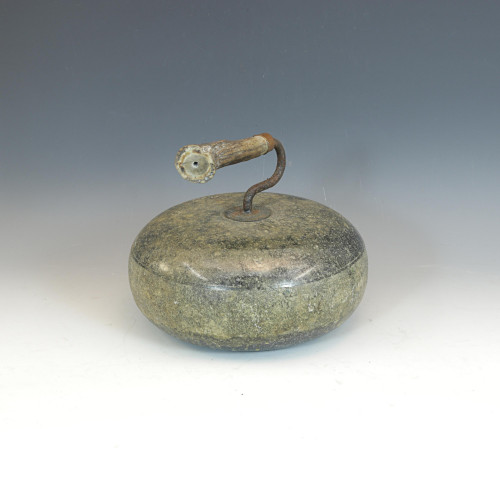
The stones are believed to originate from the Bonspiel curling stone works at Deganwy in North Wales, where composite curling stones were manufactured before production ceased around 1990 and the business was amalgamated with Andrew Kay in Scotland to form Kay Bonspiel Ltd. The pair retain their polished metal gooseneck handles with dark grips and decorative metal end caps, adding to their distinctive appearance. The handles are detachable, each secured by a central fixing bolt.
Measurements (each stone)
Weight: approximately 18 kg (39.7 lb)
Diameter: approximately 28 cm (11 inches)
Circumference: approximately 87 cm
Height of granite stone: approximately 14 cm
Handle: adds approximately 7 cm to the overall height
Striking band: approximately 5 cm
Central granite through-core: approximately 16.5 cm (6½ inches) diameter
Construction: composite granite, double-soled Ailsert type
Handles: detachable polished metal gooseneck handles with dark grips
An uncommon and visually striking pair, offering a fascinating insight into the evolution of curling stone manufacture and the development of composite granite construction. Their large through-cores, contrasting granites and surviving metal handles make them an especially interesting pair for the curling enthusiast or collector.
The exact origins of curling are unclear, but the game has a long history in Scotland, where it was originally played outdoors on frozen lochs and ponds. With the unpredictability of the Scottish winters, artificial outdoor curling rinks were developed to make a little frost go a long way. Shallow areas of concrete were flooded with small amounts of water, which could freeze solid after a night's frost, providing a surface for curling when the lochs and ponds were unsafe.
The first curling clubs were formed in Scotland, where efforts were also made to standardise the rules and equipment. The Grand Caledonian Curling Club was founded in Edinburgh in 1838 and became the governing body of the sport in Scotland. The Club encouraged the use of round granite curling stones, and the game developed from teams of eight players throwing one stone each to teams of four players, each throwing two matched stones.
In 1842, Queen Victoria and Prince Albert visited Scone Palace, near Perth, where the Earl of Mansfield gave them a demonstration of curling on the polished floor of the ballroom. The Queen was evidently impressed, and the following year, in 1843, granted the Club permission to call itself the Royal Caledonian Curling Club.
Curling was also firmly established in Canada by Scottish immigrants. The Montreal Curling Club was founded in 1807, making it the oldest established sporting club still active in North America. Today known as the Royal Montreal Curling Club, it remains an important part of the game's history.
Dimensions:
1950-1999
Circa 1985
Granite
United Kingdom
Great condition.
RELATED ITEMS



 in diameter. The core is clearly distinguishable from the coarser, heavily speckled granite forming the outer body, producing a striking contrast between the two materials.This construction is characteristic of the Ailsert system, developed to combine an alternative granite for the main body of the stone with the superior running qualities of Ailsa Craig Blue Hone granite. Historical accounts of the North Wales curling stone industry record the use of Trefor granite, quarried on the Llŷn Peninsula, for the main body, with a central core of Ailsa Craig granite inserted through the stone. These composite stones became known as Ailserts.The purpose of this innovative construction was to conserve the increasingly limited supplies of suitable Ailsa Craig granite while retaining its desirable qualities for the running surfaces. The central core provided the material required for both soles, allowing the stones to be used on either side.An interesting historical reference comes from Richmond Curling Club in Canada, whose records document the acquisition of a complete set of Ailsert double-core curling stones made from Blue Trefor granite in 1985. This provides a useful indication of the period in which this particular form of composite construction was being produced and exported.The stones are believed to originate from the Bonspiel curling stone works at Deganwy in North Wales, where composite curling stones were manufactured before production ceased around 1990 and the business was amalgamated with Andrew Kay in Scotland to form Kay Bonspiel Ltd. The pair retain their polished metal gooseneck handles with dark grips and decorative metal end caps, adding to their distinctive appearance. The handles are detachable, each secured by a central fixing bolt.Measurements (each stone)Weight: approximately 18 kg (39.7 lb)Diameter: approximately 28 cm (11 inches)Circumference: approximately 87 cmHeight of granite stone: approximately 14 cmHandle: adds approximately 7 cm to the overall heightStriking band: approximately 5 cmCentral granite through-core: approximately 16.5 cm (6½ inches) diameterConstruction: composite granite, double-soled Ailsert typeHandles: detachable polished metal gooseneck handles with dark gripsAn uncommon and visually striking pair, offering a fascinating insight into the evolution of curling stone manufacture and the development of composite granite construction. Their large through-cores, contrasting granites and surviving metal handles make them an especially interesting pair for the curling enthusiast or collector.The exact origins of curling are unclear, but the game has a long history in Scotland, where it was originally played outdoors on frozen lochs and ponds. With the unpredictability of the Scottish winters, artificial outdoor curling rinks were developed to make a little frost go a long way. Shallow areas of concrete were flooded with small amounts of water, which could freeze solid after a night's frost, providing a surface for curling when the lochs and ponds were unsafe.The first curling clubs were formed in Scotland, where efforts were also made to standardise the rules and equipment. The Grand Caledonian Curling Club was founded in Edinburgh in 1838 and became the governing body of the sport in Scotland. The Club encouraged the use of round granite curling stones, and the game developed from teams of eight players throwing one stone each to teams of four players, each throwing two matched stones.In 1842, Queen Victoria and Prince Albert visited Scone Palace, near Perth, where the Earl of Mansfield gave them a demonstration of curling on the polished floor of the ballroom. The Queen was evidently impressed, and the following year, in 1843, granted the Club permission to call itself the Royal Caledonian Curling Club.Curling was also firmly established in Canada by Scottish immigrants. The Montreal Curling Club was founded in 1807, making it the oldest established sporting club still active in North America. Today known as the Royal Montreal Curling Club, it remains an important part of the game's history.)